
To look at Dan Nichols of Adamsville, you may not place him in the minority.
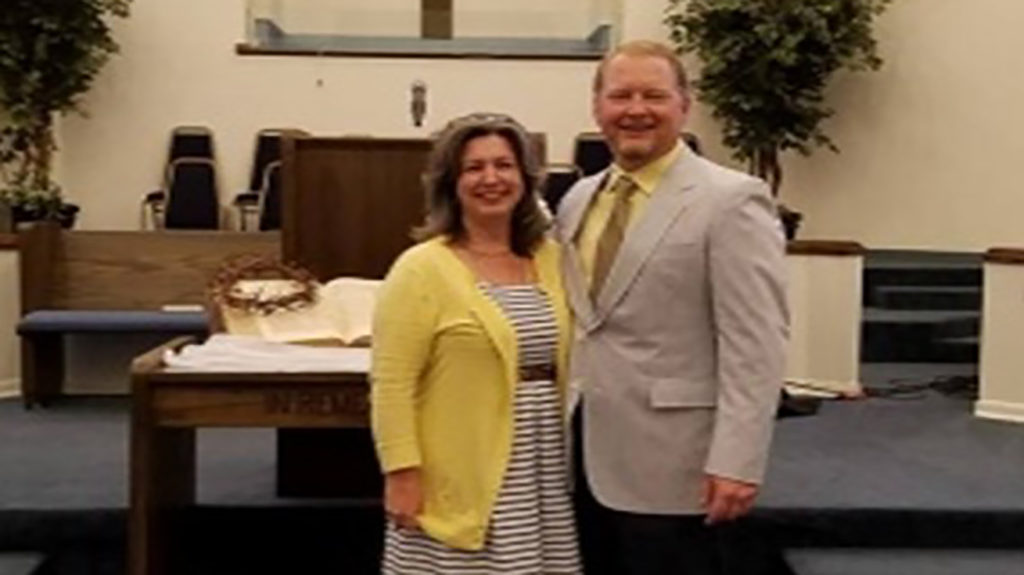
He is pastor of a Southern Baptist church — Walkers Chapel Baptist Church, Fultondale — is married and has children and grandchildren. He exercises some, preaches on Sundays, has worked the polls during elections for several years and is moderator of the Birmingham Baptist Association’s executive board.
It may not even be noticeable when Nichols experiences persistent pain and fatigue. But he is among the small percentage of males who suffer from fibromyalgia.
According to the Arthritis Foundation, women are seven times more likely to develop fibromyalgia than men. It is still being debated whether this figure is due to an actual gender-based factor or a clinical one in that doctors are slow to recognize it in men since it has long been known as a disease affecting mostly women.
Whichever is the case, Nichols said he felt fibromyalgia’s effects long before being diagnosed with it in 1999. “I started having symptoms in my late 30s, early 40s,” said Nichols, who is now 54. “I couldn’t figure it out and I went to several doctors.”
It was not until his sister-in-law was diagnosed with fibromyalgia and shared her symptoms with him that Nichols began to have an idea of what was causing his fatigue and pain. “I came home and looked on the Internet and realized I had many of the classic symptoms,” Nichols said.
However, Nichols said his doctor was reluctant to accept this self-diagnosis because so few men do have it. After several tests to eliminate other causes, Nichols said his doctor finally diagnosed him with fibromyalgia.
“I think that men are very prone to the machoism; the idea that ‘I cannot show signs of weakness,’” said Nichols of why so few men are diagnosed with fibromyalgia. “Also the fact that the male looks for other causes of feeling bad, such as ‘I’m tired because I didn’t sleep well.’”
Overwhelming fatigue
But Nichols knew his fatigue was different.
“There’s a tired that comes from physical work, and there’s a tired that comes from a stressful day. Then there’s a tired that comes when you’ve done nothing to make yourself tired,” he said. “It’s very much like mono or having a cold except mono and colds go away.”
Nichols is quick to point out that there are many people who are worse off than himself, whether from fibromyalgia or other causes. “I’ve been very blessed that it’s not a constant situation that takes away a lot of my day,” he said.
And he won’t let it take him away from work when he is needed. “I can’t call someone who’s had a death in the family and say, ‘I’m sorry, I can’t come, I’m having fibromyalgia,” he said.
There are some days however, when the fatigue hits him so hard that the “walk from my bench to the pulpit has seemed like 1,000 miles instead of four steps.” But still he preaches. “The Holy Spirit touches my heart and I preach by His strength.”
Nichols said it is the calling of God on his life and his family that gets him through those bad days.
“Knowing that I have the calling of Christ on my life and my commitment to that calling (keeps me going),” he said. “I know the day is going to come when I’m not going to be (physically or mentally) able to preach, so I’m not going to let something steal that now.”
Equally important to Nichols is the support of his family.
“They understand that if I come in and close the door, I’m not feeling well and they won’t bother me,” he said, adding that the church staff understands that same signal and screen his calls and visitors.
“I know my limits,” he said. “If I wake up and can’t get going, I do what I can until I get going.”
Nichols said those who know someone with fibromyalgia can help most by being understanding.
He said he and others with fibromyalgia dislike always explaining how bad they feel, yet oftentimes it seems like others are not aware of how bad the pain and fatigue can be.
“I wish they understood the fatigue (fibromyalgia patients) have from it,” Nichols said. “How absolutely sore you can be so that you can’t explain it. So that even minute gestures like picking up the phone hurt.”
Nichols himself manages his fibromyalgia with stretches, exercise and managing his diet. He said he is determined not to let the disease take away his quality of life.
“I just keep going, and I think we have a reserve that we reach deep down to use,” he said. “Fibromyalgia does not have to take your quality of life away, it just makes it a little more difficult to enjoy that quality of life.”



Share with others: