
By Sondra Washington
When Macon County’s “bingo” casino at VictoryLand shut its doors in August, gambling opponents claimed victory in their fight against Alabama’s slot machine-style businesses and said the gambling facilities were “100 percent shut down.” But that 100 percent didn’t include the Poarch Band of Creek Indians’ three casinos.
State legislators, city and county leaders, gambling bosses and members of Gov. Bob Riley’s Task Force on Illegal Gambling have fought all year about the future of the state’s so-called electronic bingo industry, but gambling at Indian casinos has continued. Billboards, TV commercials and newspaper ads imply a sophisticated casino atmosphere at the tribe’s facilities even though they are limited to the same slot machine-style gambling that is currently shut down across Alabama.
Some have accused Riley of turning a blind eye to the casinos to protect Indian gambling and then receive some sort of payout. He has repeatedly denied these claims.
Others say the task force could not move against the casinos since federal laws allow federally recognized Indian tribes to operate gambling in states where certain types of gambling are legal.
Either way, Indian gambling is alive and well in Alabama, and it may be awhile before that changes — if it ever does.
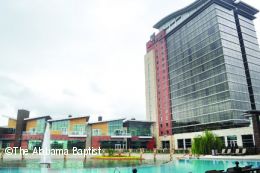
Currently the Atmore area-based tribe owns and operates Wind Creek Casino & Hotel in Atmore, Creek Casino Montgomery and Creek Casino Wetumpka.
The casinos began opening just three or four years after the tribe was recognized by the U.S. Department of the Interior’s Bureau of Indian Affairs in 1984, said Robert McGhee, governmental relations adviser for the Poarch Creek Indians. This designation allows tribe members access to various government services and to offer gambling.
According to the Indian Gaming Regulatory Act (IGRA) of 1988, “An Indian tribe may engage in, or license and regulate, Class II gaming on Indian lands within such tribe’s jurisdiction, if … such Indian gaming is located within a state that permits such gaming for any purpose by any person, organization or entity.” The act defines Class II gaming as “the game of chance commonly known as bingo (whether or not electronic, computer or other technologic aids are used in connection therewith).”
McGhee said the tribe initially offered traditional paper bingo but advanced their casinos as technology advanced. At times, the proposed moves were protested by Alabama officials.
In 2006, a news release from Attorney General Troy King’s office stated that he filed a response with the Department of the Interior opposing the tribe’s request to “significantly expand the scope of Indian gambling in Alabama” to include “pari-mutuel wagering on horse and dog races, conduct poker tournaments and sweepstakes and add an auto-daub feature to its electronic bingo games.”
In his release, King expressed “legal objections on behalf of himself and the governor” and argued that the Poarch Creeks’ request included a “mischaracterization of the state of Alabama’s gambling law and policy.”
“It is my steadfast hope that the Interior Department will base its decision upon principles of law that we have presented and deny this effort to spread a practice that is detrimental to our citizens and contrary to our state’s laws and policy,” he said.
The tribe issued its own press release, stating that King was protecting “unregulated non-Indian gaming, … turning a blind eye to other gaming within this state and denying the tribe a level playing field.”
The release added, “Pari-mutuel betting, sweepstakes, poker tournaments and one-touch bingo are currently being played at dog tracks and other venues in Alabama. These games, which fall within the IGRA’s definition of ‘Class III’ games, are prominently advertised on billboards, newspapers, radio and television throughout Alabama.”
In the end, the tribe purchased a controlling interest in the Mobile Greyhound Park in Theodore and another track in Pensacola, Fla. It also expanded its “electronic bingo” casinos, which now offer about 3,000 slot machine-style games; more than 1,600 machines are at the tribe’s newly expanded Wind Creek casino.
McGhee said the tribe is completing plans to turn the casino into a resort destination surrounded by a proposed retail development area. He also said there are plans to expand the Wetumpka casino and add a hotel and restaurants to the site.
According to the Bureau of Indian Affairs, 11 other American Indian groups have either applied or expressed an intent to apply for federal recognition, which, if given, would allow them to offer gambling in Alabama.
_____________
Poarch Creek Casinos
Wind Creek Casino & Hotel
Located near Atmore
- 50,000 sq. ft.
- More than 1,600 slot machine-style gambling devices
Creek Casino Montgomery
(also known as Tallapoosa Casino)
Located in Montgomery
- 21,000 sq. ft.
- 500 slot machine-style gambling devices
Creek Casino Wetumpka
(also known as Riverside Casino)
Located in Wetumpka
- 39,000 sq. ft.
- More than 900 slot machine-style gambling devices
Games offered on the slot machine-style gambling devices:
- Wheel of Fortune
- Price is Right
- Sizzling 7s
- Triple Lucky 7s
- American Original
- Double Diamond
- Hot Shots Blazing 7s
- Quick Hit Black & White
- Draw Poker
- Hexbreaker
- Texas Tea
- Beetle Bailey


Share with others: