
Editor’s note: This is the second in a two-part series on gospel access made possible through virtual reality. Read the first story here.
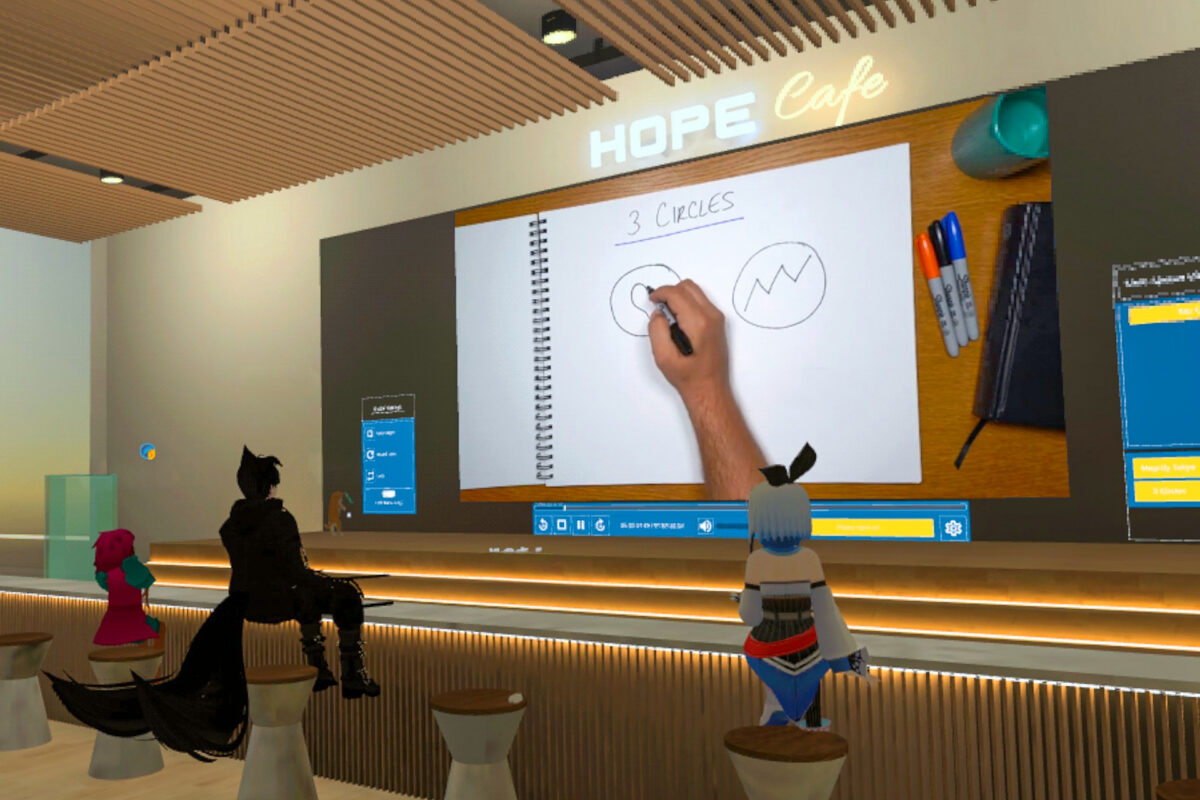
For the last few years, the International Mission Board’s digital engagement team has researched and tested the viability of this computer-generated immersive experience as a tool for evangelism. Daniel Rice, IMB missionary who lives in Japan, partnered with Matthew Banther at Calvary Church in Clearwater, Florida, to test and troubleshoot strategies that churches and other evangelical organizations can use.
Subscribe to The Alabama Baptist today!
SIGN UP for our weekly Highlights emails.
“Your professional practitioners on the field are in the lab figuring it out and getting results so you can faithfully use this tool for gospel work,” Rice said about his missionary team in Japan and Calvary Church.
The more the team tested, the more they realized they could build a place and culture where the rest of the world shows up. Rice and Banther took time to answer a few questions churches might have about this pioneering ministry tool:
Q: Why explore virtual reality for missions?
Daniel Rice: The Japanese are one of the largest consumers of virtual reality. By the year 2030, estimates have 60% of the Japanese population using some form of VR daily — like mixed reality, augmented reality or extended reality. Because of this, it’s a viable avenue to reach them with the gospel.
It can provide gospel access among people we wouldn’t normally interact with. First with the Hikikomori, a Japanese term for the socially withdrawn, we physically can’t contact them. These urban hermits shut themselves away from society, work, family and friends. And second, most Japanese adults are consumed by their jobs. We can’t find a crack in their schedule just to meet. Yet, when they get home from work, most will put on their VR headset to watch television, play games or socialize with friends.
VR allows us to gain entry and have gospel access to those we wouldn’t otherwise meet.
Q: How does this fit within the IMB’s missionary tasks?
Daniel Rice: We see this as future proofing of the missionary task. We put on our missiology caps and did some deep-dive research. We discovered that we can’t do all six missionary tasks of entry, evangelism, discipleship, healthy church formation, leadership development and exit to partnership as only virtual. It takes a combination of virtual reality and IRL or in real life.
Virtual reality is an excellent tool for entry into a community and ministry. We found evangelism comes naturally in this space due to the relationship culture of VR. This also means we can do discipleship. We can’t do church formations, however. This is where we know the ministry needs to transition in real life. In virtual reality, we can provide leadership development. And of course, exit to partnership looks a little different in this context. This phase would be more about these believers reaching the lost in the virtual world.
As we broke it down and tested, we began to see virtual reality as a very real tool for ministry.
Q: What about “in real life” ministry? How does that fit with a virtual world?
Daniel Rice: The end goal of all digital strategies is “in person.” Virtual reality is the tool we use to gain access to a community for gospel conversations. Once a relationship is developed, we want to transition to real life. We transfer this relationship to a missionary, local partner or church in their location.
We are testing how to take relationships from virtual to face-to-face encounters at a Vket-Real conference. Vket is a virtual reality convention that lasts two weeks. The last two days of the event is “in person” at a convention center in Tokyo. People from all over the country attend and connect with friends they met online in a safe environment. This transition from virtual to face to face is already part of the Vket culture.
Q: Isn’t virtual reality a game? How can it be used to share the gospel?
Matthew Banther: Yes, people play games in virtual reality, but many people log on to hang out and chat. This is where people from our church go, to a program called VRChat.
The culture in VRChat is to interact and chat. It’s OK to approach someone in this world and start talking. It’s very much like street evangelism except people are more open to being approached in virtual reality. We don’t have to chase anyone down or do any “Bible beating.” If someone doesn’t want to have a gospel conversation, they either mute you or walk on to the next person. In that culture, it’s not considered offensive.
Q: Why do you think people are more approachable in VR?
Daniel Rice: For the Japanese, it is anonymity. The culture in Japan is to conform to the group. But in VR, they have the safety of using an avatar instead of showing their own face. This allows them to make genuine heart-based decisions. It’s a safe place for them to hear the gospel and really dive into what it means without outside pressures.
Matthew Banther: Not just Japanese. I think this concept applies to all of us.
Q: Is this ministry strategy only for reaching Japanese?
Daniel Rice: No. We started out with a focus on Japan because of VR’s wide acceptance here. We hope to have somewhat of a template that others can use and not have to start from zero like we did.
Matthew Banther: We’ve had gospel conversations with Malaysians, Swedes, Americans and the list goes on and on. I’m starting to see that through virtual reality, we CAN reach the nations. There’s no excuse. No matter the geography or politics, we can evangelize the nations.
Q: What is a virtual mission trip?
Matthew Banter: It’s like any other mission trip, only it’s done from your church through virtual reality. You partner with IMB missionaries to meet people in VR worlds and share the gospel. We treat VR mission trips like all mission trips. Our volunteers sign up through IMB’s Go Method and go through training. We have specific dates set aside for the trip. The church prays for our team. We have devotions each day before entering the virtual world. We work side-by-side with IMB missionaries and global partners. There is a strategy and long-term plan.
I think VR mission trips can make a huge impact on international missions involvement, especially for small and medium-sized churches. This is something that is affordable. VR headsets cost between $300–500. There’s probably someone in your church or friend circle that already has a headset, or check with your local school. You don’t need a lot; people can share.
We estimated $55–60,000 to send a team of 14 to Japan, including airfare, lodging and food. That means each volunteer would need to raise roughly $3,000. On our first VR mission trip, we spent less than $5,000 getting set up for 20 volunteers, this included feeding them. We were blessed to have 135 gospel conversations.
Q: Do you have to be “techy” to participate?
Matthew Banther: We have a spot for everyone, no matter their experience level with virtual reality. The main thing you need is a heart to see the nations come to God. At our church we’ve had all age ranges participate in our virtual mission trips and all levels of tech knowledge.
You don’t even need a virtual reality headset. You can do this from a computer.
Q: How can I or my church be involved?
Daniel Rice: We need a few more churches to partner with us in this next phase of ministry in July. We will have a hybrid mission trip with several churches manning the virtual world, then a few of these volunteers will fly to join IMB missionaries at Vket. You can get more details about this virtual mission trip or how you can be involved in other ways through virtual reality by emailing, drice@imb.org.
Matthew Banther: You won’t have to navigate this alone. We will walk beside you and help all we can. We have a guide with “best practices” that we’ve learned through trial and error. We can help with any technical questions and get you set up.
This is pioneering work, and we get a chance to be part of it.
EDITOR’S NOTE — This story was written by Sue Sprenkle and originally published by the International Mission Board.
Share with others: