
American historian George Marsden calls it the “Great Reversal.” Rick Warren says the result of it is that the church is left with only “a big mouth.” Both refer to evangelical Christians’ movement away from involvement in ministry to human needs and toward a focus on privatized expressions of Christianity through personal piety.
Marsden, who has written extensively about the interaction of Christianity and American culture and American evangelicalism, points to the early years of the 20th century (1900–1930) as a time of dramatic change in evangelical Christians’ role in the United States. He argues that fear of equating all humanitarian efforts with bringing in the kingdom of God caused conservative Christians to distance themselves from efforts to minister to the physical and spiritual needs of the poor.
What some people call the “social gospel” became identified with theological liberalism — something conservative, Bible-believing folk like Southern Baptists would have no part of. Instead they retreated from the front lines of ministry to human hurts. (See “Fundamentalism and American Culture” published by Oxford Press in 2006.)
Evangelicals, Marsden contends, built a wall around core theological positions to defend them from the theological left, which began to question the Christian consensus of beliefs that had dominated society in the 1800s. Rather than continue to help the poor, feed the hungry, protect the weak and heal the sick as they had in the 19th century, evangelicals rallied around right belief based on a personal relationship with God through faith in Jesus Christ and expressions of that commitment through personal piety.
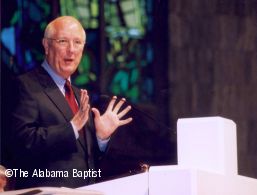
Warren, pastor of the 100,000-plus-member Saddleback Church, Lake Forest, Calif., and author of “The Purpose Driven Life,” “The Purpose Driven Church” and other books, is not as analytical as Marsden. He concludes today’s evangelical church has “cut off [its] hands and feet, and all that is left is a big mouth.” That is one reason many people in the 21st century refuse to listen to the church, he says. The church is all talk and no do.
Such reasoning is behind Warren’s PEACE Plan, which he describes as “doing what Jesus did.” PEACE stands for Promoting reconciliation with God, Equipping servant leaders, Assisting the poor, Caring for the sick and Educating the next generation.
Warren says assisting the poor, caring for the sick and educating the next generation have earned him and the network of churches he leads an opportunity to plant churches and equip servant leaders in nations around the world.
Proclaiming the kingdom of God through both word and deed, as Warren suggests, is a pattern used by Jesus. In Luke 9:2, Jesus sent out the 12 disciples with the command to preach the Kingdom and heal the sick. In Luke 10:9, Jesus instructed the 72 whom He sent before Him to “heal the sick who are there and tell them, ‘The Kingdom of God is near you.’”
Jesus described His ministry with the words of Isaiah the prophet. Luke 4:16–21 describe Jesus announcing that He was sent to “preach good news to the poor … to proclaim freedom for the prisoners and recovery of sight for the blind, to release the oppressed, to proclaim the year of the Lord’s favor.”
Again word and deed go together.
Of these verses, the commentator in the Disciple’s Study Bible, published by LifeWay Christian Resources, wrote, “Jesus’ ministry, anticipated in Isaiah 61:1–2, was addressed to the needs of suffering humanity. He demonstrated what God’s kingdom is. The Kingdom is not pride in prosperity and power. It is helping the needy enjoy life’s necessities. It is not greater wealth for the rich but deserved rewards for the faithful.”
When John the Baptist began to doubt that Jesus was the true Messiah and sent a messenger to question Him, our Lord’s response was “go back and report to John what you have seen and heard: The blind receive sight, the lame walk, those who have leprosy are cured, the deaf hear, the dead are raised and the good news is preached to the poor” (Luke 7:22).
Jesus’ answer was in the evidences of the nearness of the Kingdom as seen in ministry to human hurts.
The New Testament church understood that when people look at the church, they should see the very embodiment of Jesus. That is why the New Testament church evidenced care for the poor as a central concern. Baptists often turn to Acts 6:1–7 as the time of the first deacons. Often overlooked is the concern that prompted the selection of deacons — how to effectively care for the poor.
In Galatians 2:1–10, the apostle Paul successfully defended his ministry. The passage concludes with the sentence “All they asked was that we should continue to remember the poor, the very thing I was eager to do.”
James, the half brother of Jesus and leader of the Jerusalem church, wrote, “Religion that God our Father accepts as pure and faultless is this: to look after orphans and widows in their distress and to keep oneself from being polluted by the world” (James 1:27).
Late in life, John, the beloved disciple, wrote, “If anyone has material possessions and sees his brother in need but has no pity on him, how can the love of God be in him? Dear children, let us not love with words or tongue but with actions and in truth” (1 John 3:17–18).
Words and deeds — they go together in proclaiming the gospel. Together they help show the embodiment of Jesus.
If Marsden is right and evangelicals retreated from ministering to human needs because of fear of theological liberals, then it is time to confess our sin of timidity and reclaim the biblical pattern of demonstrating God’s love in ministry to human hurts as we share the good news of salvation through faith in Jesus.
As Warren says, few will listen to the message of the church as long as it is only a big mouth. Evangelical Christians, including Alabama Baptists, must also be Jesus’ hands and feet.

Share with others: