
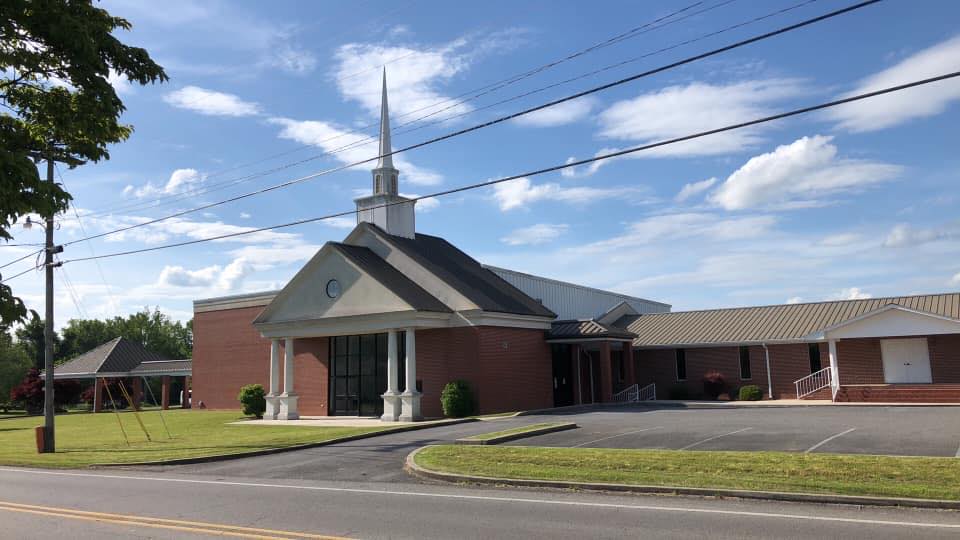
If there was a villain at the 183rd annual meeting of the Alabama Baptist State Convention (ABSC), then it was the weather. Heavy winds and rain, together with tornado watches for the area, cut deep into attendance for the Nov. 15–16 meeting held at Whitesburg Baptist Church, Huntsville.
The event most obviously affected was the International Mission Board (IMB) appointment service held Tuesday evening. As warnings of severe weather increased, so did the number of groups canceling their attendance. No one wanted to be caught on a church bus in the midst of bad weather. Many people remembered 16 years ago to the day when tornadoes struck along Huntsville’s Airport Road killing more than 20 people and doing millions of dollars in damage.
Ironically the state convention annual meeting was being held at Whitesburg Baptist that year, too, and Airport Road is within blocks of the church. A few speakers tried to joke about the date and the weather, but uncertainty kept the jokes from achieving their intended impact.
Huntsville news reports had a long list of canceled events for Tuesday evening. But the threatening weather could not stop the appointment service, and 2,000 people braved the weather to participate in the event. They were not disappointed.
Participants pushed by each other in the foyer of the Von Braun Center to see the displays from more than 30 different countries and talk to missionaries about their work.
A parade of flags led in the 89 new missionaries appointed that evening. Their testimonies told how God called them to missions or how He led them to certain fields of service. The missions challenge by IMB president Jerry Rankin challenged everyone in the auditorium to consider missions service, and some responded during the invitation. The music by the Alabama Singing Men and Alabama Singing Women was excellent.
I have participated in a number of appointment services in the past 25 years. Some were better attended than this one; some had more response than this one, but none was a better service than this one.
Weather also cut into participation in other convention-related events. Only the registration of 53 people during the final Wednesday morning session of the convention pushed the number of registered messengers above the 1,000 mark. The final reported total was 1,006 from 479 different churches. That is a new low for convention messengers in 55 years and makes the last three conventions the three lowest-attended conventions since 1950.
But, again, low attendance did not hinder an excellent convention. Bookends of inspiration were provided by President Henry Cox in his president’s address and John Thweatt, pastor of First Baptist Church, Pell City, in the convention sermon.
In between, messengers adopted a record $42.6 million budget for 2006, elected officers, conducted business and received reports from convention entities, all without a single recorded negative vote.
State Board of Missions Executive Director Rick Lance seemed to speak for all the messengers when he said the annual meeting was characterized by a “splendid, superb and wonderful spirit.”
History will judge the importance of the annual meeting, but one moment has the potential of being pivotal. That was when the messengers unanimously adopted a resolution on racial reconciliation. The topic itself is not new. Alabama Baptists have gone on record a number of times favoring racial equality, justice and reconciliation. This resolution is important because the eyes of the world will turn to Alabama in a few days as the 50th anniversary of the Montgomery Bus Boycott is observed.
Alabama is known as the cradle of the modern civil rights movement. That is something to celebrate. But the conditions that created the necessity for the movement is something to lament. The history of racial difficulties in Montgomery, Birmingham and other parts of Alabama still haunt the nation’s image of our state.
Alabama has changed much in the past 50 years. The state acknowledged its history and faced its problem of racial divide. Progress has been abundant. There are still problems but Alabama is a different place than it was Dec. 1, 1955, when the late Rosa Parks refused to give up her seat on a public bus to a white man.
Alabama Baptists are different, too. The ABSC has been on record for several years as opposing racial injustice and working for racial reconciliation. It was an Alabama Baptist pastor, Charles Carter of Shades Mountain Baptist Church, Vestavia Hills, who in 1995, as chairman of the Resolutions Committee of the Southern Baptist Convention led the national body to “apologize to all African-Americans for condoning and/or perpetuating individual and systemic racism in our lifetime and … genuinely repent of racism which we have been guilty, whether consciously or unconsciously.”
At this convention, messengers voted to “denounce racism, in all its forms, as sin.” Messengers endorsed using the anniversary of the bus boycott as a time to foster unity among black and white churches and pledged to “intentionally seek to destroy barriers of racism and build bridges of racial reconciliation to unify the Body of Christ.”
Jay Wolf, pastor of First Baptist Church, Montgomery, said it well when he remarked, “We are not going to do this because of some judge’s rule but because King Jesus rules.” Amen.
Despite the weather and the resulting low attendance, this year’s annual meeting was a success in every respect. Missions and evangelism remain the heartbeat of Alabama Baptists as evidenced by the missionary appointment service. We work together in Kingdom causes as attested to by the record budget and the positive reports of related entities. When weather seems to be the biggest villain, it is obvious that Alabama Baptists are a united people. It is good to be an Alabama Baptist.

Share with others: