
It’s hardly the goal of most chaplains — but Donna Davis, chaplain of Julia Tutwiler Prison for Women, looks forward to seeing her congregation’s attendance decline. Her prayer is that by exposing the inmates to the power of God’s salvation they will turn their lives around and not become repeat offenders, which — according to statistics — happens all too often.
“The fewer women we have return, the more we know our ministry efforts are taking root,” the 48-year-old member of Eclectic Baptist Church in Elmore Association said.
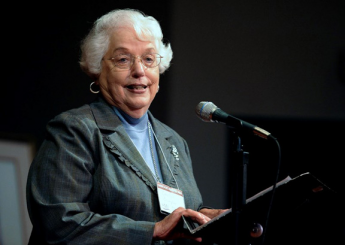
Davis is the only female chaplain in Alabama’s Department of Corrections, and she recently accepted the responsibility of shepherding the 865 inmates at the state’s only institute of incarceration for women. She was ordained by her church in March of this year and she feels her 30 years of volunteering in various areas of church work has been excellent training for her new position.
Davis said she fell in love with ministering to inmates during the four years of prison volunteer work she began in 1996. “I hadn’t volunteered in prison ministry work before this time,” the mother of two said. “I’ve never been afraid,” she emphasized. Davis’ interest in prison ministry grew as her volunteer duties expanded. She began teaching a Bible study for the 24 women in the medical isolation unit who were HIV positive. “I spoke with my medical doctor before I started, and I take precautions, but I’ve never had any fear,” she said.
After the chaplain at Tutwiler moved to another state, Davis said she felt the call of the Holy Spirit nudging at her heart. “I heard God’s voice saying to me, ‘Now is your time,’ and I knew God had been preparing me through my volunteer work.”
Davis’ enthusiasm for her job is evident by her dedication to the many ongoing projects that continue to expand under her guidance. Her staff includes six volunteer chaplains. They are diligent in their efforts to provide opportunities to meet the spiritual needs of the women to whom they minister. And with Davis’ Southern Baptist roots, music is a big part of the prison’s ministry programs.
Two women’s choirs have been established in the last six months — the ‘Celebration Choir,’ which Davis leads, and ‘Voices of Light,’ a choir that specializes in gospel music. There are currently 63 choir members. After a set of handbells were donated to Julia Tutwiler Prison, Davis created a handbell choir and she said there is a waiting list of women eager to participate.
“We presented a wonderful July 4 program,” she said. “One of the inmates used to be a concert pianist and she can play beautifully,” she said. “They are all working hard and looking forward to the big Christmas presentation.”
Although Davis’ ‘ministry plate’ is running over with opportunities for her flock, she maintains her focus on the importance and power of prayer. “We are battling spiritual warfare through prayer. We have 372 inmates committed to our intercessory prayer program — Gideon’s army,” she said.
Davis and her assistant chaplains have started new Bible studies in the dorms, increased the Christian library with books and videos and started a prisonwide newsletter.
Davis and her staff are continuing to set goals for their ministries. She says with the increased interest in spiritual issues, more inmates want to participate in chapel services.
She would love to have enough money donated to have the chapel facility enlarged. “Right now we are conducting two services a morning. We are at capacity seating and people have to sit on the floor or stand around the walls. The chapel is used for so many activities that the carpet needs to be replaced, she explained.
“My dream is to have a baptistry in the chapel. A few weeks ago we had seven women who were saved and wanted to be baptized. We had to bring in a portable baptism pool. So far we have $6,000 in the chapel building fund,” she added.
Davis said her love for her profession was inspired by her mentor, who also happens to be her father, Bill Freeney. He is a retired Baptist pastor who spent 54 years in the ministry. “He set a great example for me to follow,” she proudly said.
Women small part of prison population
According to statistics provided by Alabama’s Department of Corrections, there are currently 1,797 females incarcerated in the state. This number incorporates 865 who are housed in Wetumpka at the Julia Tutwiler Prison for Women (JTP) as well as the 295 who are housed in a Birmingham work release facility.
In addition, 242 women are living at the Edwina Mitchell work release facility located on the campus of JTP. The other 395 inmates are incarcerated in county jails across the state awaiting space availability at JTP.
The total female prison population accounts for only 7 percent of the 25,600 inmates currently in Alabama’s penal system.
The racial mix profile of the female prison population is almost evenly divided. There are 805 white inmates and 991 black inmates.
Only one inmate is profiled under a different race category.
Out of the 1,797 inmates, 443 are listed as habitual offenders. (Persons are considered habitual offenders if they return to prison three or more times.)
Out of the 443 habitual offenders, 265 of them are black and 178 are white. The total number of habitual offenders in the state — both female and male — is 7,381.
According to Donna Davis, chaplain at JTP, there were 100 female prisoners in the state in 1972. “In 30 years that number has mushroomed to over 1,000,” she said.
Statistics provided by Aid for Inmate Mothers (AIM) prison ministry reports the number of female inmates in the state increased by 58 percent during the last nine years. By the year 2005 the Alabama Department of Corrections predicts that the number of incarcerated women will increase by another 38 percent.
The majority of the 90,000 women imprisoned in the United States are there for committing economic crimes. Eighty percent of these women reported an income of less than $2,000 the year they were incarcerated.
Many inmates’ families exhibit a profile of high risk factors such as poverty, substance abuse and domestic violence.
Sixty to 70 percent of inmates had substance abuse problems when they were arrested.
More than 40 percent of them have experienced physical or sexual abuse. Twenty-five percent have been abused by their boyfriends or husbands.
One of the most tragic side affects for a female prisoner is the domino chain of horrors that occurs within her family unit.
Of all the women in Alabama prisons, more than 80 percent of them have children. Many of the inmates are single mothers. This translates to more than 2,000 children being separated from their mothers. These children face numerous difficulties — often undetected and long lasting — that occur during their mothers’ imprisonment.
AIM literature documents a 1993 study that reported “the incarceration of a child’s mother interferes with the child’s ability to master developmental tasks, adversely affects bonding and a sense of security, creates long lasting trauma and may encourage future incarceration.”
The children of incarcerated women are five times more likely than their peers to become incarcerated.
The separation of children from their mothers creates a multitude of ongoing problems such as the loss of their primary caregiver, financial issues and the removal of emotional support.
In addition, these children carry the social stigma of having incarcerated mothers which can on occasion result in physical and emotional harassment from other children.
Perhaps one of the deepest scars is the ‘burden of shame’ the children carry that causes them to feel compelled to lie about their mothers’ whereabouts.
Another emotional issue — often overlooked by the children’s caretaker — is the mourning and grief of losing their mothers as well as concern for the safety of their mothers.
Inmates need Christmas cards
Four thousand blank Christmas cards are needed for Alabama’s female inmates to send to their families during the holidays. And the Birmingham Baptist Association is sponsoring “Operation Holiday Cheer!” to make this happen.
The association is collecting handmade Christmas cards from Alabama’s children who are involved in Sunday School, Girls in Action, Royal Ambassadors, day care and choirs.
These special gifts will be sent to the women at Julia Tutwiler Prison. Children can use their imagination as they create their own cards.
Envelopes are not required. Just have children draw or paste pretty pictures on a card made from construction paper or writing paper.
Have them include a message, sign their first name and give their age.
Bring or mail the cards to Birmingham Baptist Association, 2501 12th Ave. North, Birmingham, AL 35234 no later than Nov. 27.
For more information, contact Mary Thomas at 205-853-1222. (TAB)
AIM helps inmate moms
A stilt-legged lookout tower that harbors uniformed guards and a treeless yard encased by a chain-link, barbed-wire-laced fence is not the typical setting for a Girl Scout troop meeting. But none of the 18 members of Troop 821 seem to care — they’re just excited to be sharing a part of their childhood with their mothers, who happen to be inmates at Julia Tutwiler Prison for Women (JTP) in Wetumpka.
This unique, one-year-old Scout troop, whose members range in age from 7 to 12, was made possible because of the diligent efforts of Aid for Inmate Mothers (AIM), a nonprofit organization whose sole purpose is to assist incarcerated women in Alabama. AIM is comprised of more than 100 statewide volunteers who have worked relentlessly for the past 13 years to bring hope, happiness and dignity to Alabama’s 1,000-plus female inmates. AIM, one of only a dozen such programs in the country, caters to the needs of female prisoners who have problems that are seldom found within the male inmate population.
For instance, because of the high percentage of single mothers who are incarcerated, the family unit — more times than not — is disrupted and children are displaced to extended family members or foster care. This situation is less likely to occur if the father is imprisoned. The resettling of the mother’s children into the care of others often results in limited visitation with her children — mainly due to transportation challenges.
Realizing this was a prevalent issue for JTP inmates, AIM took on the responsibility of coordinating statewide transportation arrangements through the volunteer efforts of churches who provided vans and drivers for a once-a-month visitation on the grounds of JTP. The first trip included 15 children. Now, with more than 1,000 trips logged to date, an average of 125 children from across the state travel each month to Wetumpka to see their mothers. AIM provides a picnic lunch served in the yard area around the chapel where children and mothers can visit and play with donated toys.
AIM also provides birthday presents for the mothers whose children celebrate birthdays during that month.
According to AIM’s executive director Carol Potak, these monthly visits are the only way many inmates are able to see their children. “So many times the grandmother is the custodian of the children and she may have children of her own still living with her. The cost and burden of traveling a long distance and having reliable transportation make it difficult — if not impossible — for many relatives to bring these children for visitation,” she said. After the visitation, AIM holds a mothers’ forum for the inmates to discuss their visit and any issues relating to their children.
Another successful program started two years ago and one that is hugely popular with mothers and children alike is the storybook project.
The premise is simple. Once a month a group of AIM volunteers spend half a day with inmate mothers and grandmothers who have signed up to participate in the project. They are allowed to choose an age-appropriate book for their child and with the assistance of the AIM volunteer, they read the book into the recorder, interjecting page-turning directions, a brief greeting and a closing.
“Mommy misses you and loves you very much,” says the mother of two daughters 7 and 9, as she makes a recording. “I’m going to read you a book to let you know that I love you.” She then begins a book about a child’s new shoes, her visit to grandma’s and the kindness of others.
After the session, AIM personnel take the books and the tapes and mail them to the children.
Early in the program AIM developed an inmate board that consists of a representative from each prison dorm. The board meets once a month and makes decisions about visits and activities on behalf of all of the prison’s 650-plus mothers.
As one 37-year-old inmate who has served four years of a 20-year manslaughter sentence put it, “I don’t know what I would have done without the help and support of AIM,” she said.
AIM programs need volunteers, donations
CHURCH VANS AND DRIVERS: There is a need for volunteer church vans and drivers to bring children to the once a month children’s visitation at Julia Tutwiler Prison for Women (JTP) in Wetumpka. This is a statewide need (especially in the Mobile area) and many children have to be put on a waiting list because there are not enough vans to drive them to Wetumpka.
STORYBOOK PROJECT: Volunteers are needed in assisting mothers in selecting and reading a bedtime story into a tape recorder. Volunteers help the mothers choose appropriate books for their children’s age and then operate the recorder during the reading.
SPONSORS: AIM needs sponsors to “adopt” a child of an inmate, take him or her on special outings, provide school supplies or any little “extras” that can be donated.
PRISON VISIT SPONSOR: A $100 donation will sponsor one child’s visit for a year.
SPONSOR FOR LUNCHES: Money is needed to provide lunches for the women and children during the monthly visitation. Hot dogs and cookies are usually served but AIM will accept food donations or arrange for a sponsored McDonalds lunch.
HOLIDAY LUNCH SPONSORS: AIM serves a special holiday lunch for the Thanksgiving and Christmas visits and monetary and/or food donations are needed.
CHILDREN’S BOOKS: AIM needs donations of new paperback books that will be sent along with an audio cassette tapes for the mother to record the story. The books need to be for children between the ages of 1 and 12.
FURNITURE AND HOUSEWARES FOR RELEASED MOTHERS: Donations of new or used furniture are needed to help women set up housekeeping after their release from prison.
TOYS AND GAMES: Large toys such as balls, hula hoops, nerf balls with bats, playing cards, dominoes, Uno, SkipBo, jacks, Twister, elementary workbooks, coloring books, crayons, pencils and construction paper are needed and will be used during the children’s monthly visitation.
(No Pla-Doh or clay is allowed.)
BIRTHDAY GIFTS: Volunteers are needed to provide birthday gifts for the children of inmate mothers during the once-a-month birthday celebration. The prison allows AIM to bring in the presents so the child can open them with their mothers. Volunteers can adopt a month of birthdays (usually seven or eight gifts) or just donate a gift. Gifts should be kept to $10 per child.
Contact: Carol Potak, executive director, 334-262-2245
Baptists involved in prison ministries
The Alabama Baptist State Board of Missions (SBOM) provides training, support and guidance in the development of prison ministries for Baptist churches across the state.
Ray Baker serves as the correctional ministry coordinator under the office of Christian ethics and chaplaincy ministries at the SBOM. His duties involve anything from giving weekend seminars to churches or associations on how to establish a prison ministry to assisting prison chaplains with programs and projects. Baker serves as a liaison between prison chaplains and Baptist churches or individuals who wish to offer assistance or get involved in prison ministries.
Baker said there are a multitude of needs churches can assist with — from chapels that need repairing to the building of additional ‘faith based’ dorms for many of the state facilities. Baker said individuals can volunteer their service in areas such as tutoring inmates, teaching chemical dependency and parenting classes, conducting Bible studies, etc.
Another avenue of prison-related assistance by the Alabama Baptist Children’s Homes and Family Ministries (ABCH) is the foster care or residential home placement of children of incarcerated parents in need of temporary or long-term care.
According to ABCH executive director Paul Miller, “The Alabama Baptist Children’s Homes conducted a seminar last summer for foster parents who care for these children so they could better understand the children’s special needs.
Baker urged churches, associations and individual church members across the state who are interested in getting involved in prison ministries to attend the prison ministries conference, “The Cross Is the Key” Nov. 3-4 in Birmingham.
Prison ministry brings rewards
It’s been more than a decade since Carol DeVore, a member of Hueytown United Methodist church, first got involved with volunteering with prison ministries. She faithfully helps organize the transportation arrangements for the children of inmate mothers who live in the Birmingham area. DeVore, along with other area church volunteers, rotate driving their church vans for the once-a-month journey of reuniting mothers with their children.
“It touches my heart to hear the children get excited the closer we get to Wetumpka,” DeVore said. “They start wiggling and talking and I hear them telling each other, ‘It won’t be long now — we’re almost there.’ They know they’re going to get to see their mamas,” she said. “I’ve watched some of these kids grow up. We’ve been driving one boy for 10 years. The youngest child we’ve taken was an 8-month-old who was staying in foster care,” she said.
“Something just told me that I was going to help out in Julia Tutwiler” (women’s prison in Elmore County), said Charlotte Volument who lives in Notasulga where her husband is pastor at Mt. Calvary Primitive Baptist Church. She was looking for volunteer opportunities on the Internet and came across the AIM listing and saw they had programs at the women’s prison. She now volunteers one Saturday a month to assist in the Storybook Project for inmate mothers. She has found the experience so rewarding that she has recruited two other women at her church to donate their time.
Volunteer Lynne Pickering of Montgomery has been volunteering at JTP for six months and recently brought her daughter, a college student, with her.
“It really shocked her to see how appreciative and friendly the inmates were. It totally changed her stereotype of what she thought women in prison were like,” she said.
As one inmate who will be released in November 2001 put it, “We love all of the volunteers who come here to help us. When they first come here they are afraid of us but they learn to love us just like we love them.” And perhaps the best gift an inmate can give to those who helped her during her trying times of incarceration is to not return to prison.
It took three attempts before Deberah Daniels accomplished that goal. Daniels, who now serves as the state program coordinator for Prison Fellowship Ministries, wanted to help the women still in prison. After becoming a Christian during her last jail term, her life experienced one miracle after another.
Although she is the first to admit that her problems did not go away and her trials and tribulations were many, the former inmate is now enjoying a relationship with her three children, a happy marriage and gainful employment. And most importantly — she is sharing her journey of salvation with the very ones who need to hear it. “Before I was offered this job I came to Prison Fellowship as a volunteer to give back a portion of what was given to me,” she said.
Conference seeks church involvement
The need for church involvement with prison ministries — during and after an inmate’s incarceration — will be the focus of Alabama’s first annual prison ministries conference, “The Cross Is the Key.”
The two-day event will be held Nov. 3–4 at the Metropolitan Church of God in Birmingham.
This nondenominational hands-on seminar has the governor’s and attorney general’s approval and is being spearheaded by Alabama’s commissioner of corrections, Mike Haley.
“Governor Siegelman supports this issue so strongly that he will be one of the conference’s featured speakers,” said Haley.
Keynote speaker for the event will be Paul Carlin, a nationally known prison evangelist from Crockett, Texas, who holds a doctorate in theology.
Carlin has been referred to as the “apostle Paul of prison ministry,” — a reflection of his 22 years of work in the field. He and his wife, Jeri, are founders of numerous prison-related ministries including the Prisoners Bible Institute and the faith-based therapeutic treatment model, Belief Therapy.
Carlin’s expertise in the field comes, in part, from personal experience. A portion of his testimony deals with his own incarceration in a Texas federal prison.
There are currently 25,600 inmates in Alabama’s state prisons at a yearly cost to taxpayers of $235 million. Many of these prisoners are repeat offenders.
“Our hope and desire is to get churches across the state to join forces and help develop some strong and effective after-care programs for inmates after they are released. All the state gives them (prisoners) when they are released is $10 and a one-way bus ticket to the county where they were sentenced,” said Haley, an ordained Baptist minister who is a member of First Baptist Church, Prattville.
“Church-based after-care programs could foster a much-needed ministry that could make an impact on keeping some of these prisoners from becoming repeat offenders,” Haley said. “Every inmate is looking for the key to turn their life around and we need to show them through ministry that Jesus is that key,” he added.
The conference begins Friday morning and concludes Saturday evening. In addition to guest speakers, there will be workshops on prison ministry-related topics such as criminal recovery and relapse prevention, the mentoring program and the role of the local church in prison ministry.
The Metropolitan Church of God is located off Rocky Ridge Road at 2800 Metropolitan Way in Birmingham.
For more information on the conference, call 334-353-3870 or the Metropolitan Church of God at 205-978-9776.

Share with others: