
Religious liberty has gained a higher profile in the United States and other countries during the last five years even as global persecution persists, members of the U.S. Commission on International Religious Freedom (USCIRF) said in presenting its fifth annual report May 12.
The USCIRF, a bipartisan panel of nine members, reported on its work during the last year and provided an analysis of the status of religious freedom in various countries.
Members of the commission — which was established by a 1998 law as an independent body to advise the White House and Congress — can see results from its work, some said at a Washington news conference.
Higher profile
USCIRF Commissioner Richard Land said he thinks “there’s no question that this issue is far higher on our government’s radar screen and the radar screen of other governments around the world because of the existence of this commission.”
For one thing, the International Religious Freedom Act’s requirement of the State Department to issue a yearly report on religious freedom has transformed some of the work of U.S. diplomats, said Land, president of the Southern Baptist Ethics & Religious Liberty Commission. “What’s been the result is there has been the development of a significant cadre of career diplomatic corps officers who have been sensitized and made aware of this issue and of the abuses that are taking place around the world in a way that was not prevalent prior to 1998,” he said. “[T]hey are listening to us, and they are listening more as they become more sensitized to the problem.”
The USCIRF is grateful for the response of the American government, even though it would like it to follow the panel’s recommendations thoroughly, said Michael Young, chairman of the commission.
“No, the U.S. government is not listening to us as much as they should. … [B]ut we have appreciated the extent to which this issue has been in the forefront of some actions of the U.S. government both in this administration and the prior administration,” Young said.
Developments in Sudan as a result of pressure from the United States and the willingness of President Bush and other officials to raise the issue of religious freedom on visits to China are examples of such actions, Young said.
Repression increasing
The global need to combat religious persecution is growing, Land said. “My impression as a commissioner — and I’ve been serving three years now — is that the situation is getting worse, not better,” he said.
The USCIRF reiterated the countries where persecution of religious adherents remains severe.
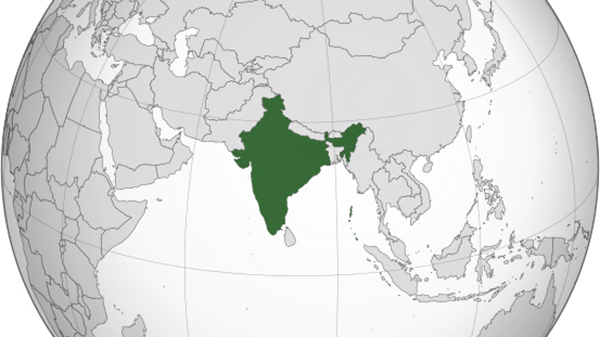
It repeated its February recommendation to Secretary of State Colin Powell that he re-designate Burma, China, Iran, North Korea and Sudan as “countries of particular concern” (CPC), a label reserved for the worst violators of religious liberty. The panel reinforced its recommendation of the addition of Eritrea, India, Pakistan, Saudi Arabia, Turkmenistan and Vietnam to the CPC list.
Communist and Muslim-controlled governments largely, but not totally, comprise the world’s most severe violators of religious freedom.
Not all Islamic states are repressive, said some commissioners. Focusing on Islam alone would be a diversion from “something very central,” said Young, dean of George Washington University’s law school.
“What we are concerned about is people within those traditions who may use those arguments that they derive from a religious basis or any other ideology and use those as justification for intolerance and repression of others. It is not in any way unique to the Islamic world.” (BP)
Share with others: