
Anglo Christians need to understand one thing if they want to reach Hispanics with the gospel. It’s spelled r-e-s-p-e-c-t, according to Gus Reyes, ethnic evangelism consultant with the Baptist General Convention of Texas.
Richard Alford, who works with language missions among Alabama Baptists, agreed. “Respect is very important because we are building trust to bridge across cultural and nonevangelical backgrounds,” he said. “People have to learn what it means to have Jesus Christ as their personal Savior, not just being a member of a church.”
Reyes said, “Saving face is a huge issue in the Hispanic culture. Never challenge a Hispanic person in public, never. When we embarrass someone publicly, we’re telling them they are not important.”
Reyes, who spoke during a seminar at the Texas Evangelism Conference Jan. 27–28, identified four distinct Hispanic cultures in the United States: first-generation immigrants; bicultural people with “one foot in and one foot out” of their culture of origin; individuals who have been assimilated into mainstream Anglo culture; and an “emerging culture” that has been assimilated but is deciding which elements of Hispanic culture and which elements of mainstream Anglo culture it wants to claim.
While the distinctive traits of Hispanic culture are most clearly evident among first-generation immigrants, they also are present even among the most assimilated individuals, he noted.
Hispanic culture values hierarchy, titles and formality, while mainstream Anglo culture in the United States is more egalitarian and informal, Reyes observed.
A pastor visiting an Anglo family might dress informally, call members of the host family by their first names, and invite them to address him by his first name, thinking that would be a way to remove barriers and make everyone feel at ease, he noted. But a Hispanic family would interpret the lack of formality as a lack of respect, and they would feel ill at ease calling a minister by his first name.
Hispanics tend to communicate indirectly rather than directly in order to avoid embarrassing themselves or anyone else, Reyes explained. “More is said than is actually said.”
Unlike the “get to the point, don’t waste my time” mainstream American culture, Hispanics value context and relationships above time and tasks. First-generation Hispanics, in particular, “see Anglos as being slaves to time,” and they want no part of that bondage, he said.
“The Hispanic person won’t say it, but he’s thinking, “Don’t look at your watch when you visit me. If you are in a hurry, you don’t have time for me. Don’t even bother,’” Reyes said.
“Be flexible. Relationships are more important than starting on time. The party begins when we get there, and it usually lasts longer than you expect.”
While mainstream Anglo culture values individualism and independence, Hispanic culture is “one for all and all for one,” he said.
The appropriate question to ask in greeting an Anglo may be, “How are you?” But Reyes said the right question to ask a Hispanic is “How is your family?” And that means the extended family. (ABP)

DR teams mobilize in wake of Pickens Co. tornado
Disaster Relief (DR) teams from several associations converged on Pickens County on Feb. 3 not 24 hours after a large
Former national WMU executive director dies at 84
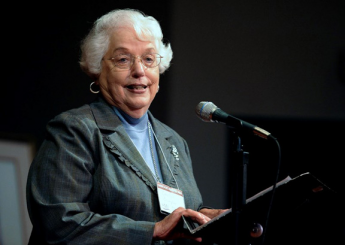
Carolyn Weatherford Crumpler’s desire to dedicate herself to Christian service is one that lasted until the day of her death
First Baptist Church, Union Springs, Heart of Missions
About 30 members from First Baptist Church, Union Springs, and other area churches will travel to Caruthersville, Mo., July 19–26
Teen girls learn about missions at Complete
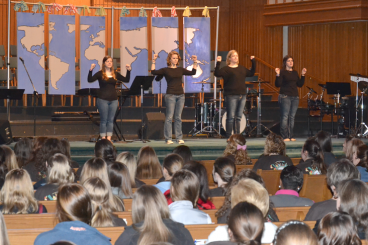
The sent life is not the safe life. That was the message driven home to nearly 500 teen girls and
Share with others: