
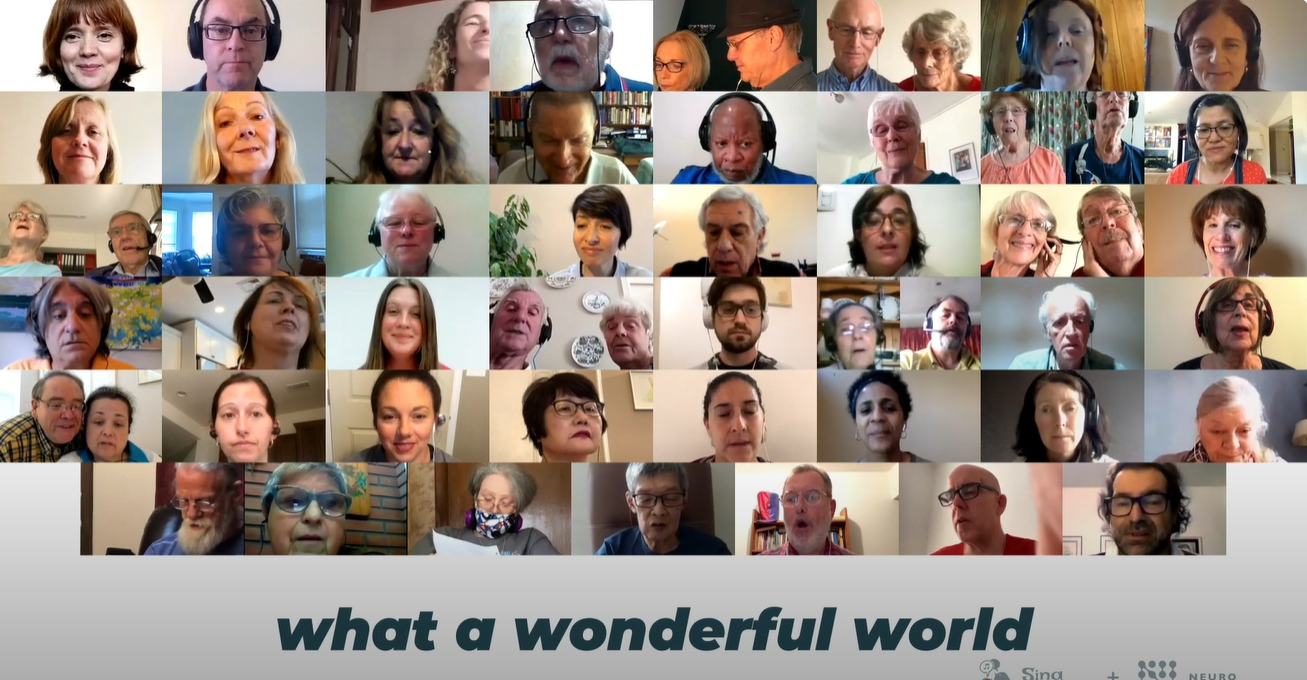
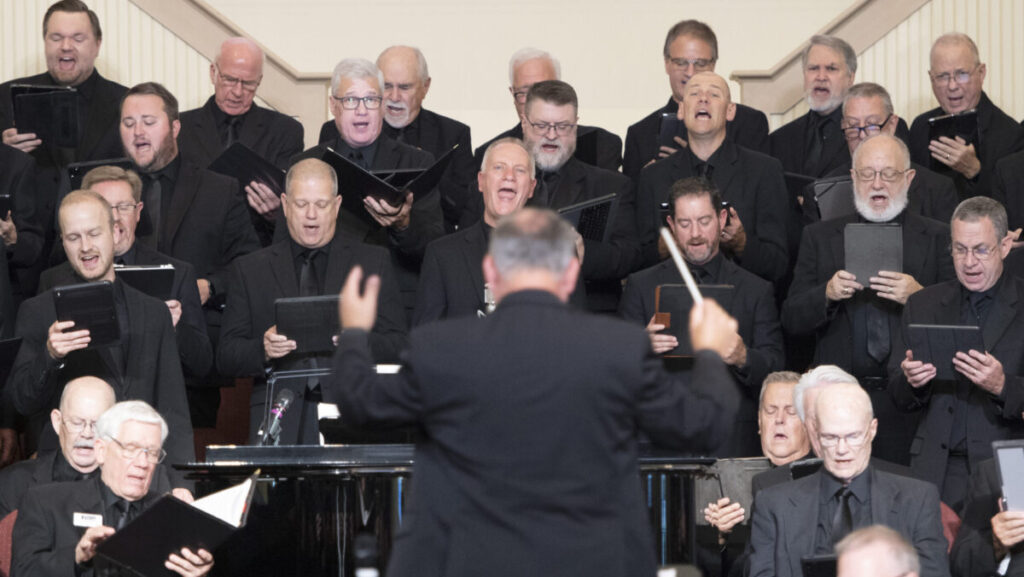
These days, Sid Burgess has trouble communicating his thoughts verbally due to aphasia, but the longtime pastor’s mind still echoes with familiar church music — which is why Samford University’s new Words of Worship, or WOW, Choir caught his attention.
“I was stunned when I saw that folks at Samford were organizing a choir for people with aphasia; that is, for people like me,” said Burgess, a 1971 graduate of Samford. “Typical of an aphasia person, I cannot remember the names of any of those good people, but I do remember they said we could look forward to singing familiar old sacred songs like ‘All Hail the Power of Jesus’ Name.’”
Subscribe to The Alabama Baptist today!
SIGN UP for our weekly Highlights emails.
Aphasia is an acquired language disorder caused by a brain injury, including stroke or infection. It’s often called an invisible disability because there are no outward signs of the condition despite the significant impacts it has on a person’s daily life and activities.
WOW is a project of Samford University’s Department of Communication Sciences and Disorders, whose practitioners serve those with aphasia among other conditions. The project seeks to explore how individuals living with aphasia can better engage with their faith and how churches can be more inclusive of those with communication disorders.
The WOW Choir, also called the Samford Aphasia Choir, is a big part of the project.
Foundation
Karen Flynn, professor in the department and one of the founders of the choir, said there are many aphasia choirs around the world, but WOW is the first she knows of with a faith-based foundation.
Flynn said the idea for the choir began with Samford assistant professor Kelly Jackson, who teaches the department’s course on aphasia. Flynn, department chair Angie Barber and Bryan Gill, director of Samford’s Office of Faith, Learning and Vocation soon got onboard.
They all recognized that while the concept of an aphasia choir was not new, Samford was in a unique position to incorporate faith into the effort. Gill helped expand the project into an interdisciplinary, campus-wide effort involving more students, Flynn said, and they began planning the choir’s launch.
Individuals who experience aphasia don’t fit into neat categories, Flynn said, but common difficulties include word retrieval, reading, forming sentences or understanding complex language.
“They can’t speak. Maybe they can’t understand what’s being said during a service. And so socially, they tend to become isolated,” she said. “One thing we know that’s critical about faith is that it helps just in overall healing and well-being, so having the ability to participate helps them have a connection to their faith community.”
Providing an outlet
The goal of the WOW Choir is offer an alternative, Flynn said — “to provide an outlet for people with aphasia to engage with and express their faith through music in an environment that supports their unique communication needs.”
The music for WOW will be adapted to meet the needs of each person who participates, Flynn said. And those who lead the choir will use a variety of methods to help with communication, including visual aids for song lyrics, gestures and facial expressions.
Choir members also will get understanding and time, something individuals with communication disorders don’t often find in other group settings.
Organizers hope an offshoot of the project will be the opportunity to educate the community, including faith leaders, on the unique challenges of aphasia and how best to support those who have it.
Flynn said the choir’s adapted music can be shared with churches and the project will champion inclusive practices, helping ministers better engage those with communication disorders in church activities.
Even more important, the choir will be an outlet for those with aphasia and their caregivers to gather together to sing, fellowship and show others how music can be healing force in challenging circumstances, Flynn said.
The Samford Aphasia Choir is free to participants, and no previous choir or music experience is needed to join. Virtual options also will be available, Flynn said. The pilot phase of the project is set for this fall with the hopes of hosting the first concert in the spring.
For more information, contact SamfordWOW@samford.edu.



Share with others: