
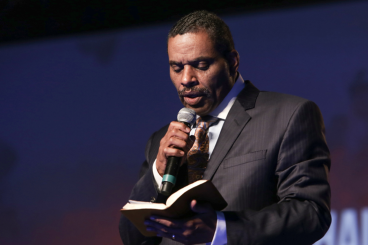
Twenty years ago Southern Baptists repented “of racism past and present” and officially apologized to all African Americans. The apology was made in the form of a resolution at the 1995 Southern Baptist Convention (SBC) annual meeting in Atlanta.
Last week at the 2015 SBC annual meeting in Columbus, Ohio, messengers received a report on progress made in the denomination’s efforts in racial reconciliation since that apology. They also learned that 16 percent of new trustees and board members in SBC life were non-Anglo.
Overall the consensus was that positive progress has been made but more is needed.
“I’m pleased with the efforts made by the convention to be more inclusive,” said John King, church and community relations specialist for Birmingham Baptist Association. “I appreciate the intentionality on the part of the leaders to celebrate the diversity and reach out to all races and ethnicities. While there is room for improvement, it is a sign of progress.”
More diversity
Rosevelt Morris, senior associate pastor of Sixth Avenue Baptist Church, Birmingham, said he has been attending the SBC annual meetings since 1998 and noticed a lot of the same people leading year after year. “We have too many people that are a part of this convention … (to see) the same faces over and over leading in various ways,” he said.
But this year was different. “I have never seen as many African Americans, Hispanic Americans, Native Americans and Asian Americans on the stage at one time since I’ve been coming to the SBC,” he said. “It is my hope that we utilize many more people that make up this diverse and growing convention.”
Morris’ suggestions will now be easier to track following messengers’ approval of the motion made June 16 by Alan Cross, pastor of Gateway Baptist Church, Montgomery. His motion commended the SBC Executive Committee’s (EC) printed progress report on race relations.
Cross actually came up with the idea for a 20-year report in 2014 and made a motion to messengers at the SBC annual meeting in Baltimore to that effect. The motion was referred to the EC and a task force was named to prepare the report.
“The report tells us where we were, how far we’ve come and how far we can go,” Cross said when speaking for his motion on the convention floor. “By commending this report, it can be information for our nominators going forward.”
In an interview with The Alabama Baptist following the annual meeting, Cross said he wants people to think about the trustee nomination process differently.
Instead of thinking about people they know, he wants those serving on the Committee on Nominations (CN) to think about people they don’t know.
“Is there an African-American brother or sister who has not served before? … Think about it differently,” he said, noting items 3, 4 and 5 under the report’s Summary and Findings section.
Item 3 deals with CN members developing a list of nominees that reflect intercultural diversity.
Item 4 requests a public report of the racial and ethnic composition of the CN and Committee on Committees each year.
Item 5 suggests that publications like The Alabama Baptist help report what God is doing through the ministries of SBC entities and highlight participation of ethnic churches and church leaders.
The emphasis to further diversify SBC boards and committees ultimately pushes the gospel forward, Cross noted. “This stands to get more people involved in SBC, which leads to increases in ownership, giving, missions and reaching America and the world. That’s really my goal.
“I want to see different ethnic groups [unifying together] so the gospel can go forward,” he said. “The leadership is taking this issue very seriously and trying to facilitate change.”
Share with others: