
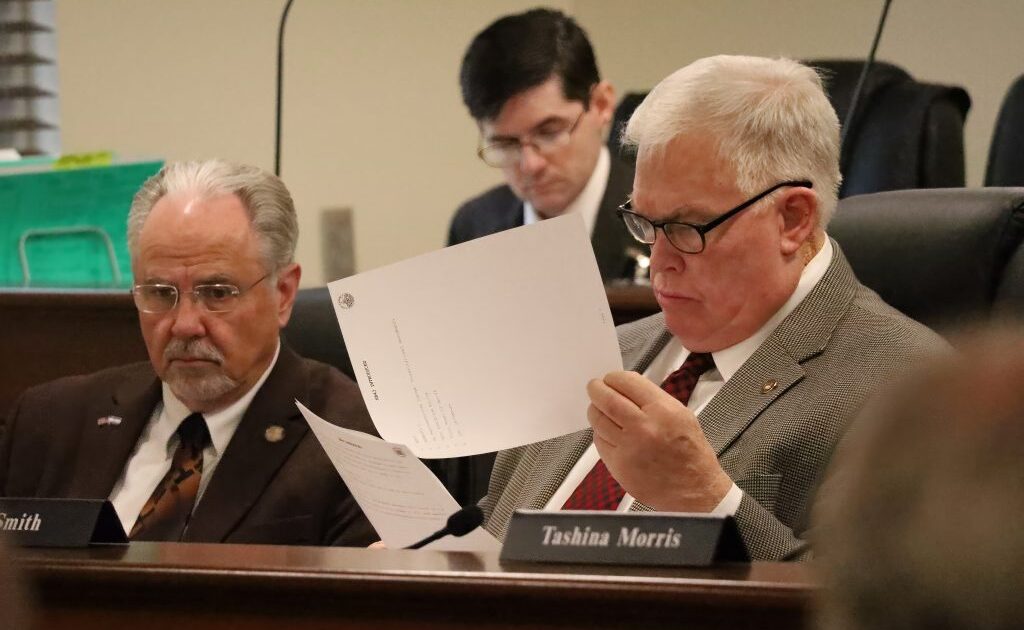
A proposed constitutional amendment requiring local school boards to vote on allowing voluntary prayer in public schools failed to advance Wednesday (Feb. 25) after a pointed debate in the House Education Policy Committee.
House Bill 43, sponsored by Rep. Reed Ingram, R-Pike Road, would place on the November ballot a constitutional amendment requiring all K–12 public schools to conduct the Pledge of Allegiance daily. It also requires local school boards to vote within 90 days on whether to permit voluntary prayer or devotional readings in schools.
Subscribe to The Alabama Baptist today!
SIGN UP for our weekly Highlights emails.
Because the proposal is written as a constitutional amendment, it would require approval by Alabama voters before taking effect.
The bill requires school boards to take a formal vote on the prayer policy, even if they choose not to allow it, and allows the state to withhold up to 25% of a district’s state funding if it fails to take the vote or conduct the pledge.
Current law already requires the Pledge of Allegiance daily but does not include a penalty for noncompliance.
Before debate began, the committee adopted an amendment removing references to the Bible and eliminating a requirement that schools collect permission slips or track student participation.
Ingram said the bill would require school boards to take a clear position on prayer and stressed that participation would be voluntary.
“It gives the schools the option to put it back into the classroom,” he said.
Debate
House Minority Leader Anthony Daniels, D-Huntsville, questioned whether the proposal addresses academic priorities.
“When are we going to stop?” Daniels said. “This has nothing to do with improving the quality of education. … It has nothing to do with raising science scores or reading scores.”
Daniels called the proposal “purely political,” saying it seeks to appeal to a particular base of voters.
Ingram disagreed.
“I think putting God in their life is really helping them,” he said.
The funding provision drew concern from lawmakers in both parties. Rep. Barbara Drummond, D-Mobile, questioned who would be affected by clawing back funding.
“The clawback here is taking money from the children who we’re trying to educate,” she said.
Rep. Alan Baker, R-Brewton, also expressed concern about tying state funding to compliance with the measure.
After debate, a voice vote was taken. Committee Chair Terri Collins, R-Decatur, said she did not believe she heard enough ayes to advance the bill and asked Ingram to continue working on it before bringing it back.
EDITOR’S NOTE — This story was written by Trisha Powell Crain and originally published by Alabama Daily News.


Share with others: