
By Sondra Washington
Alabama courts have become the last stand for the state’s slot machine gambling industry commonly called electronic bingo.
Since Gov. Bob Riley declared war on illegal gambling and state legislators did not pass a bill legalizing casinos, many of these multimillion-dollar businesses have found themselves in the crosshairs of state law enforcement officials. Although John Tyson, commander of Riley’s Task Force on Illegal Gambling, claimed victory with “100 percent” of the state’s “slot machine” gambling operations closed at press time, gambling supporters are not going down without a fight.
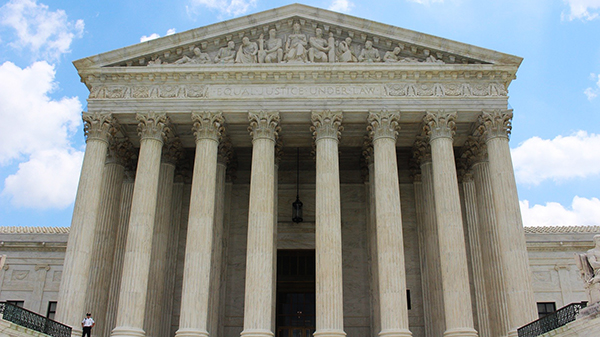
Shortly after this year’s legislative session ended, the task force threatened to raid facilities operating what it considers illegal slot machines. Almost immediately, some facility owners filed lawsuits against the task force attempting to ban its entry. Although several local judges issued one restraining order after another against the task force, Alabama’s Supreme Court has repeatedly ruled against their actions, stating that local judges cannot interfere with law enforcement activities.
Most recently, the high court “struck down” several restraining orders issued by Greene County Circuit Judge Eddie Hardaway Jr., who prohibited the task force from entering or raiding Greenetrack casino in Eutaw. When Hardaway continued to issue orders contradicting the Supreme Court’s ruling, the justices removed him from the case July 1.
According to their order, reassigning the case to another circuit judge was “advisable to preserve the appearance of justice.”
Riley called the Supreme Court’s action a “decisive victory” for the task force.
“No one is above the law, and [the] ruling from the Supreme Court reaffirms this basic principle of our state and our nation,” he said. “By removing Judge Hardaway from this case, our highest court has sent a message out loud and clear — no longer can casinos in this state run to their favorite local judges to try and stop law enforcement officers from enforcing the law.”
On July 1, about 900 machines were seized from Greenetrack, but not before 17 gambling supporters — including Greenetrack CEO Luther “Nat” Winn; Sen. Bobby Singleton, D-Greensboro; and two county commissioners — were arrested for attempting to obstruct the raid. At a hearing Aug. 11, a district judge threw out all the charges after District Attorney Greg Griggers reportedly said he was not given the information necessary to prosecute the case. Tyson disagreed and said Griggers had all the information he needed since the Supreme Court cleared the way for the task force to enter and raid Greenetrack.
Winn also was charged with striking a female law enforcement official with his vehicle as she tried to prevent him from entering the raid scene but that charge was dismissed.
At press time, a Greenetrack employee said the facility had reopened offering “simulcast horse and dog racing,” and will provide “paper bingo games” on the weekends.
A similar ruling was expected in Macon County after Circuit Judge Tom Young refused to follow the Supreme Court’s orders clearing the way for the task force to raid VictoryLand casino in Shorter. Like Hardaway, Young continually has passed restraining orders against the task force.
At one point, Riley’s communications director, Jeff Emerson, called Young’s actions a “temper tantrum.”
“It is ridiculous that a local judge continues to defy our state’s highest court,” Emerson said.
But hours before the casino’s lawyers were due to respond to the Supreme Court about the task force’s latest request to raid the 6,000-machine facility, VictoryLand voluntarily closed its doors Aug. 9. Tyson believes this action was taken because the facility’s supporters “could not risk another adverse ruling from the Supreme Court.”
On Aug. 11, after the Supreme Court refused to allow the task force to immediately raid VictoryLand, gambling supporters claimed success. Yet Tyson said the Supreme Court denied the task force’s request “without any explanation.” He said if the facility tried to reopen, then his team would go back to its plans to raid it.
In an explanation to the press, owner Milton McGregor called the task force’s actions “legal shenanigans” and an attempt at publicity “before [it] is disbanded.” Both gubernatorial candidates — Republican Dr. Robert Bentley and Democrat Ron Sparks — have said they will disband the task force upon entering office.
Many legal experts and gambling opponents across the state believe the barrage of lawsuits and restraining orders concerning Greenetrack and VictoryLand are efforts to stall task force raids in hopes of remaining open throughout the upcoming elections.
“It’s their efforts to try to stay open,” said Eric Johnston, a Birmingham attorney who has fought the expansion of gambling in Alabama for several years. “It doesn’t cost much on the scale that they make to pay lawyers to file lawsuits and be in court and get injunctions. When you’ve got local judges giving temporary relief … that’s money well spent to pay those lawyers to do that. … It becomes the cost of doing business just like paying people to clean a building or bring in food.”
Still McGregor maintains that his machines are legal and expressed sadness over the loss of “critical services” provided by the 60 Macon County charities “funded by bingo revenues” including schools, volunteer fire departments, public safety and programs for the needy.
“The system of government in our state has broken down,” he said, referring to Riley and his task force. “To the two candidates for governor, we look forward to the day that common sense and the rule of law reign supreme and not the will of just one dishonest man.”
Yet a June 30 federal court ruling found that “McGregor and VictoryLand profited sizably from electronic bingo,” making more than $162 million in 2008 but giving less than 1 percent of that to charities. Plaintiffs in this case accused McGregor and Macon County Sheriff David Warren of conspiracy and bribery in interfering with a competing business’s plan to open another gambling facility in the county.
According to Alabama’s Constitution, bingo games are allowed for charitable purposes only.
“All this talk of how VictoryLand is giving so much money to charities is an illusion, and this federal court ruling completely shatters that illusion,” Riley said. “VictoryLand is nothing but an illegal scheme to enrich Milton McGregor and his cronies, and this federal court ruling lays that out for all to see.”
At press time, VictoryLand had reopened, offering simulcast greyhound and thoroughbred racing.
While the task force is advancing in its standoff against gambling in Greene and Macon counties, law enforcement agencies are still battling gambling in other areas.
On Aug. 4, Alabama Bureau of Investigation agents raided four Fultondale businesses housing about 60 illegal slot machines. Last year, Jefferson County District Attorney Brandon Falls warned businesses in his jurisdiction to close any illegal gambling operations or face raids and potential criminal charges.
Walker County sheriff’s officers raided five facilities in their area, seizing more than 150 gambling machines in July. Last October, Circuit Judge Robert Vance ruled the county’s electronic bingo games illegal and ordered businesses offering the games to shut down immediately.
For the next eight weeks, The Alabama Baptist will provide an in-depth look into the form of gambling known as electronic bingo in Alabama. The Alabama Baptist has written numerous, national award-winning stories on gambling. To read past stories, visit www.thealabamabaptist.org. Click on “Moral & Ethical Issues” on the left-hand side of the home page and then click on gambling at the bottom of the list of topics under that category.



Share with others: