
James Walters learned rhythm as a child by dancing to bluegrass music with his brothers on the front porch of their Tuscaloosa County home.
He now keeps time at Spring Hill Baptist Church, Fayette, in Sipsey Baptist Association as song director. It’s a job Walters volunteered for in 1967 when Talmadge Sudduth, Spring Hill Baptist’s former music minister, passed away.
"We have a small church, and it was [kind of] just given to me then," Walters said. "I was a younger feller and I took it and I’ve had it ever since."
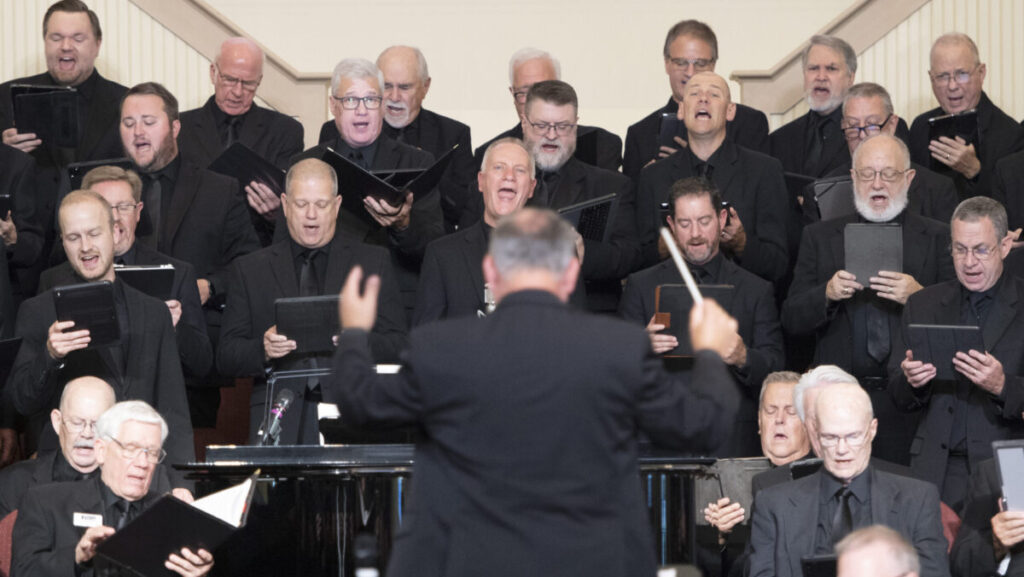
And he is just one of literally thousands of Alabama Baptists who lead Sunday worship on a part-time or volunteer basis, many times minus compensation or formal music training.
According to Keith Hibbs, director of the office of worship leadership and church music for the Alabama Baptist State Board of Missions, only about 300 of the state’s more than 3,000 Baptist churches maintain a full-time staff position with "music" or "worship" in the title.
"Consequently the other approximately 90 percent have some type of music or worship leadership that is either part time, bivocational or volunteer," Hibbs said.
What are the determining factors? According to Hibbs, "size and money."
He said there are a variety of ways smaller churches cope with leading worship.
They often recruit the band or choral director of a local high school or sometimes someone in the church who has some kind of music background from coming up through the gospel quartet ranks to singing with the family.
This describes Walter’s experience to a tee. This second place winner in the senior division of the McFarland Mall Fiddlin’ and Bluegrass Contest held in February in Tuscaloosa grew up singing with his family at home.
"I don’t know a note in music, but if I hear the tune, I can sing it. And that’s the way I’ve been all my life," he said. "And I know just about all those songs."
"Those songs" are the ones found in the Baptist and Broadman hymnals. However, a wide variety of alternatives to standard hymnals is available to small churches on tight budgets.
For instance, LifeWay Christian Resources has an entire product line dedicated to church music programs of limited means, according to Marvin Copaus, worship music strategist and sales supervisor for LifeWay Worship Music Group.
One resource kit, called Glory Songs, contains easy arrangements for an adult choir — a kit contains 10 books and a split-track accompaniment and rehearsal compact disc, as well as several worship planning tools.
"One of the biggest challenges for the small church is the availability of musicians," Copaus said, noting that the average choir in the United States has 12–15 members.
Hibbs said some churches are using split-track accompaniment for congregational worship as well. Digital hymnals, a stereo-style box containing accompaniment music for hundreds or even thousands of songs, also provide churches with the option of recorded accompaniment with volume, verse number and tempo controls that can be customized electronically and saved before the service.
Some churches also recruit accompanists from other churches or colleges, while others provide financial assistance for keyboard students’ music lessons, he said.
"Another trend that we’re seeing is that some churches would rather, for lack of a better term, ‘outsource’ their worship leader and not have a minister of music. And that’s also true of larger churches," Hibbs said.
Regarding the practice, he urges caution. "That to me is a trend that we need to be wary of because there’s more to ministry that goes just beyond Sunday morning. That includes music education during the week."
For more information about music ministry resources, contact Hibbs at 1-800-264-1225, Ext. 217. For more information about music resources available to small churches from LifeWay, visit www.lifewaystores.com or call 1-800-436-3869.


Share with others: