
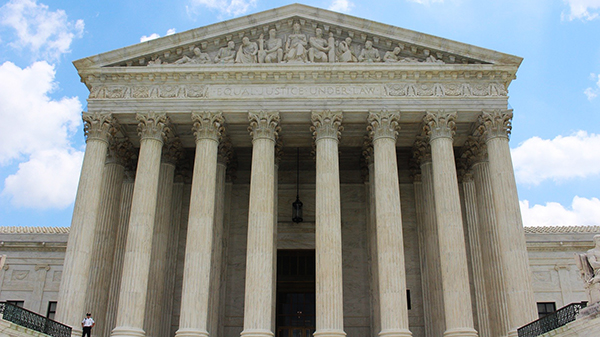
The U.S. Supreme Court announced its responses to three church-state cases June 18 and in the process provided a mixture of results on religion and public schools.
The high court:
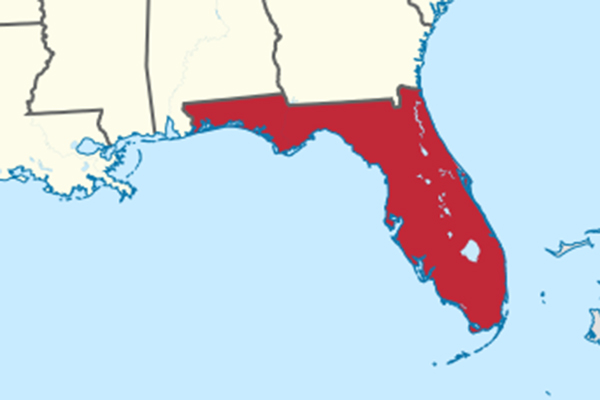
Allowed to stand a federal appeals court ruling that permits student-initiated, student-led prayer at such school functions as football games and graduations in Alabama.
Rejected and returned to a federal appeals court for further consideration a decision barring the Louisiana Christian Coalition from using school facilities.
Declined to review a lower-court decision that allowed a school to bar a first-grader from reading a story out of the Beginner’s Bible.
The prayer decision enables a 1993 Alabama law permitting student-led religious expression at school events to be in effect. A federal judge issued a permanent injunction in 1997 against such religious activities, but the 11th Circuit Court of Appeals overturned the decision. The appeals court reconsidered the case in light of last year’s Supreme Court opinion striking down student-led prayer at high school football games in Texas, but it affirmed its earlier ruling despite the high court’s decision.
In a written statement, Walter Weber of the American Center for Law and Justice (ACLJ) called the justices’ action a “critical victory for free speech and for religious liberty.”
In the case involving the Christian Coalition, the high court vacated a Fifth Circuit Court of Appeals decision against the organization and told the court to review its ruling in light of the Supreme Court’s recent opinion on a religious organization’s use of a school building.
In that June 11 decision, Good News Club vs. Milford Central School, the high court ruled a school rule prohibiting a Christian group from meeting on campus after hours when other organizations were allowed to was unconstitutional. In a 6-3 vote, the justices decided permitting the Christian club to meet even immediately after school and on an elementary-school campus was not a government establishment of religion.
The Christian Coalition had repeatedly sought use of school facilities after hours in St. Tammany Parish in Louisiana, but its requests were rejected, according to the ACLJ, which represented the organization. The ACLJ told the Supreme Court the school district engaged in “blatant anti-religious discrimination” while allowing other organizations to use school buildings for meetings.
(BP)


Share with others: