
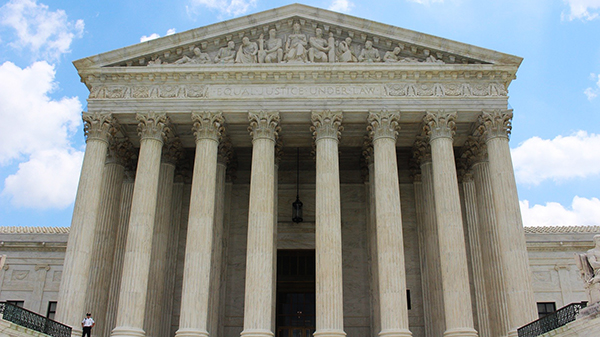
The U.S. Supreme Court agreed Oct. 14 to decide a difficult case involving separation of church and state. At issue is whether a town can require religious organizations to apply for permits before engaging in door-to-door evangelism.
The case involves Jehovah’s Witnesses, members of a Christian cult who routinely go door to door distributing literature and trying to recruit new members. The town of Stratton, Ohio, requires all persons doing door-to-door solicitation to acquire a permit from the mayor and to display the permit upon request. Applicants are required to provide their names, addresses for the past five years and contact information for organizations they are representing.
Jehovah’s Witnesses sued the town, challenging the permit policy. A lower court decided in favor of the city of Stratton, ruling that the policy did not discriminate against religion because it applies equally to all groups.
City leaders say the permits are free and nobody has ever been denied a permit. They will argue the ordinance is a reasonable approach to “weighing the First Amendment rights of canvassers against the right of homeowners to security, privacy and peacefulness in their homes.”
The high court heard a similar case in 1995 and ruled that Ohio could not fine a woman for distributing unsigned leaflets protesting a proposed local school tax. In that 7-2 decision, Justice John Paul Stevens wrote, “Under our Constitution, anonymous pamphleteering is not a pernicious, fraudulent practice, but an honorable tradition of advocacy and dissent.”
(EP)

Share with others: