
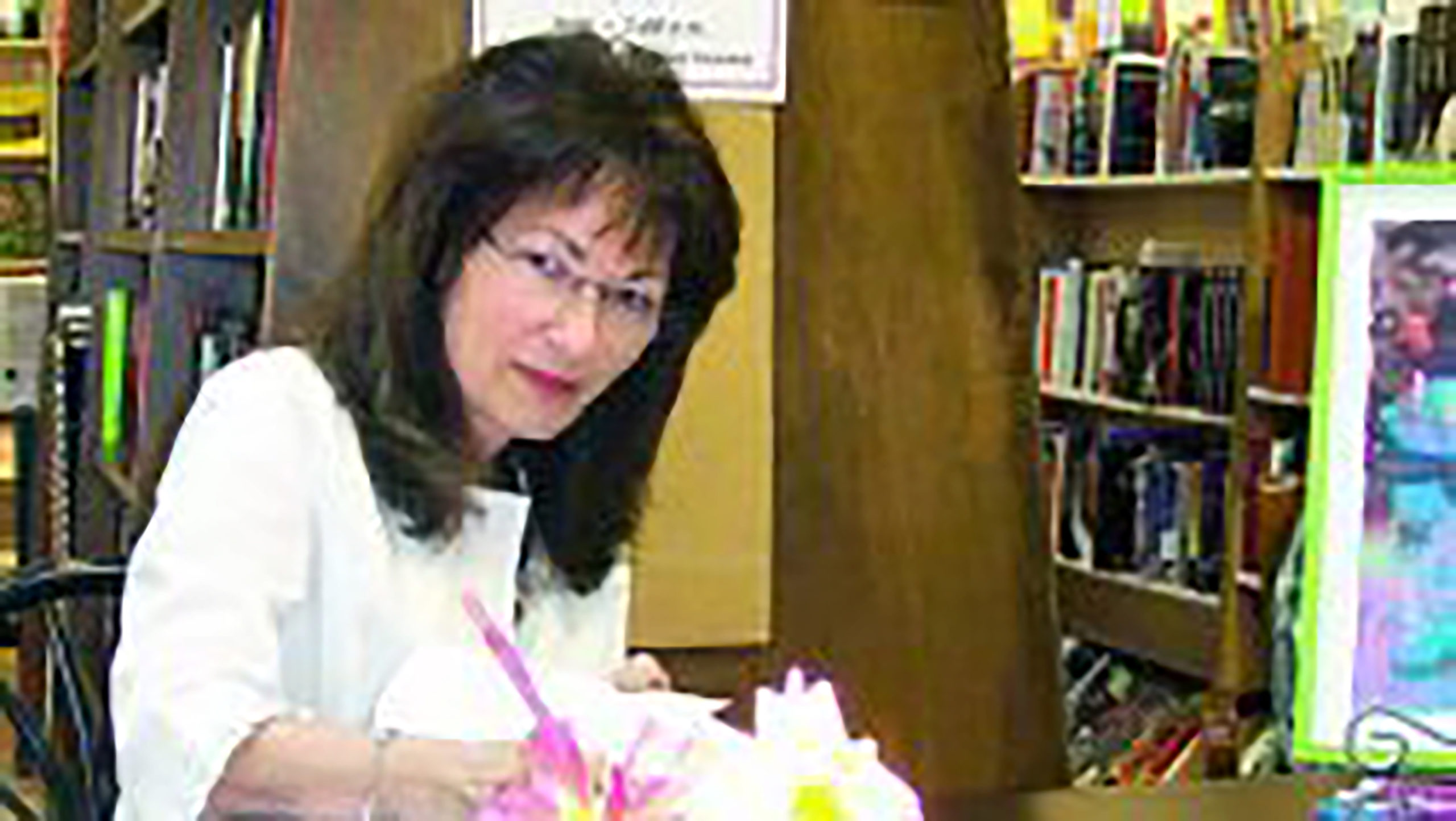
Ellen Marie Edmonds watched as her husband of 13 years, Frank, slipped back into infancy.
In the eyes of the world, Frank, a retired CEO of AT&T and Civilian Aide to the Secretary of the Army, was “a strong and capable man,” but for the last three years of his life, he became totally dependent on Ellen for everything.
“In the spring (of 1990), I married my big man, and in the winter (of 2005), I buried my baby boy,” Ellen said.
At first, one may think this sounds a lot like “The Curious Case of Benjamin Button.” In the short story, which was turned into a 2008 film, the main character is born as an old man and dies as a baby. Though there are a few similarities between the two men’s stories, there is one major difference: Benjamin’s story is fictional, whereas Frank’s story is real.
And it is reality for millions with Alzheimer’s disease or other types of dementia.
After an October 2002 car accident not far from his home in Birmingham, Frank began experiencing a rapid onset of advanced vascular dementia. Ellen, who became his caregiver, said the journey was hard and painful.
“It was like playing a long game of tennis at the net,” she said. “About the time I’d think that I was understanding some change and some new requirement on my part or I was understanding something new in his personality, then something would change again. There was uncertainty all the time about what was next and his growing incapacity.”
Along with taking care of her husband and grieving the gradual loss of her soul mate, Ellen had to deal with all the aspects of running a household, such as managing bills and house maintenance, alone.
She also was taking care of her first grandchild four days a week while the girl’s parents worked.
“She was a little baby growing bigger and bigger, and my husband, who was 6 foot 4, was a big man becoming smaller and smaller. I saw the parallels in their needs — both of them being little and needing security and care. My little alpha (granddaughter) passed him up, and he went to where she came from.”
As Ellen, a member of Our Lady of the Valley Catholic Church in Birmingham, began to see the parallels between the two, God began to reveal to her that He is the Alpha and the Omega (the Beginning and the End). She nicknamed her granddaughter “alpha” and her husband “omega” since the former was at the beginning stages of her life and the latter was at the end of his life.
“It was so profound to me because I was seeing Him through both (people),” Ellen said. “As I was going through these terrible pangs of grief, I woke up to this new little one of hope.”
About a year after Frank died, Ellen was contacted by the Eternal Word Television Network (EWTN) about sharing her story. But it took her about three years before she felt ready to tell her story on television. She said she needed to spend time reflecting.
“Knowing that in order to tell the story I was going to have to let myself go back through a very painful journey, I wrote ‘Embracing Dementia, A Call to Love: Finding Hope, Loving Someone With Alzheimer’s or Other Dementias,’” Ellen said. “The book is a faith-based, love-driven account of confronting the disease and embracing it and seeing it as a cross and a call to love. Not just to love the person with dementia but to see the ‘little’ person they are becoming and the Christ in them.”
Even though the book is biographical, she uses it to admonish those with loved ones with Alzheimer’s or other dementias not to fear.
“Physically they’re still big but you must see their heart so we don’t fear them and put them away,” Ellen said. “In the book, I make a comparison between the little one in the womb and the little one in Alzheimer’s. They are hidden but they are real and they are in there.”
She also talks about how Matthew 25:31–36 became key for her while caring for her husband.
“Whatever we do for the least, we are doing for Christ Himself,” Ellen said of the Scripture passage. “This was a huge transformation that took place for me. In realizing that this whole journey was about loving my husband, (I realized) it was really about loving the Lord.
“Knowing has to do with the heart, it’s an eternal thing, and the heart doesn’t get dementia. Even as the brain dies, we can continue to communicate with them through the heart,” she said.
“It was an opportunity to get to love the Lord all the way through to the finish line. Christ was born (and) came into humanity so that we may ultimately be born into eternity. My husband died at Christmastime, and it was a beautiful coming together that Christ was born into humanity and my husband was born into eternity.”
After publishing her book, Ellen, who is retired from AT&T, found herself with a new mission: to help others who are on a journey similar to hers. She finally appeared on EWTN twice in 2009 on two shows and twice in 2010 on another show. She now hosts a radio show called “Embracing Alzheimer’s in Mind and Heart” Sundays at 4 p.m. on Birmingham’s WXJC and live on Wednesdays at 11:30 a.m. on WQOH. Both are streamed live on her website, embracingdementia.com.
“It’s an amazing message that is just reaching and helping people in every socioeconomic stage of life,” Ellen said. “There’s a tremendous amount of faith, and our Lord said, ‘Do not be afraid.’ He wants me to help (others) transform that fear into faith and practical knowledge. I think people want to do the right thing, but we’re terrified when a thing like Alzheimer’s comes on the scene.”
She will be taking her message to Shades Mountain Baptist Church, Vestavia Hills, Feb. 4–5 for the Embracing Alzheimer’s & Other Dementias conference, sponsored by Birmingham Baptist Association and United for Life Foundation (see story, this page).
“[The conference] is well-balanced of resources to help clergy and families and professionals better understand what the patient is going through and what the family is going through so that everyone is equipped to respond more effectively,” Ellen said. “My hope is … that they’ll experience the love of God.”


Share with others: