
Over the past 20 years, a growing number of Baptists have complained about the president of the Southern Baptist Convention (SBC) being anointed in closed-door caucuses by a few politically powerful individuals rather than chosen by messengers in open elections on the floor of the annual meeting.
This year, it appears Southern Baptists will have their first wide-open presidential race in decades.
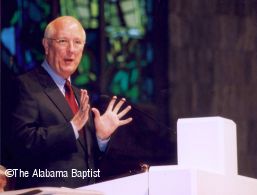
In truth, the presidential election in 2006 turned out to be a wide-open race when dark-horse candidate Frank Page of South Carolina unexpectedly defeated two well-connected and well-known megachurch pastors on the first ballot.
Page’s victory, orchestrated by individuals tired of the old system, may have set the stage for this year’s race.
To date, five candidates have announced their intention to be nominated for SBC president. Two announced their intentions May 6 — Georgia pastor Johnny Hunt and Avery Willis, retired International Mission Board (IMB) executive. They join previously announced candidates Frank Cox of Georgia and William "Bill" Wagner and Wiley Drake, both of California.
Three of the candidates are widely known by pastors and other Baptist leaders. Hunt, Cox and Willis move in the same circles of influence. Wagner and Drake are not as widely known though both have served as an SBC vice president.
Hunt and Cox are neighboring Atlanta-area pastors. Both serve megachurches and both are "Mr. Insiders" when it comes to SBC life. Hunt is pastor of First Baptist Church, Woodstock, Ga., which reports a membership of more than 16,000 with an average worship attendance of more than 6,000. He is reputed to be the most popular speaker in Baptist life and frequently appears on national, regional and state programs across the United States. He also is a featured speaker at this year’s SBC Pastors Conference.
Cox serves North Metro First Baptist Church, Lawrenceville, Ga., which has a membership of more than 4,500 and an average worship attendance topping 2,400. In 2006, he completed nine years on the SBC Executive Committee. During that time, he served three years as chairman of the Cooperative Program (CP) subcommittee, was first vice president of the SBC and served on the SBC Resolutions Committee. He continues to serve on both the Ad Hoc Committee to Revitalize the Cooperative Program and the SBC Funding Study Committee. He, too, is a popular speaker featured on programs across the nation.
Willis is best known for creating the MasterLife discipleship materials, which he did while serving as an IMB missionary and as president of the Indonesian Baptist Theological Seminary in Semarang. That material was translated into more than 50 languages and used in more than 100 countries. Later he headed up the adult discipleship department of LifeWay Christian Resources for 15 years.
From 1994 to 2004, Willis was senior vice president of the IMB responsible for all overseas operations. In retirement, he continues to work with an alliance of evangelical missions agencies. He, too, knows denominational workings from the inside out.
Wagner also is a former IMB missionary, having served for 32 years, including a stint as regional consultant for evangelism and church growth in Europe and the Middle East. He later taught missions at Golden Gate Baptist Theological Seminary in Mill Valley, Calif., and now serves as president of Olivet University International in San Francisco. He also serves as the nonsalaried bivocational pastor of Snyder Lane Baptist Church, Rohnert Park, Calif. The church reports 75 members and an average worship attendance of 35.
Drake serves as pastor of First Southern Baptist Church, Buena Park, Calif., in the Los Angeles area. The church reported a membership of 90 and an average attendance of 50. In 2006, he was elected second vice president of the SBC. He hosts a daily show aired on Christian radio.
While the late entry of Hunt and Willis makes the race a wide-open event, all of the candidates are cut from similar cloth. All are theological conservatives. Still the race is likely to test three major commitments of Southern Baptists — evangelism, missions and the CP.
The recently announced decline in baptisms for the last year has elevated Southern Baptists’ concern for evangelism. Despite efforts to focus denominational attention on baptisms by recent presidents, statistics show a decline in baptisms in SBC-related churches for seven of the last eight years. In 2007, baptisms declined by almost 20,000 to 345,941. That is a drop of more than 5 percent from 2006.
Messengers to the annual meeting can expect a lot of well-deserved hand-wringing over this downward trend and calls for renewed efforts to reach the lost. It is likely that concern will be expressed in the presidential race with calls for a president who sets a worthy example in evangelism.
For 2007, the last year of record, Hunt reported 462 baptisms. Cox reported 109. Willis is a member of Bella Vista Baptist Church in Arkansas, which reported a worship attendance average of 450 with 18 baptisms. Wagner’s church reported 24 baptisms. Drake’s latest baptismal report was 2006 and indicated 125 baptisms for a church with 90 members and 50 in average attendance.
When Wagner announced his candidacy, he lamented that despite Southern Baptists’ commitment to missions, the SBC has never had an IMB missionary as president. Now there are two candidates who fit that description — Wagner and Willis. If world missions becomes the primary concern of messengers to the annual meeting, the candidacy of these two men may get a boost.
In 2006, Page’s surprise election was widely credited to concern about CP giving by presidential candidates’ churches. From the meeting where Page was elected, came the slogan "the Cooperative Program still matters."
The importance of CP giving will be tested again in Indianapolis. Hunt’s church reported giving 2.2 percent of its undesignated receipts to missions through the CP in 2007. That amounted to $393,798 from $17,807,317 in receipts.
Cox’s church reported giving $405,380 through the CP. That amounts to 9.4 percent of its $4,295,066 in undesignated receipts.
Willis’ church reported 16.8 percent ($119,460) of its undesignated receipts of $712,485 directed through the CP. Wagner’s church gave $2,718 through the CP, which he said was 10 percent of receipts. Drake’s church report indicates $200 contributed through the CP in 2007.
If messengers believe CP giving is still important, the giving records of the candidates’ churches may influence their votes.
Obviously the number of baptisms reported in a single year does not indicate one’s commitment to evangelism. Nor does service as a missionary indicate one’s commitment to sharing the gospel around the world.
Likewise giving through the CP is not the only indication of commitment to cooperation in all that Southern Baptists do together. Yet each area is important. Southern Baptists need a president who demonstrates a commitment to sharing the saving knowledge of Jesus Christ. Southern Baptists need a president who is committed to reaching the whole world with the gospel. And Southern Baptists need a president whose actions confirm his commitment to giving through the CP.
It will be interesting to see how this wide-open race for SBC president comes out and what it says about the values of Southern Baptists.
Share with others: