
An unusually broad coalition of religious groups is pushing a bill that would protect religious expression in the workplace, but civil liberties groups are concerned the bill could be used to advance on-the-job proselytizing.
The Workplace Religious Freedom Act, introduced recently by Sens. Rick Santorum, R-Pa., and John Kerry, D-Mass., would force employers to “reasonably accommodate” employees who want to wear religious articles or take off time for worship services.
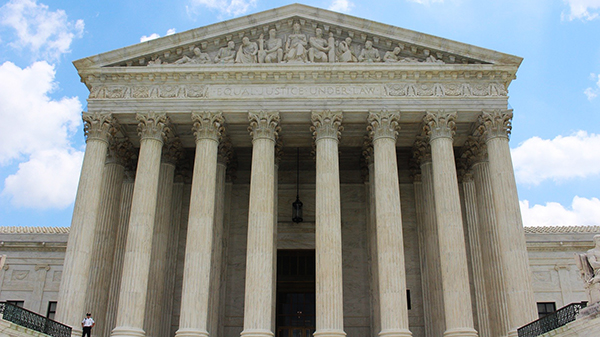
Current law mandates that employers allow such expression as long as it does not impose an “undue hardship” on the company. Supporters, however, say a 1977 Supreme Court ruling gutted the law and has not protected employees’ rights.
“America is distinguished internationally as a land of religious freedom,” Santorum said in introducing the bill.
“It should be a place where people should not be forced to choose between keeping their faith and keeping their jobs,” he said.
The American Jewish Committee, one of the bill’s primary backers, points to cases like Amric Singh Rathour, who was fired as a New York City traffic cop when he refused to shave his religiously mandated beard or remove his turban. Rathour’s suit against the city, filed in March, is pending.
The AJC also defended a New York Rastafarian who was fired from his job at FedEx when he refused to cut his dreadlocks, a part-time Methodist minister who was fired from a furniture store for taking time off to conduct a funeral, and a Muslim woman who was fired from Alamo Rent A Car for insisting that she wear a headscarf.
Religious groups, including Seventh-Day Adventists, Muslims, Southern Baptists, the National Council of Churches and others, contend that religious minorities are especially vulnerable to discrimination.
“We need a stronger position so that employers are not denying what is reasonable,” said Clarence Hodges, director of public affairs and religious liberty for the General Conference of Seventh-Day Adventists, who take Saturday as their Sabbath.
“They need to understand that ‘reasonable’ means reasonable, and that you can do what you need to do without upsetting everything and everybody.”
The employer mandate was inserted into Title VII of the federal Civil Rights Act in 1972. Five years later, however, the Supreme Court ruled that even a minimal hardship on employers was not covered under the act.
The new bill would define “undue hardship” as something that imposes “significant difficulty or expense” on the employer or that would keep an employee from carrying out the “essential functions” of the job.
The law does not apply to businesses with fewer than 15 employees. (RNS)
Share with others: