

By Bryan Gill and Michael Hardin
Samford University
How does a Christian university change a culture and overcome fear, differences of opinions and a faculty body comprised of diverse Christian traditions? How does the university guard against an administratively-driven, plug-and-play approach to faith and learning integration that would infringe on the faculty member’s academic freedom?
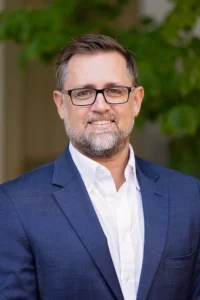
The starting point for us at Samford University was to clarify our priorities in hiring practices and to build trust among existing faculty. … Samford University set out to prove that you can hire faithful Christian faculty who are also highly qualified academics and that it is possible to support faith and learning integration without infringing on academic freedom. …
First steps
We started by clarifying and emphasizing our faculty hiring practices. As a private Christian university, we unapologetically stated our goal to seek and prefer academically qualified, Christian faculty for all faculty searches.
To help integrate this commitment to faculty hiring and also reinforce it across academic programs, several important practices became part of the faculty hiring process.
First, a member of the provost’s office was assigned to each search committee. In addition to ensuring hiring practices and policies were being uniformly followed, these representatives also enabled the provost’s office to have a front-row seat to matters of faith commitment and missional alignment of faculty candidates.
Secondly, each faculty search team included a faculty member from outside the academic department/school conducting the search. The inclusion of these faculty enriched the search process and helped indirectly disseminate commitment to hiring faculty members committed to the Christian mission.
Faculty support
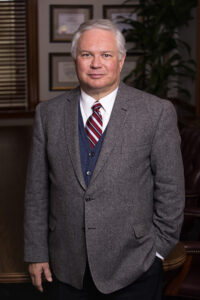
… In the Spring of 2019, Provost Mike Hardin formed the Spiritual Life Leadership Collaborative consisting of faculty and staff across campus. This collaborative examined every aspect of the spiritual makeup of Samford from the curriculum, faculty development and expectations and cocurricular spiritual development of students.
The strategic evaluation produced a list of objectives that would address the areas of opportunity revealed by the audit. … A Faith and Learning Taskforce was formed in Academic Affairs … to identify ways to equip faculty to support the Christian mission of the university through personal and professional development opportunities.
… When President Beck Taylor arrived at Samford in 2021, he, alongside his executive leadership team and the board of trustees, elevated faith and learning as a priority on campus.
Fresh wind
Fueling the momentum created in Academic Affairs, a fresh wind blew through the campus as faith and learning became a centerpiece of Fidelitas, Samford’s strategic plan. Faith and learning integration became one of the four main goals in the Academic Distinction theme of Fidelitas. …
The Faith and Learning Taskforce convened regularly and developed the
following mission statement: “to equip Samford faculty to thoughtfully integrate a commitment to faith in Jesus Christ with the pursuit of academic excellence.” …
Four emphases emerged: Personal Spiritual Growth, Pedagogical Integration, Scholarship Development and Vocational Exploration.
… In the Spring of 2024, the [faith and learning initiative] became the Office of Faith, Learning and Vocation (FLV). Dr. Bryan Gill was named director of the office under the Faculty Success Center within Academic Affairs. The formation of this office again elevated the university’s commitment to faith and learning integration. …
We developed the Christian Teacher Scholar Program, a three-year interdisciplinary cohort-based program where faculty explore their faith, their role as teacher and how faith can influence their scholarship.
… The faith and learning integration is not a one-size-fits-all solution. There is a spectrum of interpretations. Some faculty pray or read Scripture to begin their classes. Some incorporate biblical justice for marginalized people groups in internships and practicums. And there are faculty who challenge students to think deeply about the intersection of their faith and their discipline. …
We support faculty wherever they find themselves on this spectrum of approaches, and in some instances, challenge them to expand their view of faith and learning integration. We are establishing a culture that encourages and equips faculty to bring their whole selves as faculty at Samford University.
EDITOR’S NOTE — This article was featured in Christian Scholar’s Review in September and was written by Bryan Gill and Michael Hardin as an academic evaluation of Samford University’s emphasis on hiring faithful Christian faculty without infringing on academic freedom. Gill, D.Min., serves as director of the office of faith, learning and vocation at Samford. Hardin, Ph.D., is former provost and vice president of academic affairs and a current professor at Samford. This article has been edited for space. Read the full article at tabonline.org/samford.
On hold, or holding on?
By Karen Moore
karenmooreauthor.com
Hebrews 10:23 talks about holding on, encouraging us to trust and believe what we have learned in the past. It says, “We must hold on to God’s promise that we have said we believed. And we must never let go. He has promised and He will do it.”

I don’t know how you interpret this idea, but it strikes me that we often feel like we are holding on … holding on to our beliefs, holding on to our principles, holding on to those we love for dear life.
We are holding on because chaos makes us feel like we are losing our footing, unable to find a safe place to be. We may often find ourselves feeling like our lives are “on hold.”
We wonder if God is still paying attention or if He knows the mess we are struggling to manage. How do we keep holding on when we’ve been on hold for a long time already?
Waiting on God
I can’t help thinking about the Old Testament story of Moses and the Israelites who were waiting for him to come down from the mountain. … They were patient for a few days, but as time went by they … started doubting everything they had already learned about God. … They decided they needed to take matters into their own hands … so they gave up their first love and stopped holding on to their Creator.
It’s tempting for us to do the same. We look out at the world and wonder how we can manage, how we can hold on to our hope and our possibilities. We wonder if there are other options, other ways to hold on. Often, we end up holding on to things that do not serve us well.
It’s not easy to hold on, but it’s easier if you think carefully about the One you’re holding on to. It’s easier if you remind yourself that God is still there. He has not gone away. …
All churches must see themselves as agents of gospel change. Ministry must always be formed by the needs of the community and not the wants of the members. I am talking missional purpose over member preference, restless hearts over restful pews and choosing every day to be desperate to see the lost saved instead of the saved comfortable. Every church is a mission center and not a religious museum. Every. Single. One. The Body of Christ must mimic the heart of its Savior. What is the heart of the Savior? In Luke 19, Jesus stops as He rides into Jerusalem and weeps over the lostness of His city. Our people must have a burden for the lost in their community. Healthy churches weep over their city, and it starts with the church leaders. For almost a century the Church has practiced a myopic ministry in which the needs of members trump the urgency to rescue the perishing. It is time for a shift in focus.
Kevin Blackwell
drkevinblackwell.com
October means cooler weather, brown leaves and fall festivals. October is the wind down from school starting and the wind up for all things football. October is change. And for all of these things, I am grateful. I am grateful for change. Nope, I am not fond of change — but I appreciate that it comes anyway. I appreciate that things will be different in the next moment, the next day, the next month and certainly the next year. I appreciate that change allows each of us to become more than what we thought we could be and different from who we thought we were. Change allows us to increase our capacity and decrease our fear.
Sometimes change is deliberate and purposeful. Other times change is forced and uncomfortable. However, change brings variety and choice. Variety because we become more diverse in our actions and abilities. Choice because we can decide to remain uncomfortable — angry and dissatisfied — or decide to embrace an opportunity to chart new waters.
In the end, change will happen; it is inevitable. How we choose to accept change will determine our next steps. Embrace change. It is, eventually, the vehicle to a new and brighter you.
Vernet Nettles
vernetcnettles.com
Ministry is challenging, but it’s also deeply rewarding. If God has called you to serve, He will provide the tools and strength you need, as long as you are willing. Every calling is unique, and it’s our responsibility to follow God’s leading. I am thankful for the opportunities I’ve had and look forward to whatever comes next.
Allow me to share an important word of encouragement from Scripture: “I thank Christ Jesus our Lord, who has enabled me, because He counted me faithful, putting me into the ministry” (1 Tim. 1:12). This verse reminds us that ministry is a gift from God, and it is by His grace that we are called and equipped. If you feel unworthy or unsure of your calling, remember that God Himself enables you to carry out the work He has set before you.
Chris Crain
Executive director
Birmingham Metro Association




Share with others: