
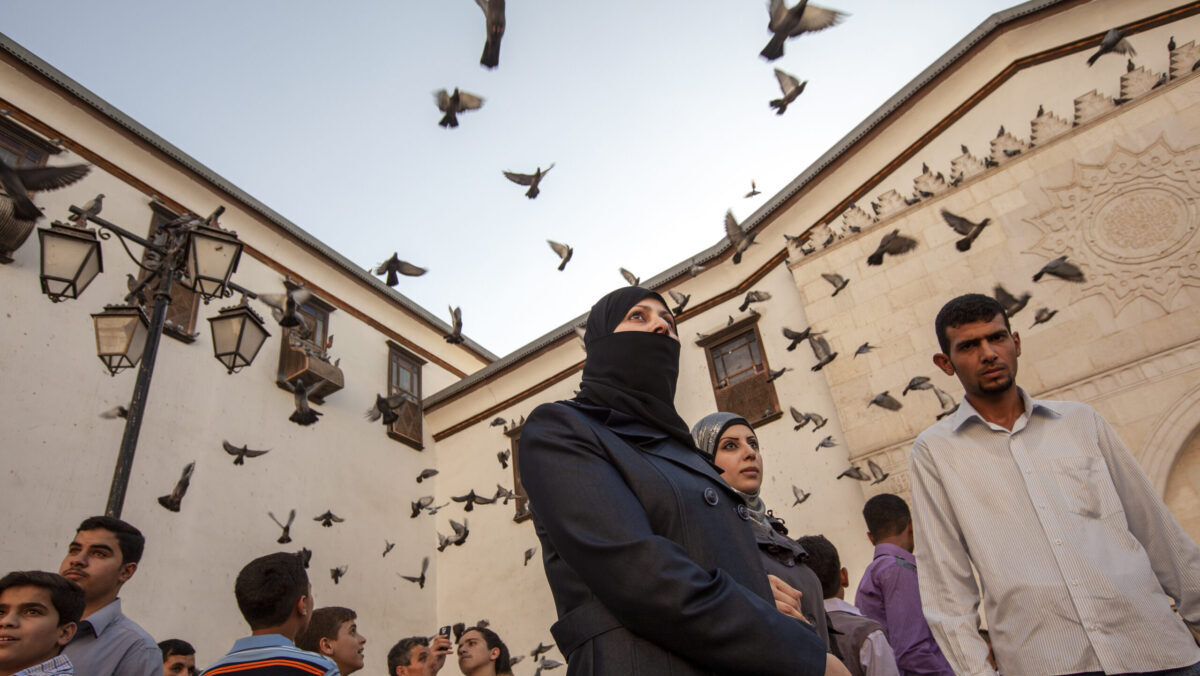
Earlier this year, the International Mission Board asked Southern Baptists to join in prayer for Muslims who were observing Ramadan.
IMB shared some ways God moved while they prayed.
During Ramadan, which was observed by Muslims from mid-February to mid-March this year, millions across the Asia-Pacific Rim devote themselves to fasting, prayer and acts of devotion in hopes of drawing nearer to God. International Mission Board digital engagement teams serving in the region recognize this season as a time of heightened spiritual focus and an opportunity to share the gospel with people who may have little or no access to it.
SIGN UP for our weekly Highlights emails.
Across multiple contexts, digital engagement teams used social media platforms to communicate a message that contrasts sharply with a works-based understanding of faith.
They sent a new message: Reconciliation with God is not achieved through human effort but is given by grace through Jesus Christ.
Patient conversation
In one setting, a digital engagement team focused its Ramadan outreach on women. Through a well-resourced advertising effort, hundreds of women initiated online conversations, many encountering the gospel for the first time through the Christians who were trained to respond to online interactions.
“Some women were not very talkative,” one responder shared. “They might only reply briefly or even send a thumbs up. But they kept responding. It felt like they did not know what to say, yet they did not want the conversation to end.”
Those short initial replies opened doors for continued engagement.
Responders shared Scripture, explained the gospel in different ways, and offered prayer when requested. Some conversations extended over several weeks, allowing trust to grow gradually. Many women asked for prayer, sharing personal burdens and spiritual questions. For the team, the experience reinforced that digital engagement often unfolds slowly and requires patience and consistency.
Early gospel exposure
In another context, a digital engagement team implemented a structured responder messaging flow during Ramadan. The goal was to help move conversations more quickly toward a clear presentation of the gospel. As a result, many users encountered the gospel early in their interaction.
Responders also observed that some users disengaged after the gospel message was shared. While fewer conversations continued deeply, team members still viewed the campaign as meaningful.
“More people heard the gospel clearly,” one responder reflected. “Even when conversations did not continue, seeds were planted.”
In environments where following Jesus can carry significant social or personal consequences, responders understand that silence does not necessarily indicate disinterest. For some individuals, simply reading the message is a meaningful first step.
Heightened engagement and opposition
A third digital engagement team observed an incredible increase in activity during Ramadan. Large numbers of people engaged with gospel content, and many reached out with questions such as who Jesus is and what Christians believe.
This team was uniquely strengthened when two new believers from Muslim backgrounds joined the response effort during the campaign. Drawing from their own recent journeys to faith, they were able to mention their new beliefs as a way to encourage others to consider following Jesus.
At the same time, responders faced significant opposition. Mockery, hostility and rude comments were common. Team members described the effort as a test of patience, kindness and self-control as they prayerfully filtered through opposition in order to focus on those who were genuinely open to conversation.
Despite the challenges, many seekers continued asking questions and engaging thoughtfully, encouraged by responders who met them with clarity and care.
Shared outcomes
Across all digital engagement efforts during Ramadan, teams observed an encouraging pattern of sustained interaction. More than 5,500 individuals engaged in multiple conversations that would not have occurred apart from these coordinated digital campaigns.
Among those conversations, four individuals professed faith in Christ, while many others are still ongoing. Teams emphasized that continued engagement is especially significant in contexts where identifying as a Christian from a Muslim background can bring severe social, legal or personal consequences.
Responders across teams noted that trust often develops over time. Conversations may pause, resume weeks later, or remain private for extended periods. Even so, teams count it a privilege to walk patiently with individuals as they wrestle with truth and consider the cost of following Jesus.
Looking ahead
While each digital engagement team served in a different context and experienced unique patterns of response, several shared observations emerged. Ramadan consistently brought increased spiritual curiosity, and many people were willing to explore questions of faith in a digital space.
As Ramadan concluded, digital engagement teams across the Asia Pacific Rim reflected on the privilege of participating in God’s work. Through digital engagement, the gospel continues to reach people where access is limited, often quietly, patiently and one conversation at a time.
EDITOR’S NOTE — This story was written by Steve Hamilton, who works with digital engagement for the International Mission Board.

Share with others: