
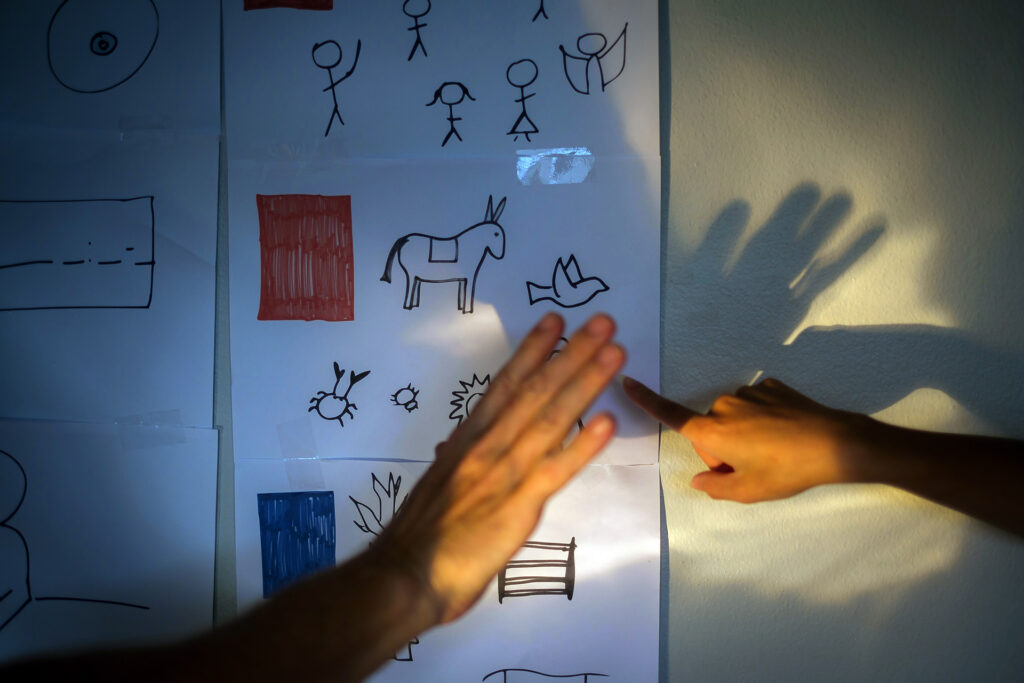
Hank and Ruby Greene could see the writing on the wall for their time in their country. The Greenes lived and served among the Deaf in Central Asia for 14 years with the International Mission Board, seeking to make disciples and plant healthy churches for this often-underserved group.
Ruby, who is Deaf, said they faced difficulties and weren’t sure they could stay in Central Asia.
Check out more stories on international missions.
“We had a church plant, but it dissolved,” Ruby said. “People had gone back to Islam or had moved away.” After many years in one mission field, they recognized their time of ministry there was closing. But God had new plans and new connections in store.
Hank and Ruby met while serving overseas. After returning to the U.S., getting married, and connecting with their church, they returned overseas to minister among the Deaf in a new city.
Getting to work
They dove into the work from the beginning, getting into the community and sharing the gospel story. Eventually, they partnered with other like-minded believers who had been working with Deaf in that part of the country.
“We helped them understand some of the unique qualities of working with the Deaf, because they did not have any exposure to that previously,” Ruby said.
Strong national partners grew out of the work there, and this beginning shaped their ministry for the next 14 years.
They made six attempts to plant one Deaf church, while continuing to support partners in their former region. They also encouraged national partners by equipping and training them.
If church planting among the Deaf was one “arm” of the Greenes’ work, the other arm was their theological training for local believers.
Earlier in their ministry, they connected with Deaf believers who already had access to theological training. But this training was for hearing believers and presented challenges for the Deaf members of the class.
‘Hard format to teach’
“They understood some of it, but they were really frustrated. It’s just a hard format to teach through a hearing method to Deaf people,” said Ruby.
When these believers connected with Hank and Ruby, they asked for their help. The Greenes provided a separate training that walked the believers through a Bible translation process.
The Greenes provided a fuller picture of the biblical narrative for the Deaf believers to understand. When some from the group wanted to do a book study of Galatians, the Greenes’ team shared the whole biblical story with them, starting from creation and connecting to Galatians.
“They said, ‘Oh, now we understand what you were talking about. Now we understand how this ties in.’ A lot of times they just didn’t have context,” Ruby shared.
Despite such opportunities, the Greenes could not get the ministry foothold they needed without reliable national partners.
Making a move
In 2024, God made a way for them to move to the Middle East, where they currently serve, to begin a new team. God also provided strong national partners.
Hank first met Omar at an international training event. They greeted each other, and “that’s all we saw of him,” Hank said. A year or so later, Hank met Omar again at a large gathering of Bible translators and Deaf ministry organizations. There, Hank learned more about Omar’s story.
Omar grew up in the Catholic church. “He would tell you he was the worst of all sinners, like Paul,” Ruby recounted. Faith for Omar was more about tradition and culture. His mom would force him to go to Catholic Mass, but it meant nothing to him, and it was hard for him to fully understand the teaching.
Later, at a convention in Europe attended by many Deaf believers, Omar had access to the gospel in a way he could comprehend. He realized, “I’m not really a believer,” Ruby recounted. Once he experienced the gospel and the Bible through sign language, he learned that deafness would not prevent him from being a faithful follower of Jesus.
Omar now feels led to educate younger people to grow up in faith and not just tradition. He works as a translator and trains other Deaf people in neighboring countries to translate Scripture into their own sign languages.
Since the Greenes first built a relationship with Omar, he has partnered with them in outreach, translation and theological training. Ruby met with him for four months of weekly meetings to equip him with new approaches and tools for Deaf ministry.
Greater reach
The partnership with Omar has broadened the Greenes’ reach beyond what they could have imagined.
“He knows the ropes and has a tremendous reach throughout the region and globally,” Hank said. The Greenes recently had a meeting with IMB missionary partners in Thailand who are planning to move to another part of Asia.
“They met Omar, and Omar said, ‘Oh, you’re moving? Let me get you in touch with my friend who lives there.’ Right on the spot, he got them connected with a Deaf man who is a believer who needsdiscipleship. We can’t manufacture that sort of thing.”
As leaders for IMB’s Deaf work, the Greenes’ time currently involves more leading and training of team members than working directly with the Deaf.
“To be able to have a little bit of frontline ministry, just meeting with the national partners and doing discipleship is fulfilling,” said Ruby, thankful to be in the Word with another Deaf person again.
“That’s the original reason we went overseas. It’s a joy to be able to shepherd teams and our team leaders, but it’s a different joy just to be able to do frontline work. My heart is to be with the Deaf people. I’m Deaf. So, when I’m with Deaf people, there’s just a sense of belonging.”
Pray for God to strengthen partnerships with Deaf believers like Omar, and to multiply opportunities for the Deaf to experience the truth of the gospel.
EDITOR’S NOTE — Names have been changed for security. This story was written by Elizabeth Ligon and originally published at the International Mission Board. It is used here with permission.



Share with others: