
Sunday, to many, is a day to go to church and then spend the afternoon in leisure.
For pastors, however, Sunday is a workday — and a rather long and tiring one at that. The day may begin around 5 a.m., include preaching two or three morning worship services and not end until well after the evening service.
“Sunday is the farthest from a day off (for pastors),” said Dale Huff, director of the office of LeaderCare and church administration for the Alabama Baptist State Board of Missions (SBOM). He describes it as the most intense and stressful of all the workdays of a pastor.
Huff, a pastor himself for more than 20 years, said the amount of energy expended to preach two or three services on Sunday would equal about two workdays.
“Sunday is a day of blessing and burden,” said Jay Wolf, pastor of First Baptist Church, Montgomery, in Montgomery Baptist Association. “It is an immense blessing to serve the Lord by shepherding His people, but the task constitutes a ‘blessed burden’ to quote Charles Spurgeon.”
Ed Litton, senior pastor of First Baptist Church, North Mobile, in Saraland in Mobile Baptist Association, understands.
“Preaching is a physically exhausting experience … especially when you do two (services) in a row,” he said. Before First, North Mobile, moved into a new building, Litton was preaching three times on Sunday morning. During the days of three-in-a-row services, he said the ritual of a Sunday afternoon nap got started at his house.
Because Sunday isn’t a day off for pastors, when do they have their Sabbath?
The Bible clearly gives a pattern of working six days and setting aside the seventh for rest. God Himself practiced and ordained it, and He knew a day of rest each week is needed for physical, spiritual, mental and emotional reasons, Huff said.
Although pastors may have Saturday free, it isn’t really a “day off” because, inevitably, the mind is thinking of the sermons to be preached on Sunday, he said.
Add to that a wedding, funeral or hospital visit and Saturday certainly wouldn’t be considered “relaxing,” said Danny Wood, pastor of Shades Mountain Baptist Church, Vestavia Hills, in Birmingham Baptist Association.
“You need that day off,” Wood said of taking a day off during the week to be a pastor’s Sabbath. Without that time to refresh, he said pastors face “a danger of burning out and wearing out” and of losing their creativity and becoming short with people.
On his day off, Wood and his wife go out and spend time together. Being in the ministry affects every person in the pastor’s family. When a pastor isn’t taking a Sabbath for himself, his wife and children, the effects ripple throughout the entire family.
Huff noted that there is a high degree of anger and depression among pastors’ wives with many feeling as if their husband is married to the church. Children tend to sense their mother’s displeasure and as they get older, may realize that dad wasn’t there in critical times in their lives, he added.
Certain moments in life — such as a son’s grand-slam home run in a Little League game — can’t be repeated if they are missed to take care of church business, said Bob Sheffield, pastoral ministry specialist with LifeWay Christian Resources.
To be with family, ministers must carve out a Sabbath and learn to say “no” to the things that would encroach upon that time, said Barney Self, LeaderCare counselor with LifeWay.
Congregants’ needs are ongoing but even Jesus did not heal everyone, Self said. Ministers have to realize that they have limitations in ministry and cry out to God with raised hands. “That’s the guy God can use.”
For Anthony Counts, pastor of Mountain View Baptist Church, Wetumpka, in Elmore Baptist Association, the ministerial week generally encompasses more than 40 hours — often 50–60 hours. He serves a church with about 200 in morning worship and one other full-time minister on staff.
Striking a balance between family and church is a challenge — one that Counts believes he has met better in the last 10 years of ministry than the 19 years prior. Each week, he and his wife plan a date night. While there will be times it is not possible to keep that date, most weeks, they do get one night to themselves.
All work and no time for a Sabbath set pastors up for a myriad of health issues, as well as behaviors devastating to ministry, Self reported. In health screenings at seminaries and Southern Baptist Convention (SBC) annual meetings, it has been found that between 60 and 80 percent of people in the ministry are at risk for cardiovascular trauma.
At the SBC annual meeting screenings, there is almost always someone who has a blood sugar or blood pressure level so high that it demands immediate attention, he said.
Self said every pastor has dealt with, is dealing with or will deal with “ministry fatigue” or “compassion fatigue” (a form of secondary posttraumatic stress disorder).
“Every person you encounter takes a little piece out of you,” he said, likening it to being nibbled to death rather than attacked by a shark.
“We can get to the point where the joy goes out of what we do,” Sheffield said. Ministers may end up “going through the motions” out of emotional and physical fatigue.
Or worse, fatigue or depletion may lead to bad choices that manifest in isolation, depression, mistreatment of family, alcoholism, Internet affairs or an addiction to pornography, among others, Self said.
Getting back to the basics — taking care of body, mind and spirit — helps to protect against pitfalls associated with continuous ministering, he said.
Care for the physical being means following a healthy diet, taking a multivitamin and exercising. Also he said ministers need to have someone trustworthy with whom they can talk — an individual other than their wife, who may be dealing with her own set of ministry-related issues.
For spiritual health, he said ministers must have their own devotional time separate from sermon preparation.
Self said it is interesting how many ministers will “encourage everyone on the planet” to have a personal devotional time but don’t practice it themselves and, therefore, miss out on that connection with their Creator.
Whether the church is large or small, the pastor will be faced with constant ministry needs. Sheffield observed that it appears the demands on staff members correlate with the number of church members.
But Huff said the pastor of a small church can see great demands as well because he may be the only ministerial staff member.
Chuck Bass, pastor of First Baptist Church, Jemison, in Chilton Baptist Association, has served churches at both ends of the spectrum. He has been an associate pastor of a large church and the pastor of a small church in a small community. Bass found that when he became pastor of the smaller church, he actually had more time for his family. Now at First, Jemison, which has about 250 in worship attendance, Bass said he is blessed with a “loving” congregation that makes sure he has time with his family. In fact, “they get upset if I don’t take care of family,” he said.
Church members are mindful of his time off, too. Though Bass’ cell phone is with him all the time, “our people don’t abuse it.” They call on his day off only when the matter is serious. In addition, the deacons willingly help out with ministry needs, he said.
Sheffield said that is a good way to shift some ministry demands off pastors. Church members can be trained to allow deacons to be a buffer for the pastor. For instance, they call a deacon first and the deacon, in turn, calls the pastor if need be. Delegating some aspects of ministry allows pastors to train church members for ministry and take advantage of their expertise.
Some churches have put into place the means for ensuring days off for pastors. For example, at some churches, ministerial staff members have designated days off, not only to give them a Sabbath but also to make sure there is a minister in the office during normal business hours. This practice may be coupled with an “on-call” rotation in which the “on-call” minister handles emergencies after office hours.
Huff cautions pastors against feeling they shouldn’t be away from the office and, therefore, not taking vacation days. “Use those days,” he said. “Most ministers expect more of themselves than the congregation expects.”

Pray for your pastor
There are so many reasons to pray for your pastor. He stands before crowds large and small who are listening.
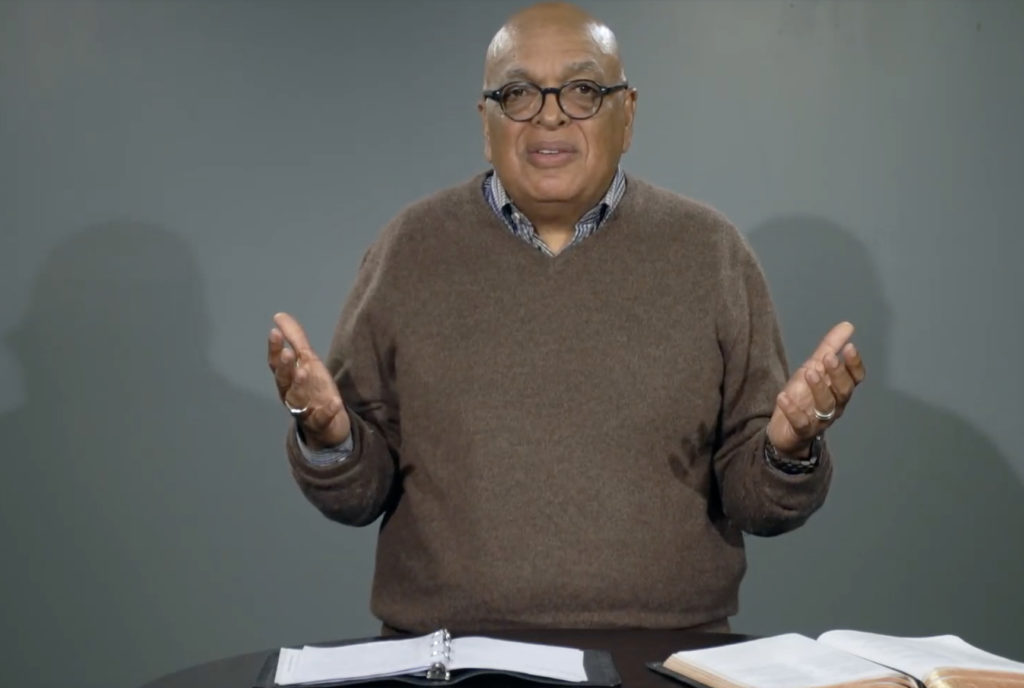
Loritts shares 5 choices pastors should make when they’re discouraged
“Let’s face it — we’re all just one text message away, one email away, one call away from disaster or

Remember Pastor Appreciation Month
There are many ways I’ve been honored by Pastor Appreciation Month, but what really touches my heart is when someone

Is your (financial) house in order?
By Margaret Colson The Alabama Baptist As you look around your financial house, what do you see? Do you see
Share with others: