
Many years ago, an Alabama Baptist church purchased an existing building that needed a lot of work and planned to construct a new facility in its place. Later, the congregation decided to renovate the original building after members became attached to it.
Throughout the years, the church continued to repair its facility, costing them a great deal of time and money and causing many to focus more attention on the church building than on the mission of the church.
After years of dealing with this, the church pastor stated, “If the renovation cannot fulfill the need and purpose of the church, then other alternatives should be considered. Reaching people should be the primary reason for spending any money on building.”
Church building experts agree and advise congregations to remember the tool rule before taking on any building project. It states that buildings are only the tools that help accomplish a church’s purpose, and a good tool makes the job easier.
“A tool doesn’t do anything until you take it in hand and put it to use,” said Gary Nicholson, an architect and consultant in LifeWay Christian Resources church architecture department. “You still have to do the work of evangelism. If we think ‘if we build it they will come,’ we will be sadly mistaken and disappointed.”
Gary Swafford, director of church planting and building services at the Alabama Baptist State Board of Missions, said church leaders should also evaluate the existing building or their current facility in light of their worship and ministry style and needs before making any changes to the church building.
“The architectural style of the building should be compatible with the goals of the church and the target group that they intend to reach,” said Swafford. “Likewise, the arrangement of space in the inside should accommodate the activities that are appropriate for the age groups that are the main focus of the church.”
Whether the church buys an existing building or builds a new one, interior decorating, renovating and remodeling will be necessary to consider at least every five to 10 years, professionals say.
“We don’t worship the same way we worshiped in the 1940s, but some of our buildings have not changed since the 1940s,” Nicholson said.
“You only have one chance to make a first impression. There are many people who have never been in a church and it can be just as scary as going in a nightclub or masonic lodge is to us,” he said.
Swafford added that society’s expectations of churches have evolved throughout the years and that churches should pay attention to these changing expectations.
“In the 70s dark paneling and bold colors were the trend, but now we want light colors and refreshing inviting space,” Swafford said. “Churches should be intentional about reaching people and their buildings should be inviting to everyone.”
Common changes that churches may need to make to match the changing needs of a congregation can include improved accessibility for physically disabled persons, expanded foyers and meeting space, better lighting and sound, more versatile platforms, technological advancements and color changes.
“When replacing old materials and equipment, churches may also need to improve their space to match the changing needs of church activities,” Swafford said.
While many improvements may be made by church members, Swafford advises leaders to seek the services of a trained professional to determine exactly what should be done.
He noted that the church should also conduct a survey of the community’s needs and then offer activities to attract people.
“This information will indicate what type buildings will be needed for these activities,” he said. “The principle here is that the church should plan outreach that is appropriate to the community and provide the building space to accommodate the age group that is reached.”
2 Peter 3:3–14, 17–18
Explore the Bible Assistant Professor of Christian Ministries, University of Mobile LIVING WITH ASSURANCE 2 Peter 3:3–14, 17–18 Resist and

Deatsville’s Liberty Church burns note
Liberty Baptist Church, Deatsville, in Autauga Baptist Association celebrates paying off the land it bought less than three years ago
Livingston church builds facilities itself, debt-free
After its building was badly damaged by Hurricane Ivan in 2004, Christian Valley Baptist Church, Livingston, was able to gather
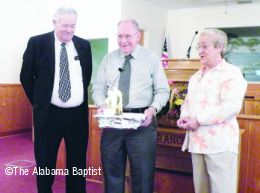
Rocky Mount Church celebrates note burning
Charles T. Kerby (center), pastor of Rocky Mount Baptist Church, Daleville, in Dale Baptist Association, along with Randolph Kelley and
Share with others: