
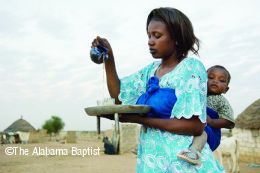
Tom Smith gets discouraged sometimes — and he’s not ashamed to admit it. As a missionary strategy coordinator, Smith and his wife, Shirley, face the daily challenge of reaching the Futa Toro (FOO-tah TOR-oh), a Muslim people numbering more than 2 million.
It’s not just their size that gives Tom Smith pause. It’s their far-flung locations and bewildering diversity.
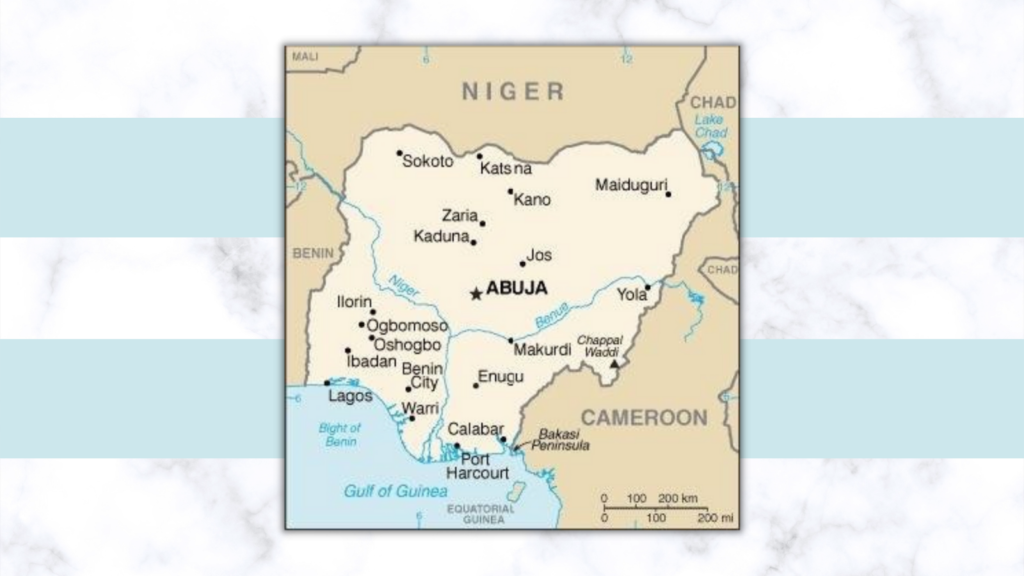
The Futa Toro actually comprises two major subgroups of the Fulani peoples of West Africa: the seminomadic, cattle-herding Fulbe (FULL-bay) and the more settled Tukulor (TOO-kuh-lor). They live in many clans and castes scattered throughout northern Senegal and parts of The Gambia, Guinea, Mali and Mauritania.
“It’s easy to become discouraged when we see the immensity of the task and so few results, so few workers, so few believers,” Tom Smith said, rubbing the sun from his weary eyes after a long day’s drive through the scorched back roads of northern Senegal. “Sometimes I wonder why God called me.”
At such moments, however, a divine voice speaks in silence to his heart: “You just do your part. Don’t worry about My part; I’ll take care of that.”
Other times, God sends encouragement and excitement through a changed — or changing — life:
– Samba, an imposing young Fulbe man who wears flashy designer shades and a long dagger strapped inside his robe, doesn’t look at first glance like a seeker of truth. But he can quote long sections of dialogue from the “Jesus” film word-for-word. The Smiths think he already has become a believer in Christ, though he hasn’t yet declared it.
– Mamadou, a Fulbe elder, welcomes the Smiths whenever they visit his family compound, where he sits in the sandy courtyard surrounded by his wives, children, sisters, nieces and nephews.
He’s heard the gospel for years from his missionary friends and other Christian workers. He has no objection to his children becoming disciples of Jesus. In fact, he’s not far from the kingdom of God himself. But he hesitates.
“I have too many people behind me,” Mamadou explains — too many relatives and clan members who would be drastically affected by his decision. If and when Mamadou decides to follow Jesus, however, he predicts this: “I will bring hundreds with me.”
That’s a day the Smiths are living for — and praying for. It’s why they transferred to Senegal in the 1990s from Sierra Leone, where they served as International Mission Board missionaries for five years (before that, they worked in Liberia for 10 years). “The needs are unmistakable all over West Africa, but this is the particular people God led us to,” Tom Smith said.
The challenges in reaching the Futa Toro abound. Persecution often follows baptism. Many Fulbe follow their herds from one place to another in an endless search for water and grazing land in the parched region. The Fulbe gather in tight clans that have little interaction with each other. The Tukulor, proud of their status as the first black Africans to convert to Islam, divide themselves into classes nearly as rigid as India’s caste system.
With all these clan and class divisions, “[w]e’re really talking about two dozen or more unreached people groups,” Tom Smith said. “That’s why it’s so important we pray that members from each group accept Christ.”
Individual Fulbe and Tukulor are coming to Christ. Perhaps 250 believers now live in the region, at least 100 of whom have been baptized. The biggest challenge is gathering them into disciple groups and congregations that will multiply into a church-planting movement. That’s Tom Smith’s top priority as strategy coordinator for the Futa Toro. He networks with other missionaries and stays on the lookout for ideas and key partners — such as Korean and Brazilian Baptist missionaries coming to Senegal.
“We can’t do it by ourselves. It’s too big, too spread out, too complex for any one group,” Tom Smith said. “This is a task only God can accomplish.” (IMB)

Share with others: