
David (name has been changed) is intrigued by big ideas and how to make them work. Until his junior year in college, his plan was to explore a moonscape or two. He was studying to become an astronaut.
It was suggested to him that the engineering degree also could be put to good use on a remote part of this planet. It was an idea that interested David. "A year later, I was seriously considering it," he said.
As he broached the idea with Rachel (name has been changed), the young nursing student in his life, she agreed — and they began to explore the possibility of serving in a faraway place, perhaps Indonesia or Africa.
"My call to missions was at age 11 or 12 at Girls in Action camp," she explained. "When I learned there were people in the world who did not know Jesus, I told God, ‘I am willing to go where You ask me to go, and be whatever You want me to be.’"
As recent graduates and newlyweds, they answered the call to Nairobi, Kenya, through Campus Crusade for Christ. Together they helped start a church, and David discipled a group of men who are now pastors or Bible study leaders.
They saw how fast the gospel could spread. Instead of growing by simple addition, the increase through church planting/disciple-making could be exponential. The couple began to look for opportunities through the International Mission Board (IMB).
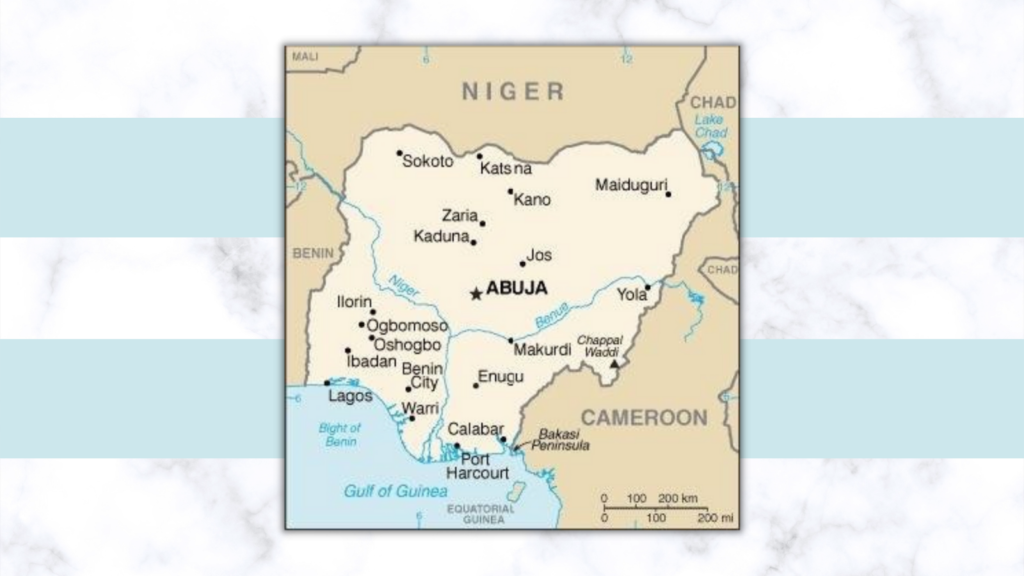
Today David is picking up his fourth language, Hausa, as the couple settles down in their newest assignment in a fast-growing community in Nigeria.
"I admire them because they are trailblazers," said Mike Stonecypher, IMB liaison with the Nigerian Baptist Convention, whose home church is First Baptist Church, Glencoe.
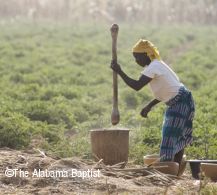
At nearly 30 million total, the Hausa live in 16 African countries. About 18 million to 20 million are in Nigeria. The Hausa constitute the largest unreached people group in West Africa. They also represent one of the largest blocs of Islam in Africa and the world.
Because of their population size, strong trade, business and relational skills, they exercise political and religious clout throughout Africa.
Hausa Muslims have aggressively moved into this region to convert local ethnic groups. As this happens, indigenous people are often absorbed, losing their traditional religion, cultural identity and language.
Hausa, which borrows heavily from Arabic, is now the second language for many in the northern half of Nigeria, Chad, Benin and Ghana.
"If you look at a map of Africa, and wanted to color it black where there is no knowledge of the gospel, what stares at you from the middle of West Africa is a big hole," David said. "Missionaries have had some impact. But entering this community as business professionals, we should find another level of acceptance."
The couple work as entrepreneurs while they experiment with some big ideas for church starting and discipleship in urban areas among the influential Hausa. David’s goal is to disciple 12 men in a year. These men will then work, two-by-two, to plant six new churches. Rachel’s plan is to befriend Hausa women who during childbearing years are often secluded. Plans are for the team to disciple each new believer immediately and prepare him or her to become a trainer or equipper of other new Christians.
They will start small churches, which will stay small (fewer than 20 adults). Men will instruct men; women will instruct women. Built around family groups, these churches should benefit from low startup costs, intimacy in fellowship and security in a world where that’s a necessity. If the situation is secure, at times, the churches will gather for fellowship and a meal.
"In some cases, there has been intense persecution here," David said. "But we have also seen that the church can remain firm, drawing strength from its … believers."
Their plan involves providing urban areas with multiple opportunities to learn about Jesus Christ through the distribution of free Bibles, chronological Bible story cassettes, radio and by airing videos such as "The HOPE," the "JESUS" film and "God’s Story."
"We want to sow bountifully in order to reap bountifully," David said. "We want to make the name of Jesus an issue on the streets."
A global prayer network will undergird all these efforts, he said. "As a team, we will seek to bathe every effort in prayer in every time zone."
The Hausa team started in 2004 with 24 partners praying for 30 minutes. They hope to have 67 praying by next year and 1,488 by 2013.
Like Christ’s plan for choosing and training 12 disciples to win the world, this plan is subtle at first but has the power to change not only the Hausa but Africa as well. (IMB)

Share with others: