

Editor’s Note: The following article is the interpretation for the theme related to the Lottie Moon Christmas Offering and International Mission Study, “The Unfinished Task: Dispelling the Darkness.”
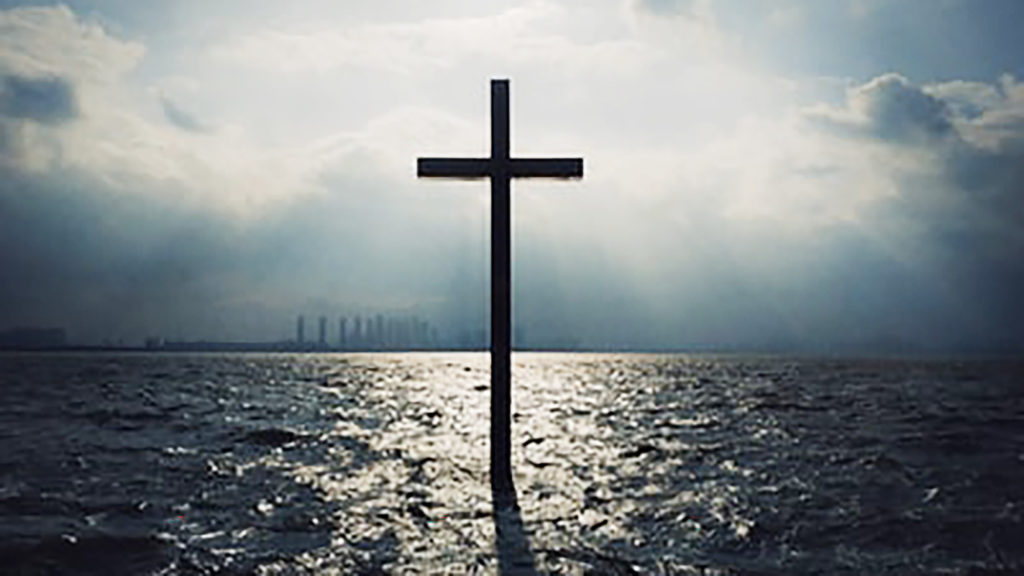
Missions exists because worship doesn’t, world hearted pastor John Piper has observed. From the beginning of time, God has purposed that His face should shine upon the darkness of this world. Until all peoples behold His light and worship Him, until all nations hear of the great salvation of God through Jesus Christ, the task of missions is unfinished.
Staggering multitudes still languish as prisoners in massive strongholds of darkness. Strongholds of false religion, atheism, communism and secular materialism hold billions of people in spiritual chains.
“When you are born in the dark and you live in the dark, you don’t even know there’s a light,” a missionary in Central Asia reports — with tears in his eyes — of the people he is striving to reach for Christ.
A pastor who walked among another lost people says: “There is darkness there. You feel the oppression from the spiritual principalities and powers … . It’s going to take a (powerful) anointing … to go there and claim them for the Lord. Then you (will) see the light and the truth blinking forth and repelling the darkness.”
That will happen among the people he visited — and every other people in darkness — as God has prom- ised:
“The people walking in darkness have seen a great light; on those living in the land of the shadow of death a light has dawned” (Isa. 9:2 NIV).
At the very beginning of His public ministry, Jesus Christ made His mission explicitly clear by reading another passage from Isaiah:
“The Spirit of the Lord is upon me, because he has anointed me to preach good news to the poor. He has sent me to proclaim freedom for the prisoners and recovery of sight for the blind, to release the oppressed, to proclaim the year of the Lord’s favor” (Luke 4:18,19; Is. 61:1,2 NIV).
Today we carry on that mission. We are His people, and His light shines upon us that we may carry it to all nations: The nations (“goyim” or “peoples” in Hebrew) prayed for in Psalm 67 are the same nations (“ethne” in Greek) Jesus spoke of in the Great Commission of Matthew 28:19: “Go therefore and make disciples of all the nations.” They are not the political nation states we usually think of today, but the great mosaic of ethnic peoples of the earth.
His disciples understood what He meant by “nations”: peoples tied together by religion, language, culture and a shared sense of identity. We also should see the peoples of the world as they see themselves — and as God sees them.
But do the peoples of the world see God? Some do, but of the world’s nearly 13,000 distinct peoples, more than 2,000 of them — comprising 1.7 billion people — languish in The Last Frontier. There, political, cultural and religious barriers prevent virtually all access to the gospel. “Today, six times more people have never heard of the gospel than were alive when Jesus gave (the Great Commission),” writes Avery Willis, International Mission Board overseas chief. Thousands more people groups lack a self sustaining church movement with the means of evangelizing their own kind.
Even now He is dispelling, scattering, driving away the darkness, for Jesus is the light, and the light shines in darkness (John 1:5). He is revealing Himself to the nations through the power of the gospel, through out control church planting movements, through the raising up of disciples to praise Him among many once darkened peoples.
The task is enormous, but it can be done. The 187 “megapeoples” (more than 1 million people each) of The Last Frontier, for example, contain 94 percent of all the 1.7 billion people who live there.
If self propagating church planting movements take root among these strategic peoples, the Unfinished Task will be on the way to completion. (BP)


Share with others: