
Sunset painted a glorious reddish glow across the placid water lapping the beach at Khao Lak, Thailand.
The view calms the mind, quiets the heart — and packs in the tourists at posh resorts. Used to pack them in, that is, before the tsunami roared ashore in December 2004.
“It’s hard to believe an ocean that beautiful could cause so much destruction,” International Mission Board missionary Mark Caldwell said.
But destroy it did. Caldwell turned around and looked inland. He stood within walking distance of the places where at least 1,000 bodies were recovered after the Indian Ocean tsunami thundered north into the Andaman Sea — and laid waste to this stretch of Thailand’s southern coastline.
Rebuilding continues to move ahead in the beach resort areas. But in the coastal town of Khao Lak, where the torrent destroyed eight of every 10 buildings, recovery proceeds more slowly. Half-buried in the mud surrounding buildings in various stages of collapse or reconstruction, a flip-flop pokes out here, a lonely mattress lies just beyond.
“They’re going to be finding body parts around here for a long time,” a relief worker said.
Caldwell, however, came to help the living — not just to rebuild their houses and fishing boats but to find new hope for the future. He’s a Southern Baptist missionary strategy coordinator “on loan” from his work among the 18 million Isaan people of northeastern Thailand. Earlier this year, Caldwell and his wife, Helen, had just returned from United States assignment when the urgent call came: Would they coordinate tsunami relief ministry in Thailand’s southern region for up to six months?
They hadn’t even unpacked. The Isaan work demanded attention. The Caldwells hesitated briefly, then accepted the temporary job. Why?
“I’ve always rooted for the underdog,” Caldwell said. “I’ve always been interested in helping folks who are down and out, and I like to bring people together.”
“Underdog” applies to the Isaan, a historically oppressed people the Caldwells first encountered in their previous assignment planting churches in Bangkok. It definitely applies to many of southern Thailand’s tsunami survivors.
In the Khao Lak area, some 5,000 people still live in temporary camps. Most lost their homes — and their livelihoods — to the tsunami. Caldwell and several missionary colleagues have coordinated Southern Baptist volunteer groups delivering food to camp residents. They’ve provided aid for Thais to rebuild homes and build new fishing boats so they can get back to work. They’ve committed to rebuild two schools in the region.
But Caldwell brings his strategy coordinator mindset to bear on a greater challenge: What will it take to see church-planting movements, led by Thai believers, spread across southern Thailand?
When the tsunami hit, one Southern Baptist missionary couple was living in the region — home to 5 million people. Only one Baptist church exists in the six coastal provinces most affected by the tsunami. As in the rest of Thailand, less than 1 percent of the population is Christian. American volunteers have put a compassionate Christian face on relief efforts.
“But the real goal is to get Thai Christians involved and out front,” Caldwell said. “That breaks down the barrier that to be a Thai, you are a Buddhist.”
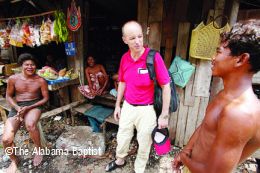
Or a Muslim, or an animist, like many of the fishermen who live along the Thai coast. Caldwell looks for Thai believers to aid and encourage — such as Sian Buaket, a pastor in the coastal city of Ranong. Buaket had longed for years to reach out to the Mogen people — commonly known as “Sea Gypsies” — living on nearby islands dotting the coastline. But he lacked the opportunity and the resources.
The tsunami provided both. With Caldwell’s help — and tsunami-aid funds from Southern Baptists — Buaket has helped the villagers buy boats. But they needed something more: Jesus Christ.
The Mogen villagers had long lived with no faith besides animism — and a fear of evil spirits. When family members died, they were taken to another island for burial. Loved ones grieved without hope.
That’s all changing. “The tsunami was a tragedy, but for us it brought new hope,” a village leader said. “If it had never come, we wouldn’t know about Jesus.” (IMB)

Share with others: