
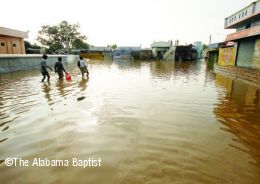
A vast multitude of poor villagers in southern India are trekking back to washed-out homes and ruined farmlands after the worst rains in 100 years set off devastating floods in early October.
Southern Baptist field partners are assessing needs and preparing an emergency response for some of the estimated 1.5 million people who are leaving relief camps to see what, if anything, is left of their homes, said Francis Horton, who with his wife, Angie, directs work in central and southern Asia for Baptist Global Response (BGR), an international relief and development organization.
“Local partners tell me conditions are very bad and it appears the principal needs right now are emergency food and water,” Horton said. “Please pray for the affected people in this area to get the relief they need. The state of Karnataka has been a focal point for persecution of Christians this past year.”
About 300 people are confirmed dead and thousands more are missing in Karnataka and Andhra Pradesh states, according to news reports. The floods came just as many farmers had planted winter crops — much of which now has been washed away or damaged. To compound the problem, family food stores were destroyed with their homes, leaving many people with nothing to eat.
The area had been suffering from months of drought before the week of torrential downpours that caused the flooding.
“We’re able to respond quickly in emergencies like this because Southern Baptists have given so generously to their World Hunger Fund and disaster response. They are truly people who care about people in need,” said Jim Brown, BGR’s U.S. director. “With so many disasters in recent weeks, we hope they will make an extra effort to reach out to the millions of people in India, Indonesia and the Philippines who need to experience the compassion of Jesus Christ in their time of need.”
Needs are also great in American Samoa, where the overall death toll from the one-two punch of an earthquake and tsunami remains at 31. Six of the victims were Southern Baptists, according to Elise Tafao, pastor of Happy Valley Baptist Church in Pago Pago.
“The South Pacific Baptist Association lost six members in three different churches — the Samoan-Korean Baptist Church, the Chinese Baptist Church of American Samoa and Faleniu Baptist Church,” Tafao said.
North American Mission Board representatives Joeli and Tupe Sovea are doing well, Tafao said, although the Seafarers’ Center — the couple’s ministry base at the harbor — was destroyed. The center’s concrete shell is all that remains, its contents swept out to sea by the tsunami. Since the Soveas’ commissioning in May 2008, the center had served as both their home and office.
Tafao said negotiations to lease a replacement facility were successful, and the Soveas and their three children already have moved in. The new Seafarers’ Center also is in the harbor district, within walking distance of the original center and not far from the international fishing vessels — especially Chinese and Russian — that dock in the harbor. Pago Pago is home to the largest tuna canneries in the world.
Electricity has been restored to most of the island, Tafao said, but landline telephone service remains out, although cell phones are working. Because the airport was unaffected, two or three military planes are flying in food and supplies each day from Hawaii to American Samoa. Tafao said residents who lost everything in the tsunami — such as the Soveas — need replacement pots and pans, cooking and eating utensils, dishes, children’s clothing and other typical household items.
“An 80-year-old man who lived in one of the hardest-hit villages and who we took food and clothing to told me he’s seen more of the love of God displayed since the tsunami than ever before.” (BP)


Share with others: