
Does Gov. Bob Riley’s Task Force on Illegal Gambling need Attorney General Troy King’s approval prior to enforcing the law? Soon an Alabama Supreme Court decision could put the issue to rest once and for all.
Although King has threatened to take over the task force numerous times, Riley’s advisers said this “constitutional conflict” began March 8 when Circuit Judge Robert Vance ordered King to “come in off the sidelines” and assume “direction and control” of the task force. Vance’s ruling was issued in a case involving Lowndes County’s White Hall Entertainment Center and the task force, which previously reached the Supreme Court on a different matter and led to the court’s six characteristics for legal bingo. The case’s remaining questions were returned to the circuit court from which Vance issued his order.
Riley called Vance’s ruling “judicial activism” and “legislating from the bench.” His team petitioned the Supreme Court for a writ of mandamus March 15 asking it to “remedy” Vance’s “separation of powers” violation in trying to “micromanage a complex executive branch relationship.”
One day later, the task force filed a motion to stay Vance’s order in the Supreme Court while it made its decision. “The trial court’s contrary conclusion was based on its mistaken belief that the Alabama Code requires the [attorney general] to expressly authorize a [district attorney] before he can represent the state in any suit,” the motion stated. “That is not correct. … To the extent that the trial court’s reasoning assumed that the [attorney general’s] views would necessarily prevail if they conflicted with the governor’s, the governor submits … that this assumption was wrong.”
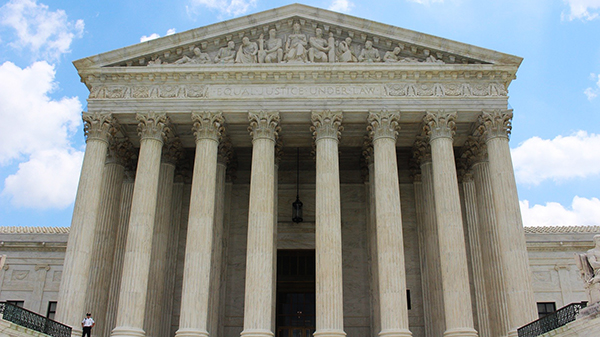
Although the White Hall casino’s attorneys asked the high court to dismiss Riley’s appeals and extend their deadline to respond, the justices unanimously refused March 24 and gave the attorneys two days to present their arguments. Task force Commander John Tyson said the decision was “important” since a dismissal could have implied the justices thought King had authority to take over the task force’s gambling cases.
In their response, the casino’s attorneys said the “governor lacks the authority to appoint special prosecutors to prosecute these cases without the consent of the attorney general.” They also said, “If a dispute were to arise between the attorney general and the governor as to the continued course of this litigation, the attorney general has the ultimate authority to direct and control this litigation.”
Riley and his team previously stated King “has no authority” to direct the task force and vowed to “vigorously defend the authority of the office of governor.”
“I created the task force as a working group of executive branch agencies and officials to ensure that the laws against slot machines are enforced,” Riley said. “All of my actions and appointments have been in conformity with the constitutional and statutory authority of the governor.”
At press time, the task force was planning to respond to the casino’s arguments and was waiting for the Supreme Court to rule.



Share with others: