

OK. On this issue, I am a contrarian. The Ethics & Religious Liberty Commission (ERLC) of the Southern Baptist Convention (SBC) says the April 4 ruling by the U.S. Supreme Court protects First Amendment values like governmental neutrality, private choice and free exercise of religion. The National Association of Evangelicals agrees.
The American Association of Christian Schools hails the 5–4 decision in Arizona Christian School Tuition Organization v. Winn for helping parents give their children “quality education of their choice.”
Conservative columnist Cal Thomas celebrates the ruling, saying, “Proponents of school choice have been waiting for a ruling like this one.”
Against such unanimous support for the ruling, it is hard to raise a caution flag, but a caution flag is necessary lest the outcome of the Arizona case irreparably harms public education as well as religious liberty.
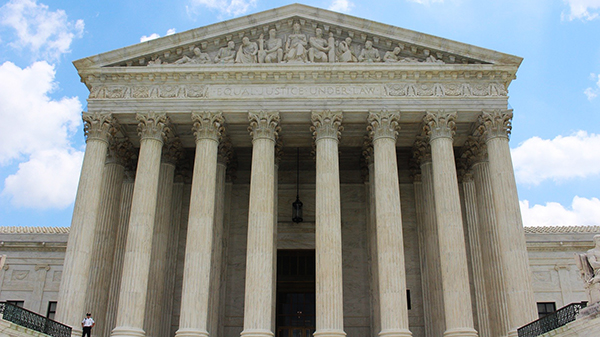
The Supreme Court did not decide the case on its merits. Instead the court ruled that taxpayers challenging an Arizona law allowing tax credits for scholarships for religiously affiliated schools could not file suit against the state because they lacked “standing.” The taxpayers argued the law violates separation of church and state. The court said the taxpayers had not been injured by the law so they could not file suit against it.
Since taxpayers now lack “standing” to file suit against any tax credit plan that channels money into religiously affiliated schools, the Supreme Court effectively established a plan for government at any level to support religious activities through tax credits.
That point was not lost on the court. The four dissenting justices observed, “The court’s opinion … offers a road map — more truly, just a one-step instruction — to any government that wishes to insulate its financing of religious activity from legal challenge. … No taxpayer will have standing to object. However blatantly the government may violate the Establishment Clause, taxpayers cannot gain access to the federal courts.”
The majority opinion argued that tax credits for scholarships to private (mostly religious) schools are not the same as appropriating tax money for scholarships. The scholarships come from private dollars, not public tax dollars, the court said.
That argument is the kind of distinction heard from proponents of parochial aid for generations. During my ministry in Missouri, I was privileged to help lead two statewide efforts that successfully prevented public tax dollars from flowing into private and parochial schools.
In those days, the SBC Christian Life Commission (the forerunner of ERLC) argued against vouchers, tax credits and every other form of parochial aid. Generally Baptists scoffed at the argument that tax credits were anything but parochial aid. If one can figure one’s taxes, then give up to $1,000 of the amount owed to a private (usually religious) organization and deduct that $1,000 dollar for dollar from what one owes in taxes and that equals indirect government aid, Baptists reasoned.
Such aid violates the U.S. constitutional principle of separation of church and state. Religious liberty for all has long been a hallmark of Baptists.
Unfortunately today many Baptist leaders parrot the arguments made by parochial school advocates of the past. The reason is the growing discontent with public schools and the growing involvement of Baptists and other evangelicals in parochial schools. Christian school advocates among Baptists argue, “It is contrary to our history of liberty that parents should be forced to educate their children in government schools.” That is the exact sentiment heard from parochial school champions a generation ago — a sentiment that Baptists rejected.
The combination of discontent and personal involvement has impacted Baptist understanding of religious liberty. The 2000 Baptist Faith and Message statement of faith says, in part, “The church should not resort to the civil powers to carry on its work.” Yet Baptists are cheering a decision that takes the nation in that direction.
Thomas said in a recent column, “The case is likely to provide a large new revenue stream for private religious schools, especially Catholic institutions.” In Arizona, more than $350 million has flowed to mostly parochial schools through this program. At one point, 94 percent of the funds went to parochial schools. Now it is a little more than two-thirds.
“The next step should be court approval for school vouchers, which would allow parents complete freedom in choosing their child’s school,” he wrote.
It should be remembered that Baptists never opposed parochial schools. Although few in number, Baptist schools can be found throughout our history. Today Baptists sponsor a number of outstanding parochial schools.
Through the years, Baptists have contended that it is not the government’s role to fund parochial schools through direct aid such as vouchers or indirect aid such as tax credits. When either happens, the church is resorting to using civil power to carry on its work. Government’s role is to fund public schools, and individual citizens are not excused from their civic responsibilities just because they choose not to avail themselves of certain services.
If what Thomas hopes for and four Supreme Court justices fear comes to pass, then Alabama will be among the many states where tax credit plans will be introduced to help parents pay the costs of parochial education for their children. Tax support for public education will fall. Instead those dollars will flow into the private education of parochial schoolchildren.
Once adopted, citizens will be powerless to protest because the April 4 decision prevents them from filing suit against violations of church-state separation. They no longer have “standing” to file suit.
Such an outcome would be disastrous in this writer’s judgment. Public schools in Alabama have enough problems to deal with without exacerbating their financial situation with tax credit plans for parochial schools.
And Baptist commitment to the historical understanding of religious liberty is imperiled every time Baptists support direct or indirect efforts to use civil power to do the church’s work.
That is why it is necessary to raise a caution flag about the Arizona case even if one does appear to be a contrarian.

Share with others: