

It’s been six months since tornadoes struck Alabama and the Southeast, killing hundreds and destroying homes, businesses, schools and churches.
Some of the physical damage remains, but the battle for emotional and spiritual healing is only half over, according to Chuck Register, executive leader of church planning and missions development for the Baptist State Convention of North Carolina.
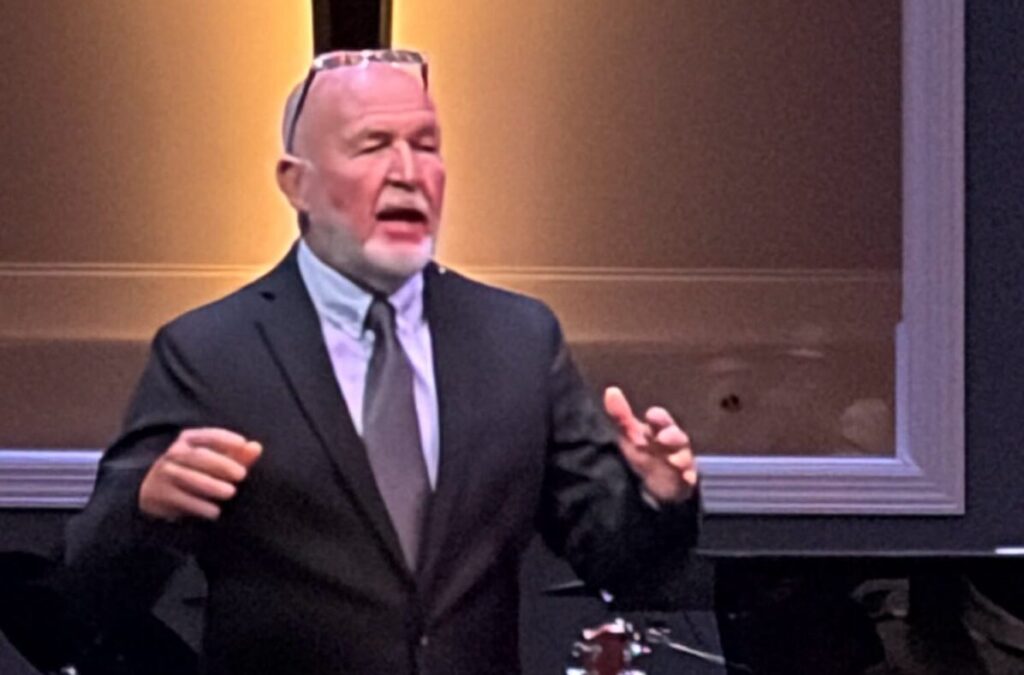
In a presentation called Adjusting to the New Normal, during the Oct. 30 After the Storm conference in Tuscaloosa, Register explained to about 100 members of Forest Lake Baptist Church, Alberta Baptist Church and New Eastern Hills Baptist Church, all in Tuscaloosa, that it will take at least a year for the healing process to run its course of highs and lows for the people of Alabama.
“If you thought the worst was over and it’s sunshine from here on out, you can just call me the prophet of doom,” he said.
Register wasn’t just quoting facts and figures. As the pastor of First Baptist Church, Gulfport, Miss., he witnessed Hurricane Katrina’s devastation firsthand. His church was gutted by the storm, and a photograph of it ran in national publications as an icon of the storm damage, he said.
At the time, Register believed he could handle the death and destruction without any help. Help was for the weak, he thought.
Before long, Register was burned out emotionally and only vented his feelings after his children were asleep.
“I didn’t want them to see Daddy cry,” he said. After he left Gulfport and it took a year for him to feel comfortable returning. Three years after Katrina, he was diagnosed with post-traumatic stress disorder.
And if tornado survivors — especially pastors in Tuscaloosa and throughout the state — don’t address their emotional and spiritual needs, then they will suffer too, he said. “We want to be fixers. We burn the candle at all the ends, not just two ends, and we end up burned,” Register said in an interview before the presentation.
After helping so many and dealing with their own concerns, people experience “compassion fatigue.” The condition, Register explained, occurs when people in emotionally draining situations, including natural disasters, become burned out after trying to be heroes to others in need. The symptoms of burnout include trouble sleeping, emotional sensitivity, short-term memory loss, appetite changes, challenged decision-making, irritability and depression.
“None of us, when we face what you faced on April 27, become superhuman,” he said.
After his presentation, Pastor Jay Wolf of First Baptist Church, Montgomery, delivered a sermon. Chip Colee, minister of music at First, Montgomery, provided the evening music, and Tuscaloosa Baptist Association provided a disaster relief team to cook for the event.
In his presentation, Register showed a graph depicting the emotional highs and lows of people in disaster situations from the initial preparations to the feelings of heroism and cooperation after the event to deep disillusionment later, all the way to the event’s one-year anniversary. He then asked attendees to divide into groups of three or four to discuss where on the graph they believed they were.
Not everyone was in the same place. Charlotte Payne, the wife of Forest Lake Baptist Pastor Donald Payne, said she had felt disillusioned in previous months but is now on the upswing. “I’m not at the top yet but I’m still climbing,” she said.
In contrast, Forest Lake college minister Aaron Barnes said he is coming off the honeymoon phase and dipping into disillusionment.
Barnes and his wife, Leesa, live outside of Tuscaloosa and volunteered from sunup to sundown for months after the storm hit.
“I would come home and just stare at the wall,” Barnes said.
Pastor Travis Coleman of First Baptist Church, Prattville, brought a team from his church to help with child care during the event held at Forest Lake.
“They just need that extra boost spiritually,” Coleman said.
He added that help from other churches, even if it’s just other members to cry with, is vital for the spiritual healing of tornado survivors.
“Jesus at Lazarus’ tomb — He cried, too,” Coleman said.
Share with others: