
Declining church attendance. Stressed pastors. Uncertain futures. Such is life for Hispanic congregations in Alabama with the new immigration law. But the news isn’t all bad.
“A lot of people left,” Carlos Gomez, pastor of the Hispanic congregation at First Baptist Church, Center Point, said of his parishioners. “I called them back and some of them returned. But I know of another ministry that is close to me here in town that had around 120, and now it has about 40. It’s beginning again.”
Reports of decreased attendance in Hispanic congregations are common since the law took effect last fall. Among its provisions is a requirement that police investigate during routine stops the legal status of anyone suspected of being an illegal immigrant. It also imposes penalties for businesses that knowingly employ illegal immigrants. A federal court struck down several other provisions of the law, including a ban on knowingly transporting or harboring illegal immigrants.
Even some legal immigrants stopped attending church and left the state after the law took effect, Gomez said, because they were afraid of being harassed by police or having an undocumented family member arrested. Many Hispanics stay home as much as possible because driving increases the risk of being stopped by police, he said.
To counter that fear, Gomez has begun picking up some of his members in a church van and taking them to worship.
Carlos Lemus, Hispanic missionary for Autauga and Chilton Baptist associations, said there have been no major problems among the Hispanic ministries in his area. But he changed the times of some Bible studies because he said police in certain regions tend to establish DUI checkpoints after dark and check the immigration documents of Hispanics who pass.
Lemus reported one church leader being arrested on his way home from visiting a family in his congregation and a youth ministry in Chilton County with struggling attendance.
“We were having a very good attendance of young people on Sunday afternoons to play soccer, and then we shared the gospel with them,” Lemus, who serves as president of the Alabama Hispanic Baptist Fellowship, said of the youth ministry. “But after this new law, parents are afraid to send their children to these kinds of activities because most of them don’t have legal documents. Some of them are Americans, of course, but they are afraid that with this situation, they could be arrested.”
Still Gomez and Lemus agreed that secure American borders are essential, and Lemus saw at least one positive effect of the law. Police apparently could not mount enough evidence to arrest two notorious drug dealers in his area on narcotics charges. However, they arrested and deported one under the immigration law, and the other voluntarily left the country, he said.
“Secure borders is, I would say, the No. 1 task of the government right now,” Lemus said, “and then trying to help those who are already here and perhaps living a decent life and trying to be good citizens here.”
Cary Hanks, catalytic missionary with the Central Alabama Baptists Hispanic Ministry Coalition and former Southern Baptist representative to Ecuador, said most Alabama Baptists do not understand how difficult Hispanic pastors’ lives have become in light of the new law.
Frequently parents who are illegal immigrants but whose children are American citizens ask their pastors to become their children’s legal guardians, Hanks said. That way if the parents are deported, then the children will not fall into state custody and can be sent back to their home country. Pastors routinely refuse to assume guardianship though, since they cannot perform that service for all church members, he said.
The United States should not grant amnesty to illegal immigrants, according to Hanks. But he said Alabama’s new law has thrown Hispanic families and churches into a crisis.
“Somebody’s got to stand in the gap with these families,” Hanks said of Hispanic pastors. “They’ve got to lead these churches. … They understand the need to be here legally, but they also understand you can’t just turn your back on families because they don’t have documents. These are people and God loves these people.”
Edwin Velez, pastor of Primera Iglesia Bautista Hispana (First Hispanic Baptist Church), Albertville, said he praises God that despite widespread fear among Hispanics, attendance at his church remains the same as it was before the law was enacted. One positive effect of the law, according to Velez, is an increased number of Hispanic immigrants attempting to gain legal status in the United States.
“I know a lot of people who have made appointments to meet with immigration lawyers,” he said.
One pressing need among Alabama Baptists is honest conversation about how to deal with the state’s illegal immigration problems, Velez said.
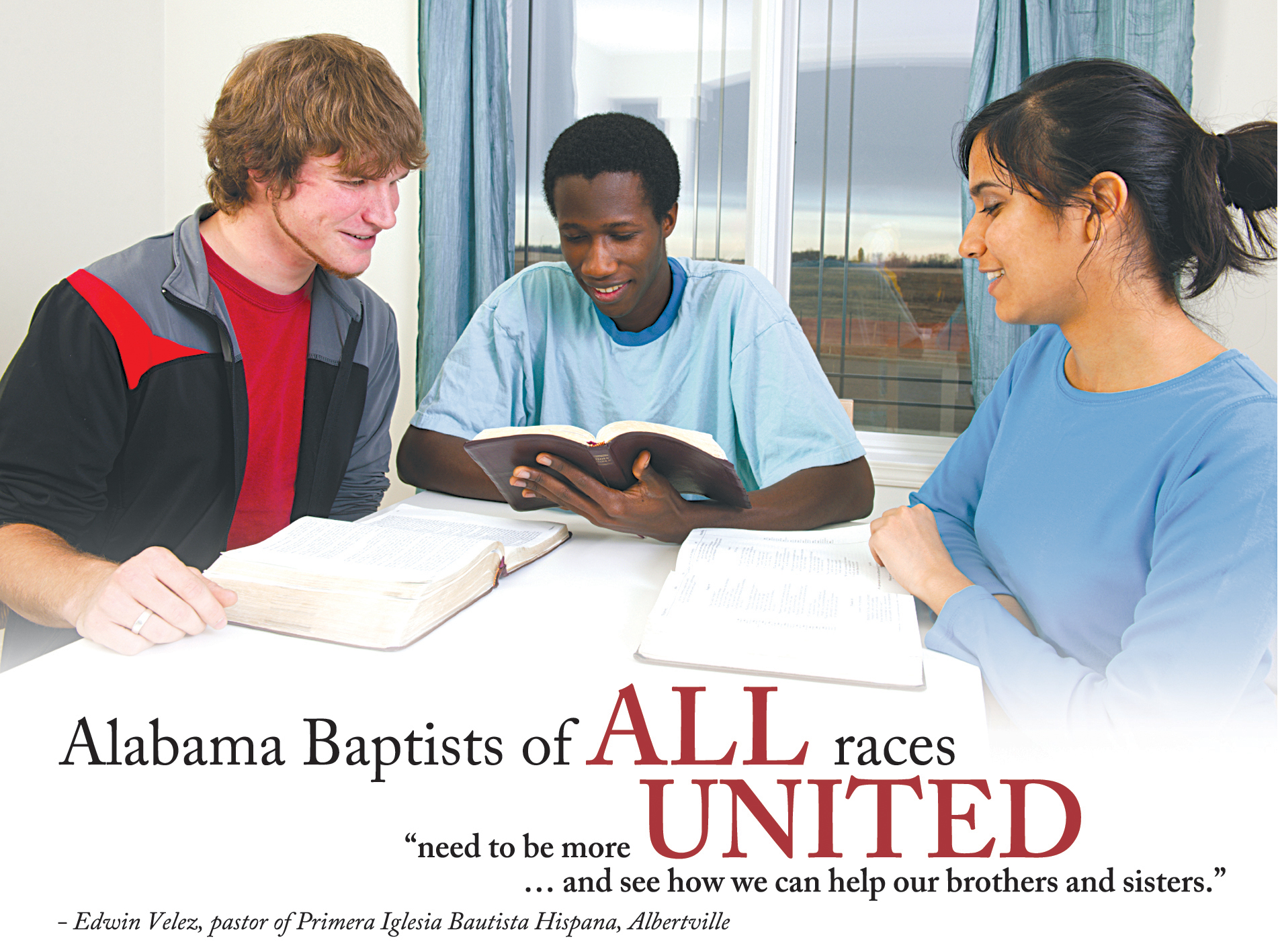
“I think that we need to unite and talk about this more openly,” he said. Alabama Baptists of all races “need to be more united … and see how we can help our brothers and sisters.”
Ben Hale, minister of evangelism and missions at Dawson Memorial Baptist Church, Birmingham, said the new law has not affected the number of attendees in his church’s Hispanic congregation. But he cited fear and uncertainty as common reactions among Hispanic believers.
“We have begun the process of thinking about how our church and how our Hispanic congregation will help and assist families if, in fact, the full law stays in effect,” Hale said. “In other words, how might we consider ministering to families that are separated (if some family members are deported)?”
While the government focuses on enforcing the law, he said Christians should reflect God’s grace to the community around them, including illegal immigrants. “We don’t necessarily feel like it is our responsibility to become enforcers of immigration law,” Hale said. “So we’re just going to serve and minister to whoever comes to our church or comes to one of our ministries.”
Share with others: