

Nominal Christianity fueled by a lack of discipleship is a major obstacle in standing against Boko Haram’s persecution of believers in Nigeria, a leader of more than 10 million Baptists in Africa said recently.
Yet Baptists in Nigeria still manage to teach the gospel at refugee camps and other locations where 1.5 million have been displaced by the Islamic militant group’s violence, said Durosinjesu Ayanrinola, general secretary of the All Africa Baptist Fellowship (AABF) consisting of 62 unions and conventions from 33 African countries.
“The issue of nominalism is nothing more or nothing less than lack of discipleship. When Christians are not discipled … you have a case where they will not grow (in) their relationship with Jesus,” Ayanrinola said. “We discovered that even though many attend church, the issue of discipleship is the case. … They go to church but they don’t have that in-depth relationship that can make them … stand [during] the difficult times like this.
Ministering in refugee camps
“But the good thing is that during this time there are people who are ministering today, even in their refugee camps, to assure them of God’s presence; to assure them that they are not alone,” Ayanrinola said. “It’s just like when the Israelites were in exile and God [was] raising up prophets to minister to them. I believe that even during these difficult times there are some pastors who have seen it as a ministry.” For those displaced people, they have committed “to pray for them, to comfort them, to assure them. They go to them one by one and collectively. And where it is possible outside the Boko Haram’s (watch), they are meeting.”
Christians who are not strong in their faith are easily sidelined by the terrorists who seek to drive out Christianity from the country and establish strict Islamic law.
“This is a difficult time in their Christian journey. Some of them came out from idolatry and because of this attack on their faith some of them are saying ‘Where is the God that we’ve heard can save us in difficult times like this?’” Ayanrinola said. “So you have some of them who … are not strong going back to their idolatry, especially for protection.”
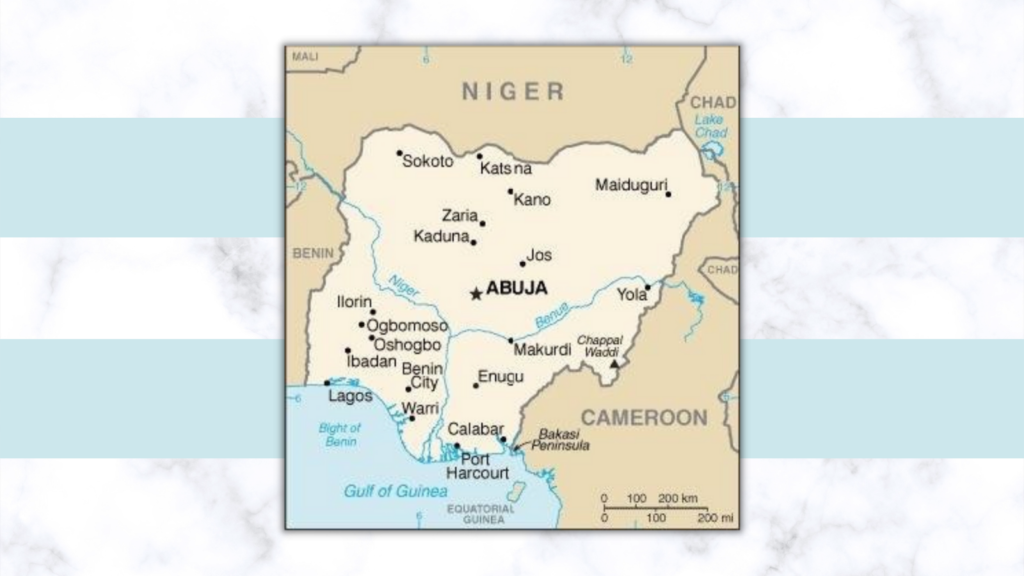
Boko Haram has intensified attacks in northeastern Nigeria since President Goodluck Jonathan imposed a state of emergency in the region in May 2013 and at one point had captured territories totaling more than 20,000 square miles, establishing Islamic regions under Boko Haram rule. The violence forced Nigeria to delay its Feb. 14 national elections until March 28.
According to a report by Samson Olasupo Ayokunle, president of the Nigerian Baptist Convention, the Boko Haram in Nigeria has affected at least 32 Baptist churches and just fewer than 2,000 individual Baptists. Most of the damage was caused by vandalism and the burning of churches.
The insurgency in northern Nigeria, Ayokunle reported, “comes most of the time through Fulani herdsmen who go about with AK-47 rifles and other sophisticated weapons to kill farmers in their villages when they are fast asleep.”
Boko Haram has killed more than 13,000 Christians and nominal Muslims in Nigeria since 2009, according to some counts. In a video posted online March 7, a man believed to be Boko Haram leader Abubakar Shekau pledged allegiance and obedience to Islamic State (ISIS).
Pushing back
Security forces in neighboring Chad and Cameroon, where refugees have fled, have joined with Nigeria military in pushing back the terrorists in some areas, including the towns of Yobe, Adawama and Bama, according to Nigerian national security spokesperson Mike Omeri.
The AABF has received lists from the Nigeria Baptist Convention detailing Boko Haram destruction among church memberships in the area. Although the lists are not exhaustive, they give faces to the victims of violence often reduced to numerical estimates in news reports.
Representative of the thousands included on the lists: Esther J. Ahidjo, father killed; Joseph Jingi, killed; Hauwa Tizhe, husband killed; First Jerusalem Baptist Church, farm destroyed, members raped and scattered.
Ayanrinola said, “There is need even to get some money to help build the schools that are destroyed. In the Nigerian Baptist Convention, I know that the president said in order for students in the Boko Haram [affected areas] to continue with their education they have moved them to another state that is free [of Boko Haram]. So they are going to school in another state which is free, and they are allowing these students to go to school [at no cost].”
Southern Baptists can help by praying for the specific needs persecuted Christians face in Nigeria and elsewhere in Africa, Ayanrinola said.
“So we need to pray that the Lord Himself will encounter His people in a new way that their faith will continue to grow. We need to pray for boldness because (the) Islamic agenda (tries) to create fear in the hearts of Christians so that on Sundays they may not be able to go out and worship, and they are achieving that,” he said. “So let’s pray that their faith in the Lord will increase. … Let’s pray for those workers among them who are helping them to grow in the Lord, that they should not be terrified, that God Himself will protect them.”
Pray also for the salvation of Boko Haram insurgents, Ayanrinola asked.
“Let’s pray for the Boko Haram too. Like Saul persecuting the Church (before his conversion on the road to Damascus) … he became an instrument in the hand of the Lord. Let us pray that the Damascus experience will also happen among Boko Haram, that many of them will come to encounter Christ,” he said.
Raising funds and awareness
The AABF has helped persecuted Christians by raising funds and awareness of Islamic insurgency. They are fighting nominalism by encouraging Christians to faithfully endure and training Christian leaders to write educational discipleship materials.
Ayanrinola served as associate pastor at two Southern Baptist churches in Kentucky before returning to Africa in 2000. He holds a master of divinity and a doctor of missiology degree from Southern Baptist Theological Seminary in Louisville, Ky.
“In my traveling around Africa, I have seen one great deficiency,” he said. “The study of God’s Word is lacking — it is seriously lacking. In many churches they don’t have any literature. They don’t have something to help them grow spiritually, no devotional materials, no Sunday School materials.
“We have taken it upon ourselves to see that in the next few years some of our conventions in Africa will be writing their own literature.”
(BP, BWA)
Share with others: