
For those Baptists concerned about developments inside the Southern Baptist Convention (SBC), the past few weeks have been filled with news. At the North American Mission Board, new President Kevin Ezell unveiled his new organizational and staffing structure during the trustee meeting Feb. 8–9.
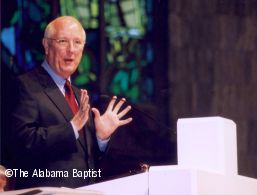
On Feb. 21 came the installation of Frank Page as the new president of the SBC Executive Committee. And in the weeks between assuming that role and his first meeting, Page had to reduce the Executive Committee’s salary budget by 19 percent and then develop a proposed budget for the national convention that further reduces the Executive Committee’s budget.
But perhaps the biggest news was sandwiched between those two events. On Feb. 16 came the announcement that Tom Elliff had been selected as the nominee to lead the International Mission Board (IMB). That announcement caught most Southern Baptists by surprise. Elliff turned 67 years old Feb. 21, making him only about two years younger than former President Jerry Rankin at the time of his retirement in July 2010.
Elliff’s selection gives credence to the many reports that the IMB search committee was deadlocked. After all, Rankin announced his retirement in September 2009 with the stated goal of having a new president in place by the time he left office.
But the search committee could not agree. Reportedly the committee was divided between those desiring a leader with extensive missions experience and those wanting new blood, specifically a president who could relate to pastors of large SBC churches.
With Elliff, both sides win. In 1981, he resigned a nine-year pastorate in Tulsa, Okla., to be appointed as a SBC missionary to Zimbabwe. An accident involving one of his children and her subsequent medical needs brought his family home two years later. Then in 2005, he resigned a 20-year pastorate at First Southern Baptist Church, Del City, Okla., to join the administrative staff of the IMB as senior vice president for spiritual nurture/church relations. He held that position until 2009, when he resigned to pursue a writing and speaking ministry.
In between those two stints with the IMB, Elliff served as the pastor of a megachurch and rose to the upper echelon of SBC leadership. He served as president of the SBC from 1996 until 1998 and the SBC Pastors Conference in 1990. He is one of the better-known personalities in the SBC.
Elliff already has been described as a compromise candidate — one both groups finally could agree on to break their stalemate. Some also have referred to him as an “extended interim president” because of his age. But neither of these observations should detract from the quality of the man or the importance of his tenure.
Elliff is an excellent choice. He loves missions. And because he has been a missionary and a missions administrator, his learning curve as president will not be as steep as if a pastor had been selected. At the same time, he is a pastor known for his “pastor’s heart.” He understands and can relate to pastors and other SBC leaders. In that light, his selection can be seen as a win-win.
And his time of leadership will be critical. When Rankin announced his retirement, he said the trustees were united in their strategy to win the world. He said there was more unity among the trustees than anytime during his 17-year tenure. He said his resignation would allow for a seamless handoff of responsibility.
Instead there was a stalemate as the search committee cast its nets far and wide and the struggles within the committee wafted across the SBC. Lots of egos were bruised in the process.
Southern Baptists certainly are united in their support of reaching the world with the gospel. Yet questions abound about strategy (Does the IMB do missions on behalf of all SBC churches, or does the IMB facilitate some SBC churches doing missions?), funding (Should missions dollars flow through the Cooperative Program, or should churches spend their missions dollars on direct missions projects?) and relationships (How does the IMB balance its autonomy as an SBC entity with its role as a part of the family of Southern Baptist ministries?).
Elliff will have a full plate of issues if he assumes office, and how he might choose to lead Southern Baptists to respond to these and other issues will be critical to the future of the convention.
Here, also, Elliff has a head start. He knows SBC structure. He knows SBC entity leaders. He knows pastors of leading SBC churches. And he knows the IMB. In addition, he is liked and accepted by all of them. All of this will be positive for the IMB.
Elliff undoubtedly will be elected when IMB trustees meet March 15–16 in Dallas. And this writer seriously doubts that he will be an “extended interim president” content to hold things together for four or five years while the board of trustees is reshaped through new members so it can try again to elect a president.
We anticipate that Elliff will put his stamp of leadership on the international missions movement by Southern Baptists from the moment he takes office and will be the “president” of the board every day he serves.
Again Elliff was a surprise choice for the position. That is obvious. But he is a good choice and is well-equipped for the challenges of this moment in Southern Baptist life.
May God bless Tom Elliff in this new role and use him to unite Southern Baptists in the Great Commission challenge of making disciples of all people everywhere.
Share with others: