
The suspension of food assistance during the government shutdown will leave hundreds of thousands of Alabamians in the lurch. Food banks are preparing to step in as they can.
It won’t be easy for organizations that have already seen the effects of high grocery prices and federal funding cuts earlier this year.
Subscribe to The Alabama Baptist today!
SIGN UP for our weekly Highlights emails.
Feeding the Gulf Coast serves 24 counties in south Alabama, Mississippi and Florida. Chief Executive Officer Michael Ledger said the food bank is used to seeing a surge in demand when natural disasters like hurricanes strike. But the shutdown will take it to another level.
“This is a scale, and just because of the geography and the number of people that are going to be impacted, that I would say is truly unprecedented,” Ledger told Alabama Daily News on Tuesday (Oct. 28).
Alabama’s Department of Human Resources announced Monday that the U.S. Department of Agriculture informed them that the Supplemental Nutrition Assistance Program, or SNAP, benefits will not be distributed to recipients in the state, beginning Saturday (Nov. 1), due to the federal funding lapse.
Roughly 752,000 Alabamians receive food assistance through SNAP, including 500,000 families with children, 300,000 families with older adults or disabled people, and 24,000 Alabama veterans, according to Alabama Arise.
Preparing for ‘disaster’
The Community Food Bank of Central Alabama is treating the shutdown like a disaster, having set up a fund for donations to specifically provide meals for those impacted by the shutdown, including federal workers missing paychecks and those who will not receive their SNAP benefits.
“Hundreds of thousands of people just in our 12 counties in Central Alabama will not have food on their table,” CEO Nicole Williams told ADN. “And to me, that is a disaster.”
In Washington, Republican congressional leaders do not appear ready to advance legislation sponsored by Republican Sen. Josh Hawley of Missouri to fund SNAP during the shutdown.
U.S. Sen. Katie Britt, R-Ala., signed on as a cosponsor to that bill. Britt said she would prefer for the Senate to pass the full-year spending bill that would fund the food assistance through next year, but acknowledged people could go hungry without the benefits being distributed next month.
“…(I) believe that people who depend on SNAP should not fall victim to Democrats’ political ploys and that’s exactly what’s happening here,” she told ADN.
Senate Majority Leader John Thune, R-SD, is not expected to bring the SNAP funding bill to the floor for a vote, arguing a “piecemeal approach” is not the way to fund food assistance or the federal government as a whole. He said the focus should be on reopening the government with the Republican-led stopgap funding bill. The government has been shut down for 29 days.
U.S. Sen. Tommy Tuberville said he probably wouldn’t support Hawley’s legislation if it made it to the floor. If the Senate keeps “nitpicking” certain federal programs to support, “we’re not gonna get anything done” to end the shutdown, he said.
“I don’t think we should do a stand-alone (bill) because we’d end up with a government shutdown for many more weeks,” the Alabama Republican told ADN.
Democrats are urging the White House to tap into a contingency reserve to fund SNAP next month while the government remains shut down. But a USDA memo and Vice President JD Vance say the reserve can’t legally be used to cover the benefits.
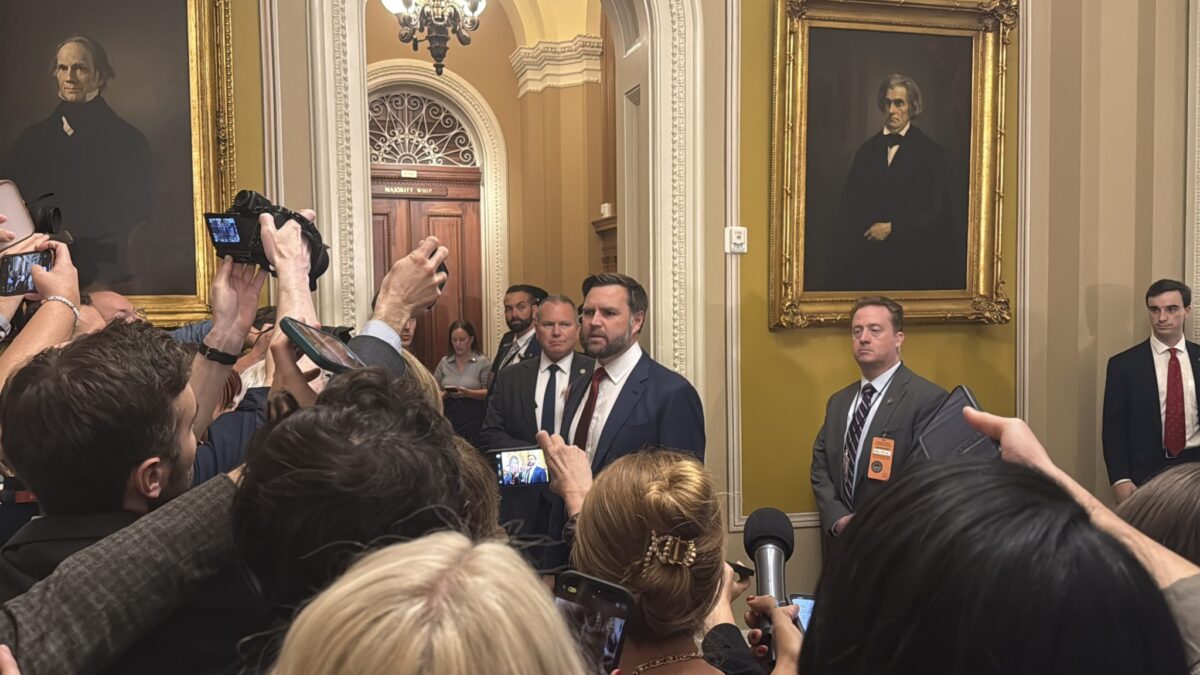
“We’re trying to keep as much open as possible, and we’re exploring all options,” Vance told reporters after meeting with GOP senators at the Capitol. “There are limitations on all these funds. There are limitations on how you can use them.”
Legal fight
On Tuesday, 25 Democratic-led states and the District of Columbia sued the USDA for suspending the SNAP program. The coalition argued that the federal government is required to fund the food assistance as long as it has funding, and the contingency funds could allow the department to dole out benefits during the funding lapse.
The Center on Budget and Policy Priorities, a left-leaning think tank, estimates that about $5 billion in reserve funding is available. About $8 billion is needed to fund the totality of the program in November, which feeds more than 42 million Americans nationwide.
For now, the state’s food banks are working to meet the growing demand. Feeding the Gulf Coast has already provided more than 65,000 meals to federal workers during the shutdown.
You can find food distribution sites throughout Alabama here.
EDITOR’S NOTE — This story was written by Alex Angle and originally published by Alabama Daily News.



Share with others: