
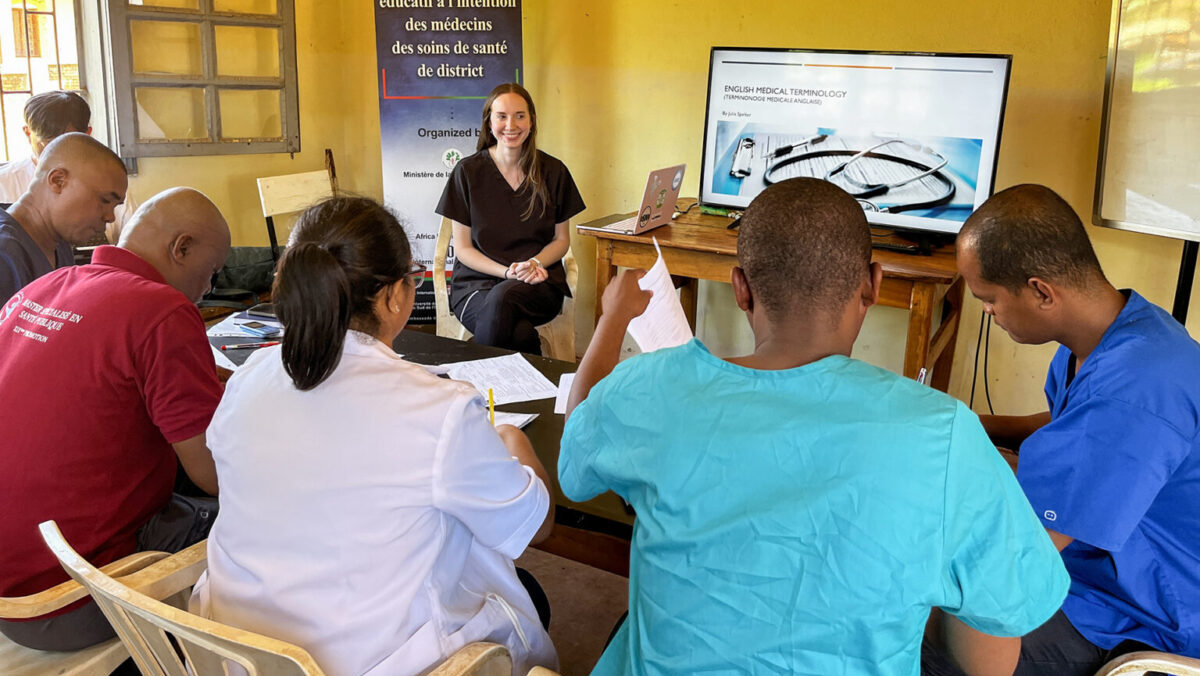
After hiking in 90-degree weather in flip-flops and a skirt to reach a village, Julia Spelter and another International Mission Board missionary were exhausted and dripping in sweat as they sat drinking tea in the dim room of a local nurse. The Malagasy nurse had the overwhelming task of serving several rural villages by herself in Madagascar.
Spelter shared this story during a main session at MedAdvance 2025 with 45 students during an evening event.
For more stories at your doorstep, subscribe to The Baptist Paper.
SIGN UP for our weekly Highlights emails.
Spelter told of listening to the nurse share about what was going on in the region physically and spiritually. Since she also had been trained as a nurse, Spelter saw the impact of the nurse’s dedicated work.
Spelter began her medical career in 2020 and was eager to dive into the physical work of being a nurse. When she started her Journeyman term, she was not seeing patients and not providing physical care but listening and building relationships by drinking cups of tea in locals’ homes and places of work.
‘Most powerful medical work’
“Sometimes the most powerful medical work doesn’t look like medicine at all. It looks like relationships,” she said. “Medicine teaches us, and what we learned in nursing school, measurable results are what we’re after. We want to see better patient outcomes. We want to see better statistics and our nursing care plans going according to our plan.
“But what if Christ’s success looks very different? We know that our success ultimately is measurable according to our obedience to Christ.”
She said, as healthcare workers, not having measurable results is a tough pill to swallow.
“I am a healthcare worker who is trained to value the tangible results of my work. But I realize that if I held to that mindset, that would be my Achilles’ heel,” she admitted. “The truth is that the unseen work matters just as much as the seen.”
Healthcare strategies and ministry
When Spelter arrived in Madagascar, she was the only medical professional on her team. She was tasked with using her healthcare strategies to reach the island.
“I realized that in order to do anything at first, I really needed to take off that stethoscope and pick up those cups of tea,” Spelter said. “Picking up that cup of tea was just as important as if I was in the clinic, working day and night.”
She began by teaching doctors and nurses medical terminology in English. She met people who she may never have met otherwise. She discipled medical students and taught them that faith and practice go together; they are not separate. She built trust and developed resources for future missionaries.
Spelter traveled with a missionary surgeon to teach medical terminology in English to doctors around the island.
Addressing MedAdvance attendees, Spelter said, “My challenge for you today is, are you willing? Are you willing for a season, or for however long the Lord tells you, to put down your stethoscope and your skills? Are you willing to pick up those cups of tea in order to establish ministries that will last for a long time?”
EDITOR’S NOTE — This story was written by Tessa Sanchez and originally published by the International Mission Board.

Share with others: