
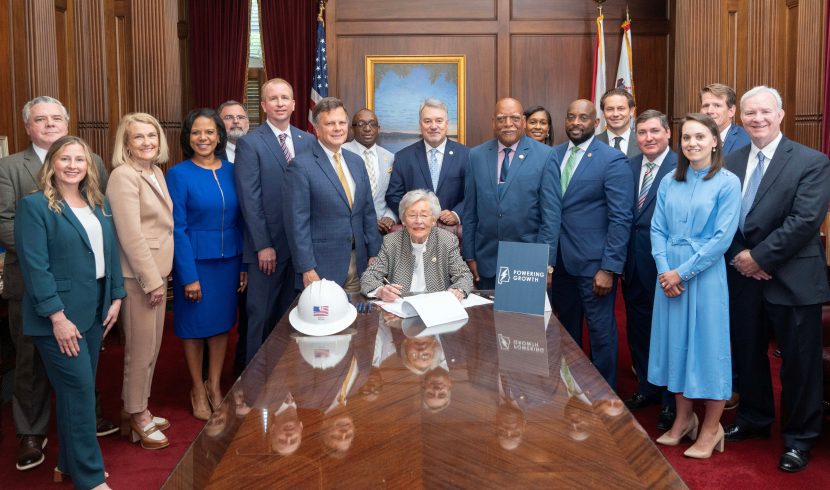
Gov. Kay Ivey signed into law Wednesday (May 13) the Powering Growth Act, a bill designed to accelerate energy infrastructure projects to boost industrial development in Alabama, particularly its rural areas.
“In order to keep Alabama’s economy growing, we’ve got to make sure that we have the power to support it,” Ivey said Wednesday in a statement.
Subscribe to The Alabama Baptist today!
“That’s what Powering Growth is all about — making sure our energy infrastructure is robust enough to meet the demands of new industries, new jobs and a stronger future. This plan ensures we’re prepared to compete, not just with neighboring states, but on a national level. By investing now, we’re laying the groundwork for long-term growth — especially in areas that need it most.”
Sent to Ivey’s desk last week, the bill will establish the Alabama Energy Infrastructure Bank, a division of the State Industrial Development Authority charged with financing energy infrastructure projects that support economic development. The law authorizes the agency to issue up to $1 billion in bonds to provide loans and other financial assistance to eligible energy infrastructure projects.
The Powering Growth Act will also establish two new state funds, the Alabama Energy Infrastructure Fund and the Strategic Energy Infrastructure Development Fund, to support long-term energy needs and accelerate industrial site readiness. The funds will initially be provided with $50 million, mostly from the state’s Alabama 21st Century Fund, which holds the state’s share of tobacco settlement money.
The Powering Growth Act was sponsored by Sen. Arthur Orr, R-Decatur.
“Powering Growth is truly a visionary plan that was developed through a collaborative, forward-thinking approach to identify today our energy needs for tomorrow,” Orr told Alabama Daily News.
“You don’t want to build a levee when the water is already rising. As energy demand is going to continue to accelerate in the future, we are laying the groundwork now through Powering Growth to ensure we are able to compete and win on economic development projects for decades to come.”
Targeting rural areas
The legislation targets rural areas by mandating that 40% of the loans and financial assistance given out by the newly created Alabama Energy Infrastructure Bank are allocated toward projects in rural counties, defined as having populations of less than 150,000. It also mandates that through 2030, the Strategic Energy Infrastructure Development Fund can only be used for projects in rural areas, and at least 50% after 2030 and beyond.
The language targeting rural areas of the state came from the Senate, with Senate Pro Tem Garlan Gudger, R-Cullman, saying Wednesday that supporting rural communities was a “key focus” for him and Senate leadership this year.
“We worked to include language in these bills that ensures a significant portion of this investment goes to rural Alabama, and I can’t wait to see the projects and economic growth that these investments will make for years to come,” Gudger said. “Energy security and dominance is critical for growth, and this is a big step forward in ensuring that we have both here in Alabama.”
The Powering Growth Act is expected to cost up to $50.3 million over 40 years, given the authority for the State Industrial Development Authority to issue $1 billion in bonds to accelerate the development of energy infrastructure projects. The State Industrial Development Authority was also allocated $15 million in the 2026 General Fund budget, $5 million less than what Ivey had recommended.
EDITOR’S NOTE — This story was written by Alexander Willis and originally published by Alabama Daily News.


Share with others: