
It is an unchallenged assumption. Churches with a casually dressed preacher and guitar- and drum-driven worship songs are essential to a vibrant church, and if a church has traditional worship it will decline and die (see story, page 4). But is it true?
Alabama Baptist worship leaders hold their own views on the assumption that contemporary worship is vital to success in today’s churches.
Keith Hibbs, director of the office of worship leadership and church music for the Alabama Baptist State Board of Missions (SBOM), said he disagrees with the assumption.
Successful worship is vibrant and passionate and happens throughout the week as personal worship, he said.
“It’s the heart of the worshipper,” he explained. “If the worshipper is worshipping in spirit and truth, it doesn’t matter what … style it is.”
According to Hibbs, the SBOM’s office of worship leadership and church music does not hold a worship style preference and considers all styles of music valid. He shared that many Alabama Baptist churches use a blended style of worship, which blends traditional and contemporary songs, music and presentation.
Eric Mathis, instructor of church music and worship leadership at Samford University in Birmingham, said successful worship for a church is all about finding one’s niche.
The assumption that contemporary is the only option is “grossly mistaken,” he said. Too many people currently run the risk of saying the church has to go one single direction, he said. “I just don’t think that’s true.”
Mathis grew up in a small Missouri town, and his grandmother served as church organist for more than 40 years. He received his early musical training in the church — first learning to play by ear and then eventually learning to read music.
Originally thinking he would go into full-time music ministry, Mathis attended Wheaton College in Wheaton, Ill., to study piano performance. But he was frustrated by “worship wars” he was observing at the time, and a professor encouraged him to consider teaching. That set him on a path where he went on to receive a master of music in church music from Baylor University in Waco, Texas, and later a master of divinity from George W. Truett Theological Seminary of Baylor University. He is currently completing a Ph.D. in theology with emphases in Christian worship and preaching from Fuller Theological Seminary.
Mathis explained when worship is reduced to musical styles only, music is made subjective because it becomes more about one’s own personal preferences. “Worship is all about how God is God and we’re not,” he noted.
According to Mathis, people tend to think that because some churches are going the way of guitar- and band-driven worship, all churches will move that direction.
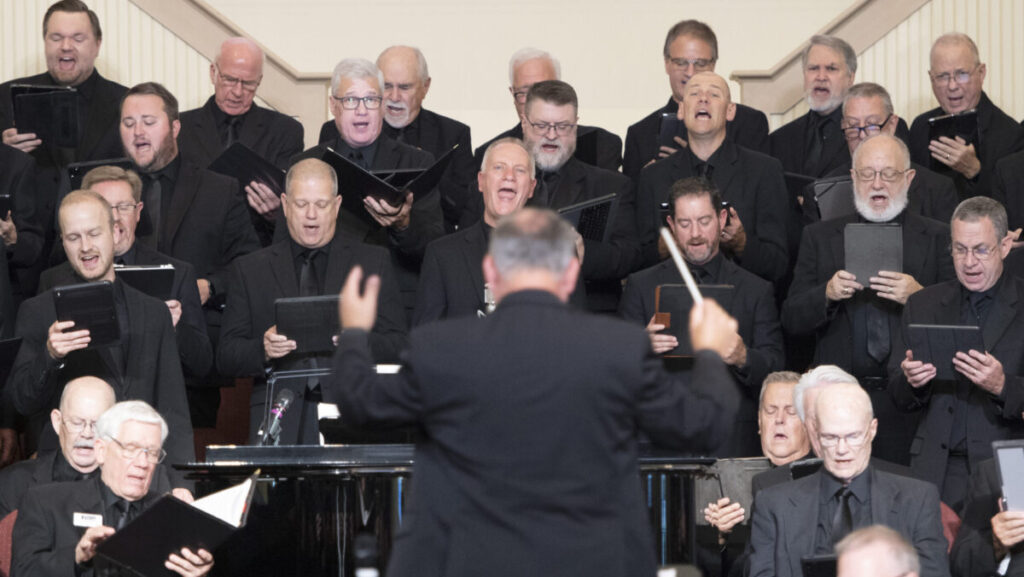
While it is certainly true some churches are going that way, he explained, many other churches possessing a more traditional style of worship — both within and outside of Baptist life — also have worship that is vibrant.
Dawson Memorial Baptist Church, Birmingham, is an example of a church with a successful traditional worship service, he said, noting more than 1,800 people attend its two traditional services on Sunday mornings.
But churches proudly waving a “tradition and heritage” flag must also be careful not to become stale, he noted. They must find ways to reinvigorate their worship to make it fresh to their particular context, he said.
Mathis serves as church organist at Dawson but also fills in to lead the contemporary worship service when needed.
“I love the hymns … organs … choirs … just as much as I love the band,” he said. “I love more than anything when a church can find its niche in worship.”
Jason Breland, worship pastor of First Baptist Church North Mobile, Saraland, said, “I think the church as a whole is much bigger than dress code or a certain instrumentation on the platform.”
Disagreeing with the assumption that contemporary is the only option, Breland — who serves on the faculty of the Center for Performing Arts (CPA)/School of Music and School of Worship Leadership at the University of Mobile and is the artist in residence — said the assumption “is a very limiting perspective.”
Breland grew up at Cottage Hill Baptist Church, Mobile, and attended Liberty University in Lynchburg, Va. He toured with his father Roger Breland’s Christian music group, TRUTH, for six years and has served churches in various states including Ohio and Florida.
Breland knows of vibrant churches that would be labeled traditional as well as those that are casual and not traditional in any sense of the word.
For example, the choir at First Baptist Church, Woodstock, Ga., sings in choir robes and Pastor Johnny Hunt preaches in a suit.
On the west coast, the praise team and contemporary band at Saddleback Church in Lake Forest, Calif., is casually dressed, just like Pastor Rick Warren. But both churches are making a significant impact in their areas and around the world, Breland said.
“The health of the church and the effect of the church” have to be measured by more than what’s worn on the platform and what instruments are used in praise and worship, he said.
Mathis added, “I think the reality is that we need all the music that the church offers.” The importance is learning to love our neighbors in worship so much “that we’re willing to sing each other’s songs.”
To read related articles, see "Organ provides 'thrilling sound' with 'soul'" and "'Default standard' contemporary worship style may not be only option for success"
Share with others: