

Seven years of harassment and attacks by hard-line Muslims have finally forced a Palestinian church in East Jerusalem out of its building.
The members of Calvary Baptist Church, under Holy Land Missions, moved out of their building in the Shofat area of Jerusalem, Israel, in July after Islamists threatened their landlord.
Pastor Steven Khoury said he was emotionally torn when he handed over the keys. The persecution was difficult but also had been a catalyst for spiritual development, he said.
Immediate persecution
“It was very emotional because a lot of our people really started to grow there,” he said. “Most of the growth happened in Shofat because of the persecution.”
The persecution started almost immediately after the congregation moved into the building in a predominantly Muslim area in 2007.
Within 10 days of starting meetings and worship services, a Muslim who lived close to the church building attacked a member with a knife. Then someone tried to set the building on fire, likely with a Molotov cocktail, Khoury said.
Next came the vandalism — first cars parked at the church building were damaged, then the property and finally came physical attacks on children coming to church gatherings.
“These were all spread out over a two- or three-year period, to let us know that we were not welcome there,” Khoury said.
When the local government accepted a request in late 2008 to put up a road sign identifying the location of the church building, things “really escalated,” he explained.
“When we did that it took everything to the next level. The landlords were now being threatened. The landlords were being told, ‘How dare you do this, this is a disgrace to Islam. If you don’t do anything about this, we will.’”
Eventually the landlord succumbed to the pressure and the 110-member congregation had to leave the building.
This has happened to the church twice before.
In 2006, Holy Land Missions had to leave a building in the Beit Hanina area of East Jerusalem, which is a Muslim-majority area like Shofat. When the group rented the building in 2004 church vehicles were vandalized, a sign identifying the church was torn down twice and the building was subjected to repeated vandalism and break-ins, Khoury said.
Church administrator Hany Khayo said persecution has been constant.
Especially disheartening to the congregation was the response they received from clergy of “traditional” Christian denominations such as the Greek Orthodox and Armenian Orthodox.
“Some of those [pressures] in the community were from traditional Christians, believe it or not,” Khayo said. “Traditional Christians did not want us there. They said, ‘You guys are not Christians. What Christianity do you represent? If you’re not an official church then God doesn’t hear your prayers.’”
‘Sheep stealing’
A well-known phenomenon in the Middle East rarely discussed openly, centuries-old churches accuse evangelical Christians of “sheep stealing” when they arrive to establish churches. Paradoxically hard-line Muslims tend to be more tolerant of the ancient churches because of the perception that they do not engage in evangelism, whereas evangelical denominations by definition actively spread the message of Christ. Any missionary activity brings them into direct conflict with Muslims.
Eventually the landlord of the Beit Hanina building began receiving threats from his fellow Muslims, and the church had to leave after only two years.
The Beit Hanina congregation was Khoury’s second attempt to plant a church in Jerusalem.
When he was an adolescent his father, a pastor, ministered in East Jerusalem and Bethlehem. During that time, Khoury’s uncle, George Khoury, showed the need for a church in East Jerusalem. He also would display the power that a church body can have on people’s lives, changing Steven Khoury’s life forever.
In the mid-1990s, George Khoury was a stocky, 6-foot-6 man known to be a trouble-maker with anger issues. Steven Khoury’s father invited George Khoury to a three-day prayer conference.
“When we invited him, the first thing he said to us is, ‘Will there be free food?’” Steven Khoury said. “At the end of the three-day conference, my Uncle George — big man, tall guy, anger problems, liked very few people and very few people liked him because he was just a trouble-maker — on the third day of the conference in the Sea of Galilee he accepted Christ as his personal Savior.”
On the way back from the conference George Khoury made an abrupt announcement: “We need to have this in Jerusalem.”
“When he said, ‘We need to have this,’ what he meant was that he wanted the fellowship, the Bible and the spiritual growth,” Steven Khoury said. “He wanted that, he just didn’t know the lingo for it was called ‘church.’”
Steven Khoury said about two years passed and his uncle quickly became a different man. He was the inspiration for the church established by Steven Khoury’s father in Wadi al-Joz in East Jerusalem. George Khoury’s favorite Bible verse was Matthew 16:25, “For whosoever will save his life shall lose it, and whosoever will lose his life for My sake shall find it.”
The verse became prophetic when a neighbor began frantically knocking on George Khoury’s door as he sat in his house on the Mount of Olives one night. A group of Muslims were trying to take an elderly man’s house from him by force. George Khoury took him into his house to protect him and then walked outside to face the group of Muslims and stop the attack. It was the last thing he would do.
‘Peace of Christ’
“He barely walked outside his doorstep and the same men that were attacking, chasing after the old man, saw my uncle walk out onto his doorstep,” Steven Khoury said. “In our culture, when somebody ‘walks out’ — when you take somebody’s place — you’re basically responsible for that man’s life, and Uncle George was beaten to death with a metal rod by these men.”
The elderly man survived the attack. Many years later when he could talk about what happened, he told Steven Khoury that his uncle had more peace in him than all those who killed him. When George Khoury died, the elderly man told Steven Khoury, “The peace of Christ was upon his face.”
The Wadi al-Joz congregation rented a building to use as a church but was forced to leave it as well because of persecution.
“It was always being targeted for break-ins. We had a minimum of 10 break-ins,” Steven Khoury said.
When the Wadi al-Joz congregation left the building, members tried to set up house churches but quickly found that didn’t work, Steven Khoury said. Whereas converts and other Christians could go to a church building with some degree of safety and anonymity, it was nearly impossible to meet unnoticed in a house church because of the small, tightly knit community that defines Palestinian society.
“They did home meetings for a while, then that started to cause problems for people because many people live in apartment buildings and the majority of the Arab community in Jerusalem, whether they be in the Old City or outside the Old City, are Muslim,” Steven Khoury said.
Some of the original Wadi al-Joz members later joined other “above-ground” churches. Others left the country because of political problems and violence.
As a temporary measure the Shofat church rents a meeting hall for a few hours two times a week. They found a multistory building they would like to buy for $3.5 million — a high price because of the competitive real estate market in Jerusalem, Steven Khoury said.
“By faith we are asking the Lord to help us raise $3.5 million. We’ve been able to raise about $700,000 so far,” he said.
In spite of all that happened to him and his congregation, Steven Khoury said they are determined to stay in Jerusalem and do what he feels God has called them to do. “I believe in being persistent, and I believe in holding your ground and standing strong,” he said.
(MS)
_______________________________________________________
Baptist leader urges Christians to stay in Middle East
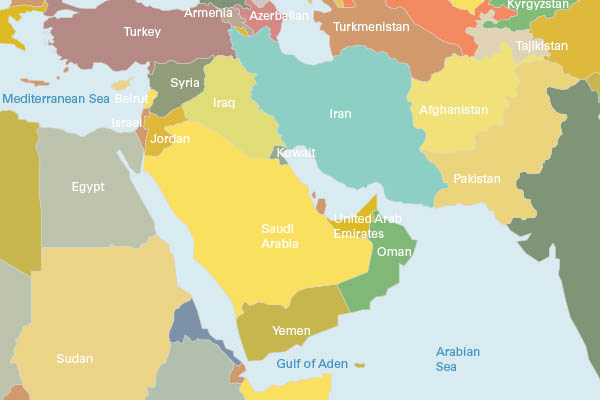
Nabil Costa, executive director of the missions organization Lebanese Society for Education & Social Development, opposes recent initiatives by European and Western governments to offer visas for Christians fleeing violence by Islamic militants in Syria and Iraq.
“We want the Christians in the West to lobby for us to live here in peace,” Costa said.
The government of Australia recently approved 4,400 humanitarian visas to resettle people fleeing violence in the two countries.
Long-term refugees
Costa said short-term humanitarian relief to those fleeing violence in Iraq is to be commended, but he fears that unless Christians return to their homes they will become long-term refugees similar to the exodus of Palestinian Christians from the Holy Land.
“In the long run we need to help Iraqis stay in Iraq,” Costa said. “The Iraqis that left Mosul need to go back to Mosul. Christians that are leaving Syria need to go back to Syria. You need to help them go back to their countries.”
Reuters reported Aug. 29 that 3 million Syrian refugees have registered in neighboring countries and nearly half of 6.5 million Syrians have been displaced by the advance of Islamic State forces.
Recently the Syrian conflict has spilled over into Lebanon.
“You do not help us as the West when you give us visas to emigrate,” Costa said. “We don’t want to emigrate. We want your power to help us to stay here.”
(ABP)


Share with others: