
Evangelism is “the headwaters of everything,” according to pastor and ministry leader Sam Rainer. “All church health flows downstream from evangelism.”
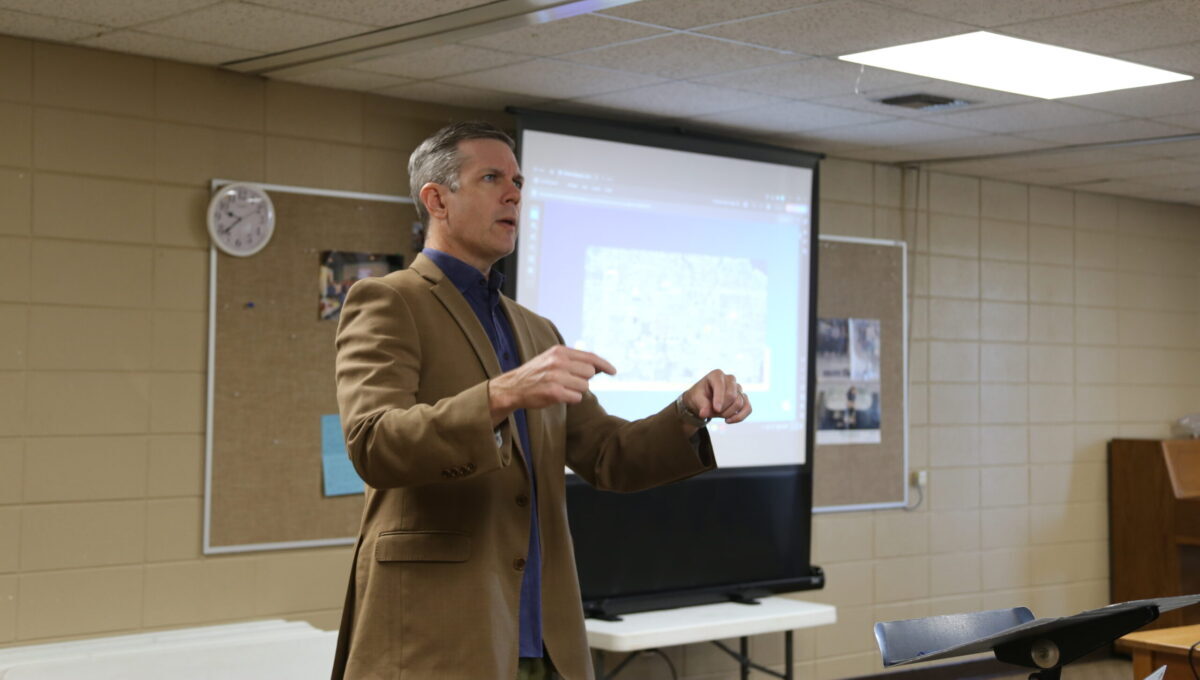
Rainer, pastor of West Bradenton Baptist Church, Bradenton, Florida and president of the Church Answers ministry, led a breakout session at the Alabama Baptist State Evangelism Conference, at Heritage Baptist Church Montgomery March 2.
Subscribe to The Alabama Baptist today!
SIGN UP for our weekly Highlights emails.
Rainer became pastor of West Bradenton 10 years ago, describing it as a “neighborhood church.”
“In the South we sometimes talk about having churches on every street corner,” he acknowledged. “And I say, ‘What’s wrong with that?’ This is gospel real estate and God has called every church to bless its community. You are where you are for a reason.”
‘Return of the neighborhood church’
Rainer based his breakout session on his 2023 book, “The Surprising Return of the Neighborhood Church,” saying his research suggests “megachurches” are a Baby Boomer phenomenon.
“We define a megachurch as one with 2,000 or more worshipers on site for one year,” he noted. “In 2010 we had about 1,600 of these. The number peaked in 2012, and today there are approximately 1,000, though some insist 800–900 is more accurate.
“There’s nothing wrong with being a megachurch, of course, but we have some 400,000 churches in America. Each of these is called to bless their communities.”
‘The power of hospitality’
Rainer said the neighborhood church has a number of advantages in addition to strategic location: “the power of hospitality.”
“In the megachurch one expects efficiency,” he explained. “But the neighborhood church offers welcome and relationship. The smaller the venue the greater expectation of hospitality, which is one of the most overlooked spiritual gifts today. Hospitality is more than arranging flowers.”
The neighborhood church generally has financial sustainability based on good stewardship, Rainer asserted.
“You can handle the air-conditioning and plumbing issues, but imagine an aging megachurch having to spend millions of dollars on these things. Deferred maintenance can be a major challenge.”
‘High impact targeted ministry’
The neighborhood church also can provide “high impact targeted ministry,” Rainer said.
“You have a school or two in your community and you can minister in some way. For example, we adopted one school in our area, and we stock the breakroom for the faculty. You can believe our church has a good reputation among them when we walk in every week with grocery bags!”
The neighborhood church also can sustain bivocational or covocational ministry.
“The median church in 2000 had 137 in weekly worship,” Rainer noted. “Today the median church has about 65 in worship. This means that we must raise new leaders who may choose to keep a footprint in the business world for income and witness, but feel called to serve their churches too. The pastor in charge of our Sunday morning Bible study ministry is covocational and works in the insurance industry. But he has a heart for small group ministry.”
Finally, Rainer suggested a long drive “may not be worth it anymore.”
“A church in Jacksonville, Florida used to post billboards in South Georgia that read: ‘The difference is worth the distance,’” he related. “But no more. People will generally drive no more than 12 minutes to a place of worship. And 80% of millennials aren’t mobile. The mobility rate was 25% a few years ago, but now due to two jobs, unaffordable housing and the like, the millennial mobility rate is more like 7 or 8%. People are staying in their neighborhoods.”
Taking the lead in evangelism
Rainer later said the main pastor of a church must take the lead in evangelism.
“I hear pastors complain that their people don’t engage in gospel conversations,” he said. “I tell them, ‘Well, you do this and you can be the leader in evangelism.’”
Rainer’s website is churchanswers.com.

Share with others: