
As Alabama prepares to channel $12.2 million from its Roblox settlement through the state’s Safe Schools Initiative, Attorney General Steve Marshall said the money will help fill gaps in school safety efforts across Alabama.
The funding is the latest use of a program that has changed over time. Marshall said the initiative is designed to reflect best practices and national standards in school safety.
Check out more Alabama news here.
“What we’ve tried to do is to mirror best practices and national standards for those that do school safety,” he said.
Holistic approach
He said the goal has been “to truly elevate this discussion of school safety beyond just hardened locks and doors and entryways” and move it toward a more holistic approach.
Marshall told Alabama Daily News the settlement money will be used to fund school resource officers, which he said are a key part of school safety, for schools that currently don’t have them.
In the strongest programs, he said, SROs do more than respond to threats. They also build relationships with students and become trusted adults children feel comfortable going to with safety concerns.
Marshall said the money will likely be awarded through an application process and could be available not only to public and private schools, but also to local governments and law enforcement agencies that provide school resource officers.
‘More than a minimum standard’
Dwight Satterfield, Decatur City Schools’ deputy superintendent and school safety coordinator, said those changes are also reflected in the award itself. He has worked in school safety locally and statewide for 17 years.
“It’s more meaningful,” Satterfield told Alabama Daily News. “You’re having to prove the best practices. It is not a series of box checks. It’s more than just the minimum standard.”
He said winning the award now reflects not only on a school, but on the broader community around it.
Satterfield said this year’s criteria are the best he has seen.
First awarded in 2002, the Safe Schools Award has changed from recognizing schools largely for meeting state requirements to recognizing schools that can show stronger planning, stronger partnerships and stronger day-to-day practices, Satterfield said.
That change shows up in the application itself.
It starts with a school’s emergency operations plan, which has to be in strong shape before an application can move forward. From there, schools are asked to show how they work with law enforcement, fire departments, emergency management officials and others as well as what they are doing beyond what is required.
Then comes the site visit.
Satterfield said those visits are much more thorough than they used to be. Reviewers want to know not just whether a school has a plan on paper, but whether staff and students know what to do and whether the school can actually carry out what it says it does.
More than checking boxes
The process, he said, is no longer just about checking boxes.
“There’s not one thing you can do to say, ‘OK, this is it. This is the end all, be all,’” Satterfield said. “You’re going to see layers.”
Those layers can include building access, emergency procedures, student support programs, anti-bullying efforts and a culture in which students feel comfortable speaking up when something seems wrong, he said.
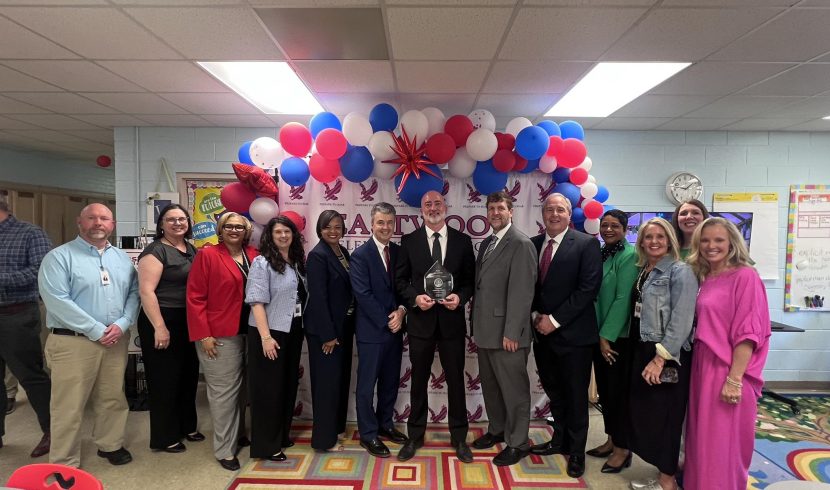
Decatur’s Eastwood Elementary School was among the schools recognized this year.
In a March 4 release announcing Eastwood’s award presentation, Marshall’s office said judges selected the school for its “proactive and compassionate approach to student safety and well-being,” citing partnerships with local agencies, participation in the Handle with Care initiative and computer-aided dispatch alerts for incidents within 500 yards of campus.
According to Marshall’s office, applicants were judged on preparation and training, collaboration with local emergency response agencies, involvement of school resource officers or other security personnel, safety technology, community participation and law-related and prevention education.
Marshall’s office announced in January that nine schools statewide received the Safe School Award, the program’s highest honor, for the 2025-26 school year. Four others were recognized for exceeding minimum state requirements and for higher standards in student learning, mental health and safety.
Marshall said schools that win can serve as examples for others. He also said schools that apply but do not win can still benefit from feedback from the team of expert reviewers on their applications.
The nine Safe School Award winners were: ACCEL Academy in Mobile; Orange Beach Middle and High School in Orange Beach; Northside High School in Northport; Beauregard Elementary School in Opelika; Allen Thornton Career Technical Center in Killen; Cullman City Primary School in Cullman; Eastwood Elementary School in Decatur; Elvin Hill Elementary School in Columbiana; and Harriette W. Gwin Elementary School in Hoover.
EDITOR’S NOTE — This story was written by Trisha Powell Crain and originally published by the Alabama Daily News.

Share with others: