
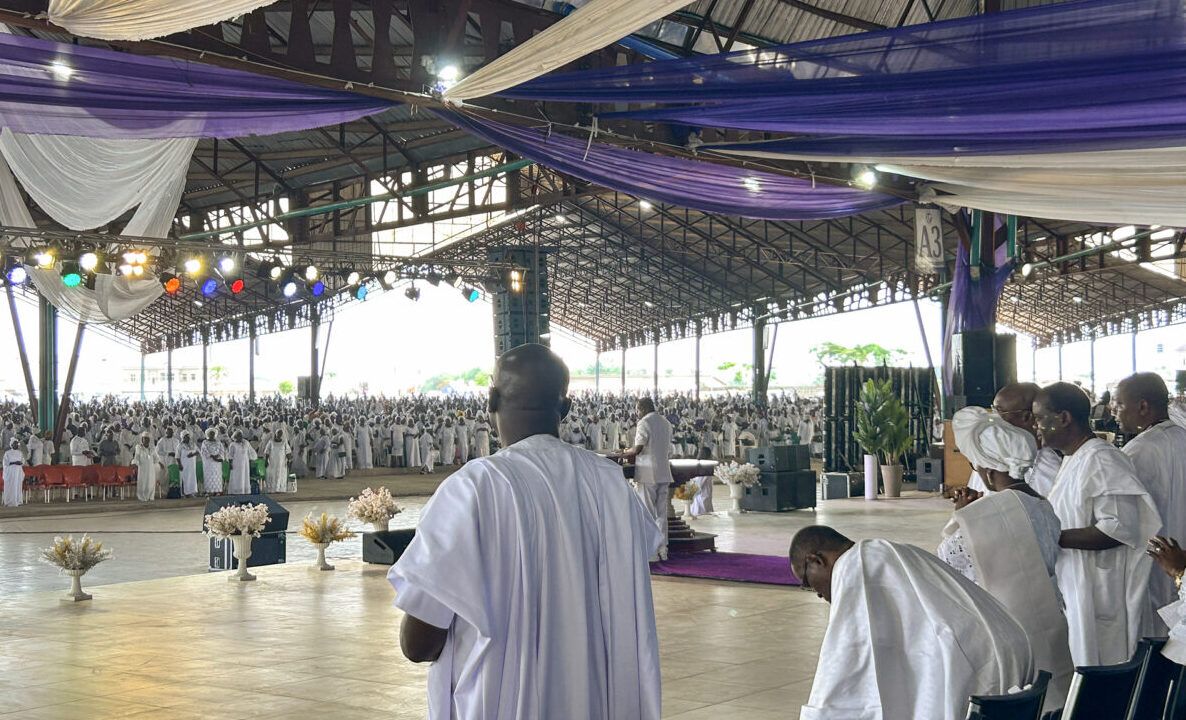
Southern Baptists first arrived in Nigeria when it existed as independent kingdoms. Now, 175 years later, Southern Baptists continue to serve in the West African country home to diverse ethnic groups.
As International Mission Board missionaries and Nigerian Baptists celebrate the 175 years of the growth and spread of the gospel, they also acknowledge the mission is not complete.
Looking back and looking forward
Thomas Jefferson Bowen journeyed by boat to Nigeria in 1850, becoming the first Southern Baptist missionary to serve in the country now known as Nigeria.
While Bowen was only in Nigeria for a handful of years, his passion for reaching Nigeria has continued throughout the generations of missionaries who served after him and the national believers who are ardently reaching their nation for the Lord.
“We celebrate Southern Baptist presence in Nigeria for 175 years, and we’re so grateful,” IMB missionary Josh Rivers said. Rivers serves as a regional leader in West Africa.
The Nigerian Baptist Convention was founded in 1914, and the Nigerian Global Mission Board is the missionary-sending organization of the convention.
“Why would we still send missionaries to a place that we sent missionaries to 175 years ago?” Rivers said some people may ask.
While the gospel took root in many locations, and Nigerian Baptists have been effective in spreading the gospel, the country is still very divided, Rivers said. The north has a Muslim majority, and the south predominantly identifies as Christian. Animism exists throughout the country.
“When we think about Nigeria, we celebrate the history of the work that is there. But we acknowledge that this is a country that still has a Muslim majority and needs the gospel, so that is why we’re still sending laborers into that harvest field,” Rivers said. “There is still the strong need for a mission and missionary presence there to see the gospel flow into those unreached areas that exist across Nigeria.”

Nigeria is home to 435 people groups, 40 of which are unengaged and unreached, meaning there is no active engagement or church-planting strategy among the people group who may have few-to-no known believers among them.
While some regions are difficult or even dangerous for Westerners, IMB missionaries can access other areas and are partnering with Nigerian Christians to bring the gospel and disciple believers.
Projects to add water wells to communities have given clout to Christians in strongly Muslim areas where people had to walk miles to access water for drinking and bathing. As Nigerian Christians built the wells, they shared the gospel, and people have committed their life to Christ and formed fellowships.
The wells were life-changing projects both physically and spiritually.
Significant ministry happens in theological education, where IMB missionaries are teaching in seminaries and other institutions for training. IMB missionaries are working in cooperation alongside Nigerian Baptists to send out missionaries.
Rivers said they are continually looking to place theological educators at key seminaries and theological schools to help with the formation of leaders who are taking the gospel across Nigeria and to the world.
“We are working alongside of them, pulling from our experience, and learning from their experience as well, to see Nigeria mobilizing to the nations,” Rivers said.
Some names changed for security .
EDITOR’S NOTE — This story was written by Tessa Sanchez and originally published by the International Mission Board.
Share with others: