
The Bible and the Quran are among textbooks used in religion classes offered at Alabama’s Athens State University (ASU), a public school.
Some are surprised this could happen, illustrating the confusion many people — even some teachers — have over the role religion and religious books can legally have in the public classroom. Across the country, such classes are increasingly common, without constitutional controversy, as long as they don’t endorse a particular religion.
Robert White Jr., director of the Center for Religious Studies and Ethics at Athens State and pastor of Locust Grove Baptist Church, New Market, in Madison Baptist Association said it’s easy to separate his role in the classroom from his role in the pulpit.
“As a pastor, I’m saying, ‘This is our story,’” White said as he and professor Tony Moyers discussed ASU’s program. “As a teacher, I’m saying, ‘This is the story.’ I’m trying to promote understanding and goodwill among religions — not indoctrination, but education.
“If we offer just one perspective, Baptist, Episcopal, or even strictly Christian, it would violate church and state separation,” White said.
Moyers has a similar approach.
“We have students from various denominations,” he said. “We don’t tell them which one is correct or what they should believe.”
There was a time when ASU professors could, and sometimes did, tell students what to believe. But that was when the school was a Methodist institution. Alabama accepted the college — the state’s oldest, founded in 1822 — into the state system in 1974.
ASU now has 2,650 students, 21 of whom are religious studies majors. Traditionally the major drew only students planning to become ministers. But the major provides a solid liberal arts background for those going into business, law and other professions, too.
As at other universities across the country, Moyers has seen an increase in interest from general studies students since 9/11.
“They come in, thinking it will be an easy subject,” he said.
“They’re looking for something like what they got in their Sunday School classes. They think, ‘How hard can religion be?’”
But the study of religion is perhaps even more complex than the study of wars as a way to get at the history of world cultures and events, so the classes offer challenging concepts.
The classes can also be challenging personally when people find out that the monolithic perception they may have had of their own faith is not historically accurate. The first Christians, for instance, had some ideas about some things that seem odd today.
“The history of early Christian thought can challenge people’s conventional understanding,” White said. “But hopefully education is about learning new ideas, being stretched, then reaching one’s own conclusion.”
He remembers his own student days as a religion major at Athens State.
“I saw the world as one-dimensional, then I came here and saw all the ideas — and I struggled,” White said.
He remembers how professor Daniel Jones, since retired, would force students to think about the platitudes they mouthed.
“He’d pin you to the wall,” White said. “He’d ask, ‘Why do you believe that?’ And I’d say, ‘Really? Someone actually believes something different?’ We thought everyone in the world believed this.
“It enlarged the world I live in.”
Both White and Moyers, who considered the ministry before earning a degree in philosophy, see their work in the religion classes as a mission, but different from their mission as Christians.
“What’s brought more violence into the world: openness, understanding and tolerance or fundamentalism and fanaticism?” Moyers said. “Tolerance doesn’t necessarily mean that we all agree.”
“And it doesn’t mean we don’t have our own convictions,” White said.
“But we’re living through days when we’re reaping a whirlwind of fanaticism,” he said. “If teaching religious studies can help a little way to create a space for a little more openness, respect and tolerance, I’m willing to dedicate myself to that.” (RNS)
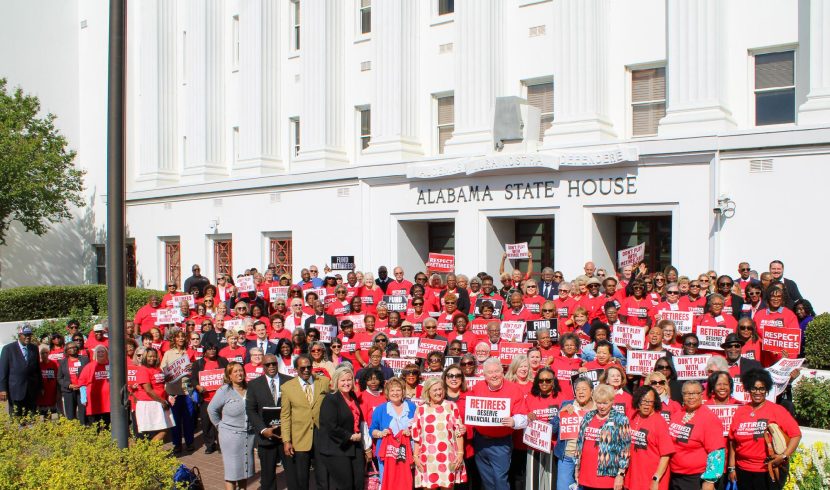
Senate committee passes education budget, bonus for education retirees
The Senate Finance and Taxation Education Committee on Wednesday (April 1) approved the FY27 $12.4 billion Education Trust Fund budget package, adding a one-time bonus for education retirees equal to $1 per month for each year of service.

Lass Words: Need to see a miracle? Follow these simple instructions.
Life got you down? Is your faith being tested? Have you given up on miracles? We all go through it. You need a little reassurance.
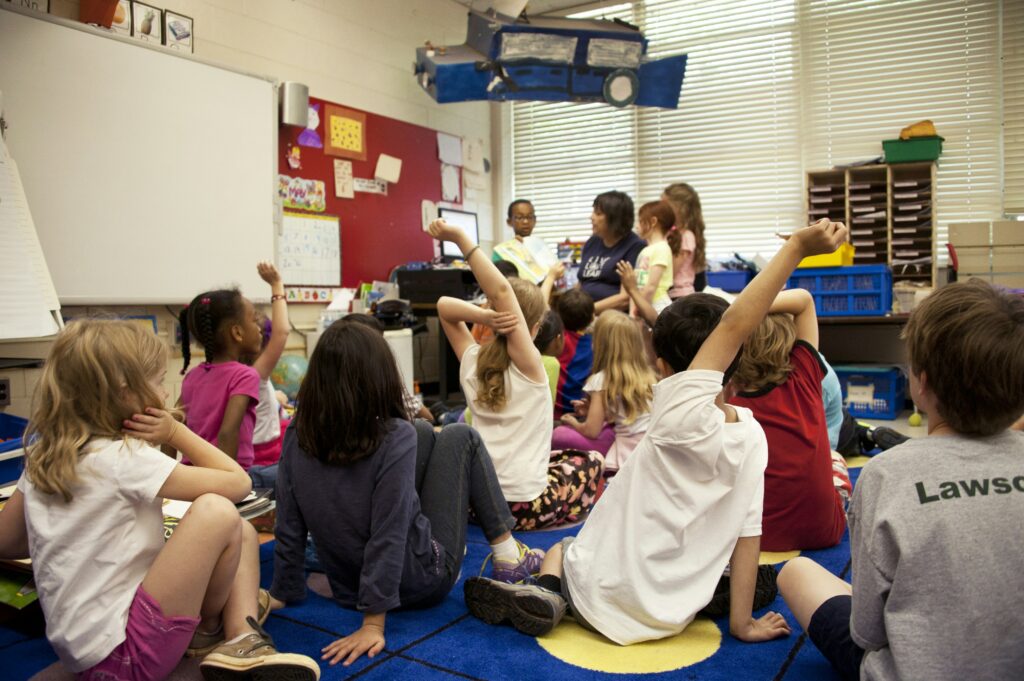
Alabama House approves religious instruction release time bill
The Alabama House on Tuesday (March 31) passed a bill that clarifies how public school students can participate in off-campus religious instruction during the school day.
First person: As we celebrate Easter, let’s ask the hard questions
The Bible is full of paradox. Jesus teaches us that the first shall be last (Matt. 20:16). We are told that whoever saves his life will lose it (Matt. 16:25). We read that the least among us is the greatest (Luke 9:48)…
Share with others: