
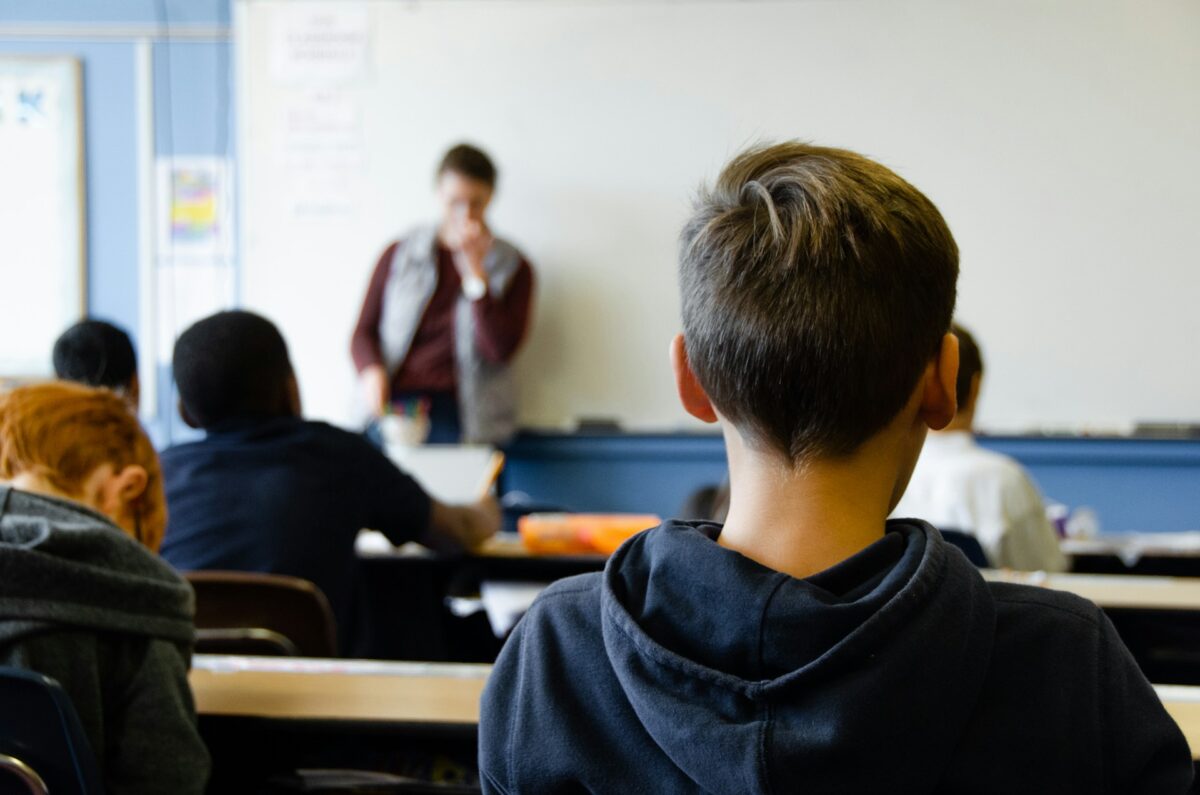
Nearly two dozen education-related bills were stranded without needed votes in the final days of the legislative session.
While some high-profile measures grabbed headlines — like House Bill 244 dealing with gender ideology and pronouns in schools and a proposed drag show restriction — others quietly failed to cross the finish line.
RELATED: Check out more Alabama news.
Subscribe to The Alabama Baptist today!
Most of the bills would have impacted K-12 schools, though a few aimed to support college students. Some, like HB244, are already expected to return next year. Others could resurface, too, but for now, they remain unfinished business.
Here are several key education bills that were waiting on the Senate floor, plus two that got stuck in the House.
School safety technology
A bill requiring all schools to adopt panic-button-style “Rapid Response” alert systems by 2030 never made it to a final vote.
“The school safety bill was one of several worthy House bills that got caught in the Senate local bill clog,” said Rep. Alan Baker, R-Brewton. He said he will bring the bill back next year.
Supporters pointed to a deadly school shooting at Georgia’s Apalachee High School, where such a system was credited with saving lives. Georgia passed similar legislation earlier this year.
Newly required coursework for K-12 students
House Bill 332 would have made computer science a graduation requirement for Alabama high schoolers. Schools already have to offer a course in computer science, but this bill would have required students to take it. It passed the House easily, with just one ‘no’ vote, but didn’t get a vote in the Senate.
Senate Bill 34, one of the two that got stuck in the House, proposed another new requirement: a conflict resolution and violence prevention course for middle schoolers starting in the 2026–27 school year. The Alabama Department of Education would have developed the course. It, too, failed to get a vote.
The Star-Spangled Banner constitutional amendment
The other bill that died waiting for a House vote is Senate Bill 13, which proposed a constitutional amendment that would require public schools to broadcast or perform the first stanza of “The Star-Spangled Banner” at least once per week during school hours. This is the sixth time the bill’s sponsor, Sen. Gerald Allen, R-Tuscaloosa, has introduced similar legislation and the first time it has gone this far.
Career tech access for homeschoolers
For the second year in a row, Rep. Susan DuBose, R-Hoover, proposed a bill to let homeschool students enroll in public school career tech programs when space is available. And for the second year in a row, the bill stalled.
“Every student that they can make room for needs to be allowed to participate,” DuBose said, noting that homeschooling families still contribute to the Education Trust Fund through sales and property taxes.
Ban on three-cueing in reading instruction
House Bill 9 would have codified a ban on the controversial “three-cueing” method, which encourages students to guess unfamiliar words based on context rather than sounding them out. The State Board of Education banned the method by resolution in 2023, but HB9 would have made that ban part of state law. It passed the House but never got a vote in the Senate.
Higher education bills stalled
Two bills supported by the Alabama Commission on Higher Education also failed to advance.
House Bill 271 would have expanded the (Re)Engage Alabama grant program helping adult learners return to college to complete an unfinished two- or four-year degree.
“(Re)Engage is more than education — it is about empowering individuals and strengthening Alabama’s workforce,” said ACHE Director Jim Purcell.
The second bill, called the Hunger-Free Campus Act, would have encouraged colleges to help students access SNAP benefits and establish on-campus food resources.
“With 1 in 3 college students experiencing food insecurity, access to food should never be a barrier to academic success,” Purcell said.
Both bills had broad support and are expected to return next year.
“We’re optimistic,” Purcell said.
Parental notification of teen traffic tickets
“TJ’s Law” would have required law enforcement to notify parents when a minor receives a traffic citation. The bill is named after T.J. Morgan, who died in a 2022 single-car crash. After his death, his mother learned he’d received multiple seat belt violations she hadn’t known about.
“I had no idea that he was in the habit of not wearing a seatbelt,” April Vafeas told lawmakers. She hoped the bill would help prevent similar tragedies.
The bill passed the House and a Senate committee last year, and for the second year in a row it did not reach the Senate floor.
EDITOR’S NOTE — This story was written by Trisha Powell Crain and originally published by Alabama Daily News.



Share with others: