
While one might want to rejoice that Christianity is the predominant religion in American Samoa, standing head and shoulders among the rest, that fact doesn’t necessarily evoke cheers from evangelical missionaries there.
“In American Samoa, everyone is religious,” said Lucy Tafao, principal of Samoa Baptist Academy in Tafuna and wife of Elise Tafao, pastor of Happy Valley Baptist Church, Tafuna, and director of missions for South Pacific Baptist Association. “It’s a small island and … everyone somehow belongs to a church, but spiritually coming to receive the Lord is a different story.”
After attending Southern Baptist Theological Seminary in Louisville, Ky., and partnering with Baptist work in Hawaii, the Tafaos returned to their homeland of American Samoa in 1993 to further the work started by Southern Baptist missionaries Ray and Lena Viliamu.
The Viliamus’ work began in 1976 when they were sent to American Samoa as joint missionaries of the Home Mission Board (now the North American Mission Board, NAMB) and the Hawaii Pacific Baptist Convention.
“My parents were not attending church anywhere in (American) Samoa, so we started a church in their home with their relatives and some of their friends,” said Ray Viliamu, a native of American Samoa.
“There was about 19 of us on the first Sunday,” he said of the Happy Valley Baptist Church plant. “That was the beginning of Baptist work from the Southern Baptist Convention in American Samoa.”
The Viliamus sought to share with American Samoans the difference between “being religious” and “being Christian,” he said.
“We were able to see my parents accept the Lord, and I baptized them and some sisters. And people that were in the neighborhood started coming to church.”
In the seven years they were stationed in American Samoa, the Viliamus established churches, a prison ministry, the academy and a “miniseminary.”
Today there are seven Southern Baptist churches (including Samoan, English, Korean and Chinese) in American Samoa, mostly concentrated in the Pago Pago region, and two in the Independent State of Samoa, according to Elise Tafao.
“To look back and realize the Lord has used my wife and me, it brings great satisfaction — to realize God has a plan for your life and for every life,” Ray Viliamu said. “I’m glad we were a part of what God is going to continue to do both in (American) Samoa and wherever (American) Samoans are today.”
And continue is just what the ministry is doing.
“We’ve been able to start a church a year for the past three years. … We try to get villages to respond to us, and we do a Bible study and out of that comes a church,” said Brian Smart, of Hendersonville, Tenn., who has served as pastor of the English-speaking Tafuna Baptist Church for almost four years.
The churches are also doing outreach in the forms of football camps; Bible training conferences; classes about other religions from a biblical perspective; small group meetings for men, women and children; after-school programs for children and their parents; and missions trips to neighboring islands.
Smart noted that because the majority of American Samoans’ faith is based on tradition, the ministry church members are now tackling focuses on “re-educating people about the foundations of what Christianity truly believes. … We have to re-educate before we can present the correct gospel.”
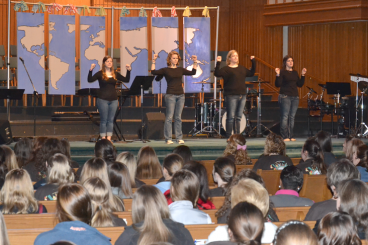
“The island no doubt is very religious,” said James Katina, a member of the contemporary Christian group The Katinas who grew up in American Samoa. “On Sunday morning, you can get in your car and go down the main road in the middle of the island and all you’ll see is people dressed in white, walking to church. But all that says is that it is an island that is content with just being religious.
“Every family goes to church. Everyone claims to be a Christian, but as we’ve grown deeper in our faith, we’ve realized it’s not about religion. It’s about a relationship with God.”
Over the years, the most predominant faith groups have been the Congregational Christian Church and Mormons, said Terry Henderson, disaster relief operations consultant for NAMB working in American Samoa. But the consistent Baptist relief work that has been taking place since the September 2009 earthquake and tsunami has brought Baptist life to the forefront.
“We didn’t come in to make any recognition for ourselves,” Henderson said. “We’re there to do what God has led us to do and to assist on the island. They see we don’t have an agenda, and hopefully they don’t think we are there to make everybody a Baptist. We’re there to share the gospel, and we’re there to help anybody and everybody.”
Lucy Tafao said even though the fruits of her and her fellow Baptists’ labor in American Samoa may not be immediately visible, she knows God is at work in their midst.
“When we want something, we want to see results right way, but we have learned to accept the fact that it will take time,” she said. “Little by little, we’re planting that seed and we may not be here long enough to see a bunch of people (come to Christ), but we do see God working.”
Share with others: