
I am increasingly convinced that the phenomenon of forgiveness is one of the core realities of life on this planet. Those who do not forgive shake their fists at the moral structure of the universe and bring on themselves only misery.
Every human being is deeply flawed. The Bible calls this the problem of sin.
It’s not just that we make occasional mistakes but that we are inclined to sin, bent to sin, prone to sin. Even when we know what we should do, or should not do, we do the opposite. We sense a force within us that overrides our moral sense or even our common sense.
Human life consists of a bunch of deeply flawed people interacting with one another. My flawed self comes into contact with your flawed self; my lack of self-control in one area of life is matched by yours in another.
Inevitably we wound each other. It is to be counted on. Unless we live alone and without any human contact we will encounter other people; a certain percentage of the time, we will do badly in those encounters. We will say things we should not say and do things we should not do. There are no wound-free, offense-free human relationships.
The question in life is not whether we will be offended but how we will respond when offended. Forgiveness is one of only two options available to us at such moments. The other is unforgiveness — that is, to hold the offense against the offender, perhaps indefinitely.
Unforgiveness tends to come more naturally to us, which is another sign of our sinfulness. We find what amounts to a kind of perverse pleasure in nursing grudges and withholding forgiveness. We are reluctant to clear the slate of the offense and move on.
Instead we are inclined to keep account of wrongs and perhaps even to plan payback. But when payback time comes it actually provides little pleasure.
Relationships fray and finally break when the weight of unforgiven offenses becomes too great. This is what finally happens to most marriages that fail.
The work of forgiveness has been left undone, or has become impossible due to the sheer number of offenses that would need to be forgiven. But the collapse of relationships under the weight of unforgiven sin is fearful. At best, the wounded parties retire sadly to their separate corners. At worst, they erupt in rage and violence.
True forgiveness is actually a multilayered process that requires the participation of both offender and offended. It begins with repentance, in which the offender genuinely recognizes having done wrong. Confession is the next step, as the offender goes to the one wronged, names what he did wrong, and asks forgiveness.
At this point, the offended one stands at the pivotal fork in the road — to forgive or not forgive. Genuine forgiveness involves accepting the confession of wrong and deciding not to hold the offense against the person any longer but instead to let it go. This makes possible true reconciliation.
This cycle — repentance, confession, forgiveness and reconciliation — is the lifeblood of any successful relationship. A breakdown at any point poses what can eventually become a mortal threat.
It is no coincidence that the same pattern applies in our relationship with God.
The Christian faith rests on the sure promise that all who repent and confess their wrongs before God will be forgiven and reconciled with Him.

Latest news: Former Lifeway employee charged; pastors weigh in on challenges of preaching; Mo. Supreme Court tackles question of explicit books in public schools
Check out these recent headlines reported by The Baptist Paper.

How a legacy of faith is impacting IMB’s gospel work
Rebeca Couto moved from one volcanic archipelago to another, leaving Portugal’s Azores islands to anchor her life in Japan. The

Rankings of Alabama elementary and middle schools released
U.S. News & World Report has released its 2027 Best K-8 Schools rankings, showing how 871 Alabama elementary and middle schools
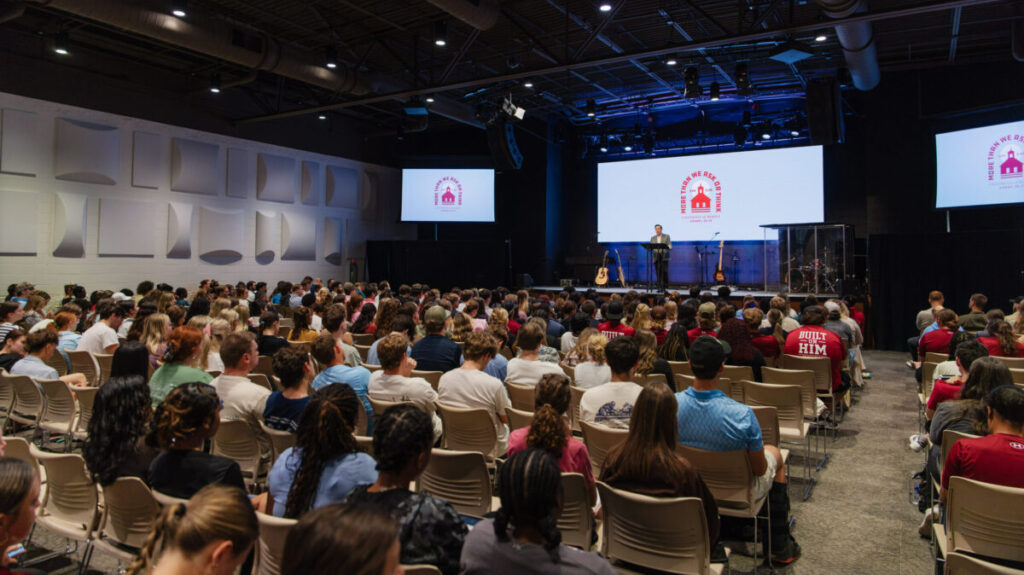
Wax challenges students to conform to Christ not culture
During the University of Mobile Chapel on October 14, Trevin Wax, vice president of research and resource development at the North American Mission Board, challenged students to passionately follow Christ and not the patterns of this world.
Share with others: